


Dyslipidemia and Fatty Liver Disease in Overweight and Obese Children
- PMID: 30009050
- PMCID: PMC6020453
- DOI: 10.1155/2018/8626818
Dyslipidemia and Fatty Liver Disease in Overweight and Obese Children
Abstract
Introduction: Obesity is a worldwide concern. It is associated with morbidity such as dyslipidemia and liver disease. Childhood obesity has dramatically increased, particularly in the Gulf region. We aim to assess the prevalence of dyslipidemia and fatty liver disease (FLD) in overweight and obese children and analyze the association between different anthropometric measures with dyslipidemia and fatty liver disease.
Methods: A descriptive, cross-sectional study conducted on children referred with obesity. BMI percentiles were plotted and standardized waist circumference (WC) was generated. Family history of metabolic syndrome was recorded. Fasting lipid, liver transaminases, and ultrasound scans (US) for those with elevated enzymes were performed. Descriptive statistics were used for quantitative parameters.
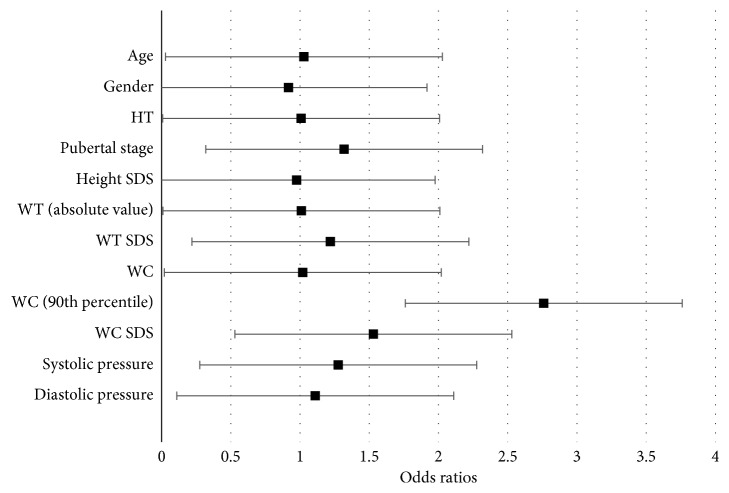
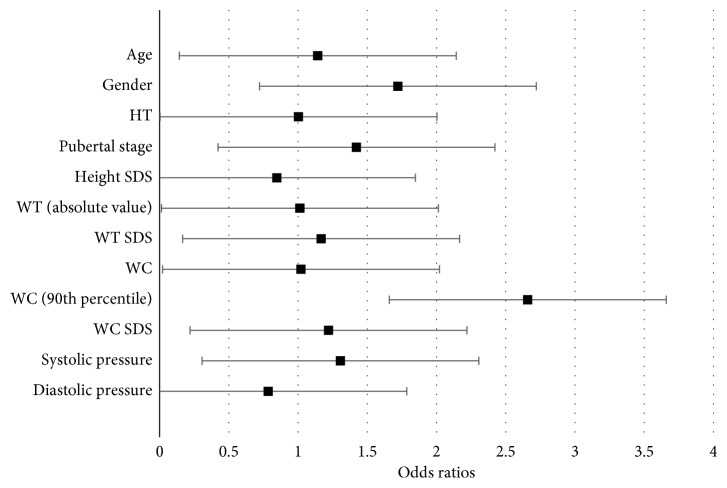
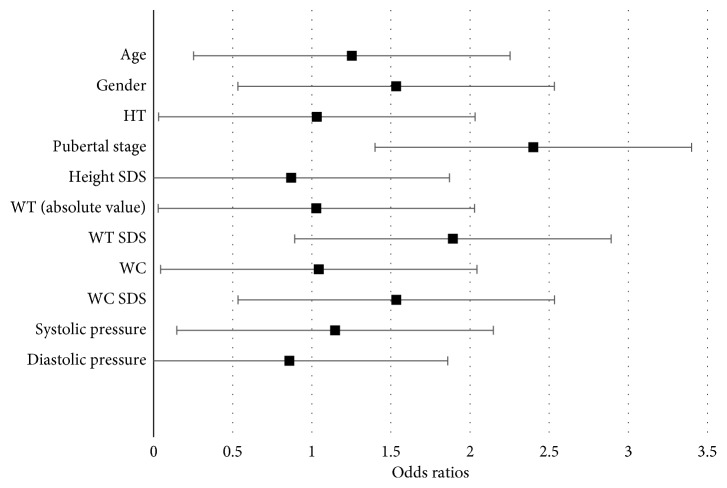
Results: 216 participants were recruited. Mean ± SD age was 10.58 ± 2.996 years. 55.3% had dyslipidemia; 11.7% had high cholesterol, 28.6% high triglyceride, 32.7% high LDL, and 18.0% low HDL. 51 (84%) had either elevated transaminases. All had liver US, and 43 had FLD. WC was strongly associated with dyslipidemia and FLD (P=0.04 and 0.003).
Conclusion: Dyslipidemia is common in overweight, obese children. FLD is prevalent in those with elevated liver transaminases. WC is an easy tool that can be utilized to screen for dyslipidemia and FLD in overweight and obese children.
Figures
References
-
- Malik M., Bakir A. Prevalence of overweight and obesity among children in the United Arab Emirates. Obesity Reviews. 2006;8(1):15–20. - PubMed
-
- Robinson D. Killing me sweetly. Arabian Business-Health. 2005;6:48–53.
Publication types
MeSH terms
Substances
LinkOut - more resources
Full Text Sources
Other Literature Sources
Medical
