


Are standardized caries risk assessment models effective in assessing actual caries status and future caries increment? A systematic review
- PMID: 30012136
- PMCID: PMC6048716
- DOI: 10.1186/s12903-018-0585-4
Are standardized caries risk assessment models effective in assessing actual caries status and future caries increment? A systematic review
Abstract
Background: Assessing caries risk is an essential element in the planning of preventive and therapeutic strategies. Different caries risk assessment (CRA) models have been proposed for the identification of individuals running a risk of future caries. This systematic review was designed to evaluate whether standardized caries risk assessment (CRA) models are able to evaluate the risk according to the actual caries status and/or the future caries increment.
Methods: Randomized clinical trials, cross-sectional studies, cohort studies, comparative studies, validation studies and evaluation studies, reporting caries risk assessment using standardized models (Cariogram, CAMBRA, PreViser, NUS-CRA and CAT) in patients of any age related to caries data recorded by DMFT/S or ICDAS indices, were included. PubMed, Scopus and Embase were searched from 2000 to 2016. A search string was developed. All the papers meeting the inclusion criteria were subjected to a quality assessment.
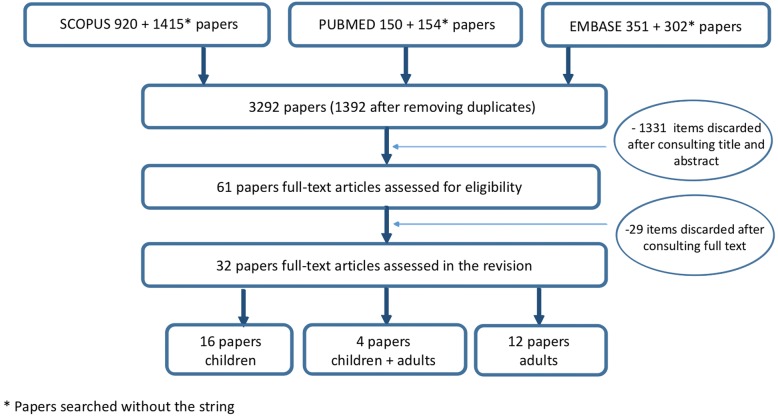
Results: One thousand three-undred ninety-two papers were identified and 32 were included. In all but one, the Cariogram was used both as sole model or in conjunction with other models. All the papers on children (n = 16) and adults (n = 12) found a statistically significant association between the risk levels and the actual caries status and/or the future caries increment. Nineteen papers, all using the Cariogram except one, were classified as being of good quality. Three of four papers comprising children and adults found a positive association. For seven of the included papers, Cariogram sensibility and specificity were calculated; sensibility ranged from low (41.0) to fairly low (75.0), while specificity was higher, ranging from 65.8 to 88.0. Wide 95% confidence intervals for both parameters were found, indicating that the reliability of the model differed in different caries risk levels.
Conclusions: The scientific evidence relating to standardized CRA models is still limited; even if Cariogram was tested in children and adults in few studies of good quality, no sufficient evidence is available to affirm the method is effective in caries assessment and prediction. New options of diagnosis, prognosis and therapy are now available to dentists but the validity of standardized CRA models still remains limited.
Keywords: Dental caries; Dental caries susceptibility; Dental health surveys; Review; Risk assessment.
Conflict of interest statement
Ethics approval and consent to participate
Not applicable as this paper is a systematic review.
Consent for publication
Not applicable
Competing interests
The authors declare that they have no competing interests. There are no financial completing interests as we have not received any grants. The authors alone are responsible for the content and writing of the paper.
Publisher’s Note
Springer Nature remains neutral with regard to jurisdictional claims in published maps and institutional affiliations.
Comment in
-
Are standardised caries risk assessment models effective?Evid Based Dent. 2018 Dec;19(4):102-103. doi: 10.1038/sj.ebd.6401338. Evid Based Dent. 2018. PMID: 30573864
References
Publication types
MeSH terms
LinkOut - more resources
Full Text Sources
Other Literature Sources
Medical
Miscellaneous
