Meta-Analysis
. 2018 Aug;50(8):1072-1080.
doi: 10.1038/s41588-018-0157-1. Epub 2018 Jul 16.

Genome-wide association and HLA fine-mapping studies identify risk loci and genetic pathways underlying allergic rhinitis

Johannes Waage  1 Marie Standl  2 John A Curtin  3 Leon E Jessen  1 Jonathan Thorsen  1 Chao Tian  4 Nathan Schoettler  5 23andMe Research TeamAAGC collaboratorsCarlos Flores  6   7 Abdel Abdellaoui  8   9 Tarunveer S Ahluwalia  1 Alexessander C Alves  10 Andre F S Amaral  11 Josep M Antó  12   13   14   15 Andreas Arnold  16 Amalia Barreto-Luis  6 Hansjörg Baurecht  17 Catharina E M van Beijsterveldt  8 Eugene R Bleecker  18 Sílvia Bonàs-Guarch  19 Dorret I Boomsma  8   20 Susanne Brix  21 Supinda Bunyavanich  22 Esteban G Burchard  23   24 Zhanghua Chen  25 Ivan Curjuric  26   27 Adnan Custovic  28 Herman T den Dekker  29   30   31 Shyamali C Dharmage  32 Julia Dmitrieva  33 Liesbeth Duijts  29   31   34 Markus J Ege  35 W James Gauderman  25 Michel Georges  33 Christian Gieger  2   36 Frank Gilliland  25 Raquel Granell  37 Hongsheng Gui  38 Torben Hansen  39 Joachim Heinrich  2   40 John Henderson  37 Natalia Hernandez-Pacheco  6   41 Patrick Holt  42 Medea Imboden  26   27 Vincent W V Jaddoe  29   30   43 Marjo-Riitta Jarvelin  10   44   45   46 Deborah L Jarvis  11 Kamilla K Jensen  47 Ingileif Jónsdóttir  48   49 Michael Kabesch  50 Jaakko Kaprio  51   52   53 Ashish Kumar  26   27   54 Young-Ae Lee  55   56 Albert M Levin  57 Xingnan Li  58 Fabian Lorenzo-Diaz  41 Erik Melén  54   59 Josep M Mercader  19   60   61 Deborah A Meyers  18 Rachel Myers  5 Dan L Nicolae  5 Ellen A Nohr  62 Teemu Palviainen  52 Lavinia Paternoster  37 Craig E Pennell  63 Göran Pershagen  54   64 Maria Pino-Yanes  6   7   41 Nicole M Probst-Hensch  26   27 Franz Rüschendorf  55 Angela Simpson  3 Kari Stefansson  48   49 Jordi Sunyer  12 Gardar Sveinbjornsson  48 Elisabeth Thiering  2   65 Philip J Thompson  66 Maties Torrent  67 David Torrents  19   68 Joyce Y Tung  4 Carol A Wang  63 Stephan Weidinger  17 Scott Weiss  69 Gonneke Willemsen  8 L Keoki Williams  38   70 Carole Ober  5 David A Hinds  4 Manuel A Ferreira  71 Hans Bisgaard  1 David P Strachan  72 Klaus Bønnelykke  73
Affiliations
Meta-Analysis

Genome-wide association and HLA fine-mapping studies identify risk loci and genetic pathways underlying allergic rhinitis

Johannes Waage et al. Nat Genet. 2018 Aug.

Erratum in

  • Author Correction: Genome-wide association and HLA fine-mapping studies identify risk loci and genetic pathways underlying allergic rhinitis.
    Waage J, Standl M, Curtin JA, Jessen LE, Thorsen J, Tian C, Schoettler N; 23andMe Research Team; AAGC collaborators; Flores C, Abdellaoui A, Ahluwalia TS, Alves AC, Amaral AFS, Antó JM, Arnold A, Barreto-Luis A, Baurecht H, van Beijsterveldt CEM, Bleecker ER, Bonàs-Guarch S, Boomsma DI, Brix S, Bunyavanich S, Burchard EG, Chen Z, Curjuric I, Custovic A, den Dekker HT, Dharmage SC, Dmitrieva J, Duijts L, Ege MJ, Gauderman WJ, Georges M, Gieger C, Gilliland F, Granell R, Gui H, Hansen T, Heinrich J, Henderson J, Hernandez-Pacheco N, Holt P, Imboden M, Jaddoe VWV, Jarvelin MR, Jarvis DL, Jensen KK, Jónsdóttir I, Kabesch M, Kaprio J, Kumar A, Lee YA, Levin AM, Li X, Lorenzo-Diaz F, Melén E, Mercader JM, Meyers DA, Myers R, Nicolae DL, Nohr EA, Palviainen T, Paternoster L, Pennell CE, Pershagen G, Pino-Yanes M, Probst-Hensch NM, Rüschendorf F, Simpson A, Stefansson K, Sunyer J, Sveinbjornsson G, Thiering E, Thompson PJ, Torrent M, Torrents D, Tung JY, Wang CA, Weidinger S, Weiss S, Willemsen G, Williams LK, Ober C, Hinds DA, Ferreira MA, Bisgaard H, Strachan DP, Bønnelykke K. Waage J, et al. Nat Genet. 2018 Sep;50(9):1343. doi: 10.1038/s41588-018-0197-6. Nat Genet. 2018. PMID: 30116036

Abstract

Allergic rhinitis is the most common clinical presentation of allergy, affecting 400 million people worldwide, with increasing incidence in westernized countries1,2. To elucidate the genetic architecture and understand the underlying disease mechanisms, we carried out a meta-analysis of allergic rhinitis in 59,762 cases and 152,358 controls of European ancestry and identified a total of 41 risk loci for allergic rhinitis, including 20 loci not previously associated with allergic rhinitis, which were confirmed in a replication phase of 60,720 cases and 618,527 controls. Functional annotation implicated genes involved in various immune pathways, and fine mapping of the HLA region suggested amino acid variants important for antigen binding. We further performed genome-wide association study (GWAS) analyses of allergic sensitization against inhalant allergens and nonallergic rhinitis, which suggested shared genetic mechanisms across rhinitis-related traits. Future studies of the identified loci and genes might identify novel targets for treatment and prevention of allergic rhinitis.


Conflict of interest statement

Competing financial interests

G.S., I.J., and K.S. are affiliated with deCODE genetics/Amgen declare competing financial interests as employees. C.T., D.A.H., J.Y.T., and the 23andMe Research Team are employees of and hold stock and/or stock options in 23andMe, Inc. L.P. has received a fee for participating in a scientific input engagement meeting from Merck Sharp & Dohme Limited, outside of the submitted work.

Figures
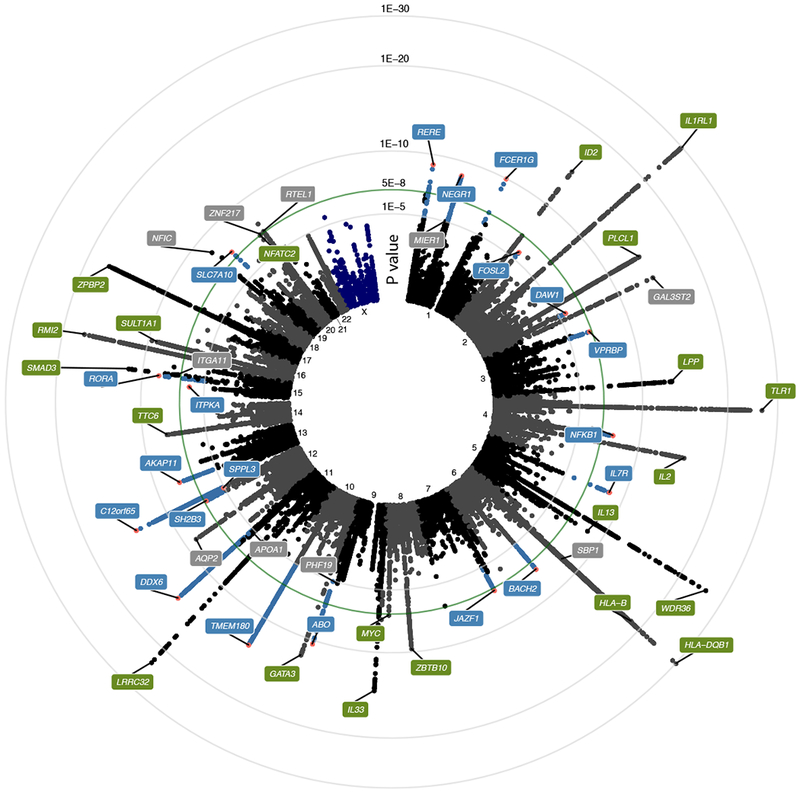
Figure 1:
Figure 1:. Manhattan plot of the meta-GWAS discovery phase
Circular plot of p-values from a inverse variance weighted fixed-effect meta-analysis of association of 16,531,985 genetic markers to allergic rhinitis from the discovery phase, including 212,120 individuals. Only markers with p < 1e-3 are shown. Labels indicate nearest gene name for index marker in locus (marker with lowest p-value). Green labels indicate loci previously associated with allergy; blue labels indicate novel AR loci; grey labels indicate novel loci that were not carried forward to the replication phase. Green line indicates level of genome wide significance (p = 5e-8).
Figure 2:
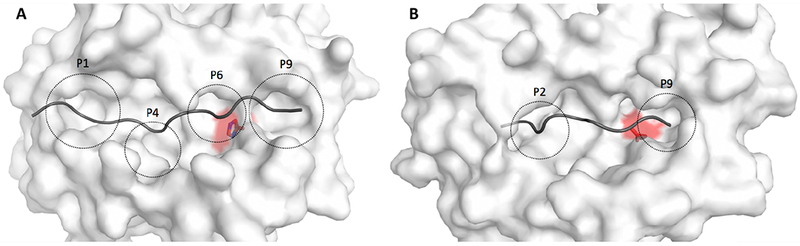
Figure 2:. Structural visualization of amino acid variants associated with allergic rhinitis
The surface of the MHC molecule is shown in white, while the backbone of the bound peptide is shown in dark gray. The amino acid variant in focus is highlighted in red and the peptide binding pockets of the MHC molecule is indicated with dashed circles and annotated P1-P9. (A) The amino acid variant with strongest association to AR is HLA-DQB1 His30 (MHC class II), located close to P6 with a distance of 6Å to the peptide (excluding the peptide side chain). The protective amino acid variant at this location in relation to AR is hisitidine, whereas the risk variant is serine. Histidine is positively charged and has a large aromatic ring, whereas serine is not charged and not aromatic. Therefore, this mutation results in a significant change of the binding pocket environment. (B) The strongest AR-associated amino acid variation in HLA-B (MHC class I) is HLA-B AspHisLeu116, located close to P9 with a distance of 7Å to the peptide (excluding the peptide side chain). The close proximity to the bound peptide for both variants indicates that they are likely to affect the MHC-peptide interaction and thereby which peptides are presented.
Figure 3:
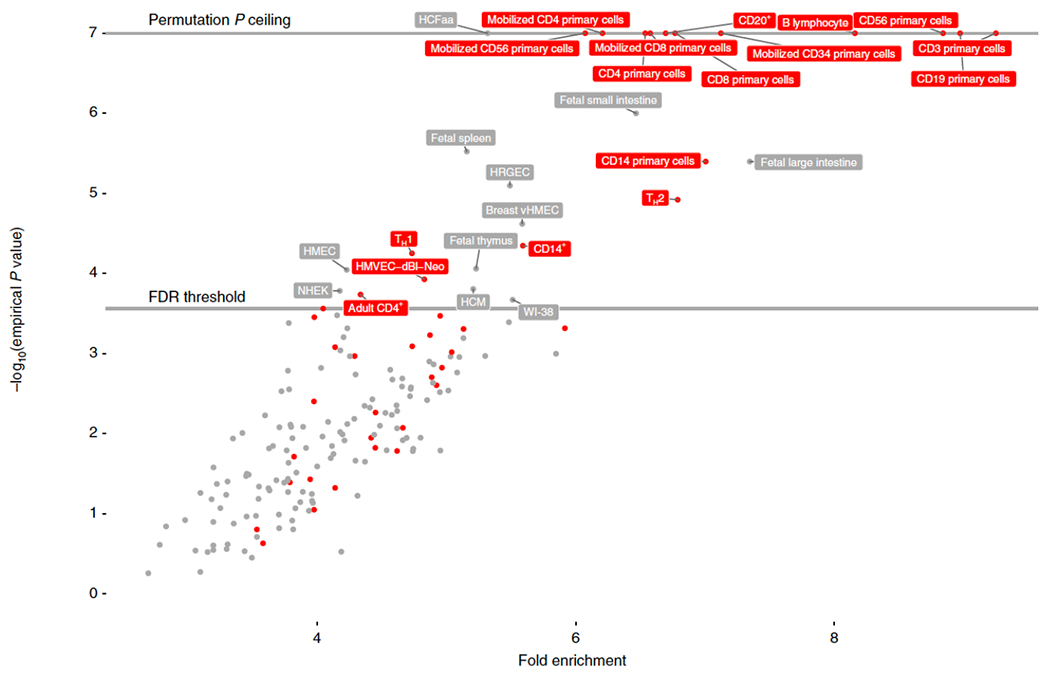
Figure 3:. Enrichment of allergic rhinitis-associated variants in tissue-specific open chromatin
Enrichment of 16,531,985 genetic variants associated with allergic rhinitis in 212,120 individuals (at p < 1e-08 as threshold for marker association) in 189 cell types from ENCODE and Roadmap epigenomics data. Enrichment and p-value was calculated empirically against a permuted genomic background using the GARFIELD tool. Red labels indicate blood and blood-related cell-types, grey labels indicate other cell types. Due to number of permutations = 1e7, empirical p-values reached a minimum ceiling of 1/1e7. FDR threshold = 0.00026. For epstein-Barr virus transformed B-lymphocyte cell types (cell type “GM****”), only most enriched instance is shown (“B-Lymphocyte”). NHEK = normal human epidermal keratinocytes, HMEC/vHMEC = mammary epithelial cells, HCM = human cardiac myocytes , WI-38 = lung fibroblast-derived, HRGEC = human renal glomerular endothelial cell, HCFaa = Human Cardiac Fibroblasts-Adult Atrial cell, HMVEC-dBl-Neo = human microvascular endothelial cells, Th1 = T helper cell, type 1, Th2 = T helper cell, type 2.
Figure 4:
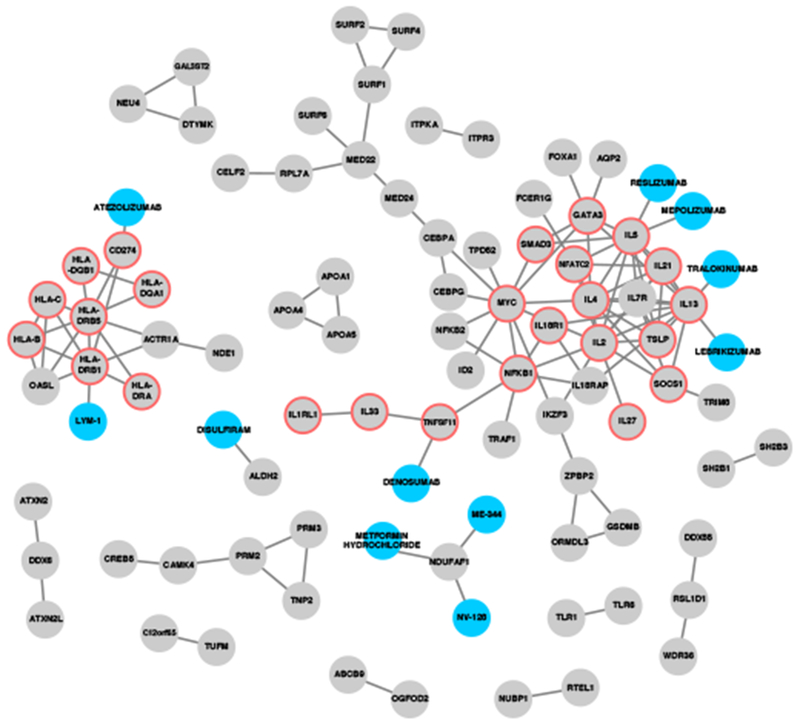
Figure 4:. Interaction network between drugs and proteins from genes associated with allergic rhinitis
Grey nodes represent locus genes as well as genes prioritized from e/meQTL and PCHiC sources, based on genetics association of 16,531,985 markers with allergic rhinitis in 212,120 individuals. Blue nodes represent drugs from the ChEMBL drug database. Edges represent very-high confidence interactions from the STRING database (for locus-locus interactions) and drug target evidence (for drug-locus interactions). Red borders indicate genes with protein products that were significantly enriched in the “Th1 and Th2 Activation” pathway (-log[p-value] >19.1) from the IPA pathway analysis.

References

    1. Greiner AN, Hellings PW, Rotiroti G & Scadding GK Allergic rhinitis. Lancet 378, 2112–2122 (2011). - PubMed
    1. Björkstén B et al. Worldwide time trends for symptoms of rhinitis and conjunctivitis: Phase III of the International Study of Asthma and Allergies in Childhood. Pediatr. Allergy Immunol. 19, 110–124 (2008). - PubMed
    1. Willemsen G, van Beijsterveldt TCEM, van Baal CGCM, Postma D & Boomsma DI Heritability of self-reported asthma and allergy: a study in adult Dutch twins, siblings and parents. Twin Res. Hum. Genet. 11, 132–142 (2008). - PubMed
    1. Fagnani C et al. Heritability and shared genetic effects of asthma and hay fever: an Italian study of young twins. Twin Res. Hum. Genet 11, 121–131 (2008). - PubMed
    1. Ramasamy A et al. A genome-wide meta-analysis of genetic variants associated with allergic rhinitis and grass sensitization and their interaction with birth order. J. Allergy Clin. Immunol 128, 996–1005 (2011). - PubMed

Methods section references

    1. Winkler TW et al. Quality control and conduct of genome-wide association meta-analyses. Nat. Protoc 9, 1192–1212 (2014). - PMC - PubMed
    1. Mägi R & Morris AP GWAMA: software for genome-wide association meta-analysis. BMC Bioinformatics 11, 288 (2010). - PMC - PubMed
    1. Segrè AV et al. Common inherited variation in mitochondrial genes is not enriched for associations with type 2 diabetes or related glycemic traits. PLoS Genet 6, (2010). - PMC - PubMed
    1. Karolchik D et al. The UCSC Table Browser data retrieval tool. Nucleic Acids Res 32, D493–6 (2004). - PMC - PubMed
    1. Subramanian A et al. Gene set enrichment analysis: a knowledge-based approach for interpreting genome-wide expression profiles. Proc. Natl. Acad. Sci. U. S. A 102, 15545–15550 (2005). - PMC - PubMed

Publication types