


Physical and chemical assessment of 1,3 Propanediol as a potential substitute of propylene glycol in refill liquid for electronic cigarettes
- PMID: 30013226
- PMCID: PMC6048019
- DOI: 10.1038/s41598-018-29066-6
Physical and chemical assessment of 1,3 Propanediol as a potential substitute of propylene glycol in refill liquid for electronic cigarettes
Abstract
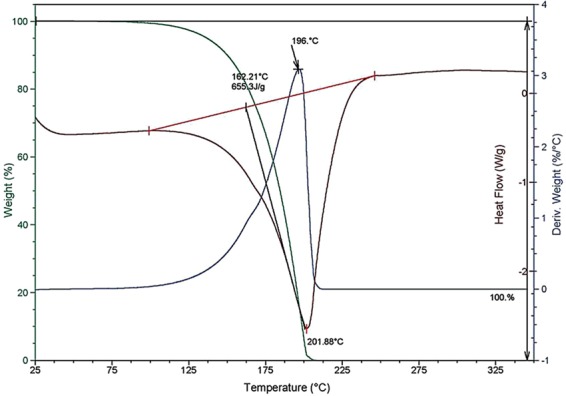
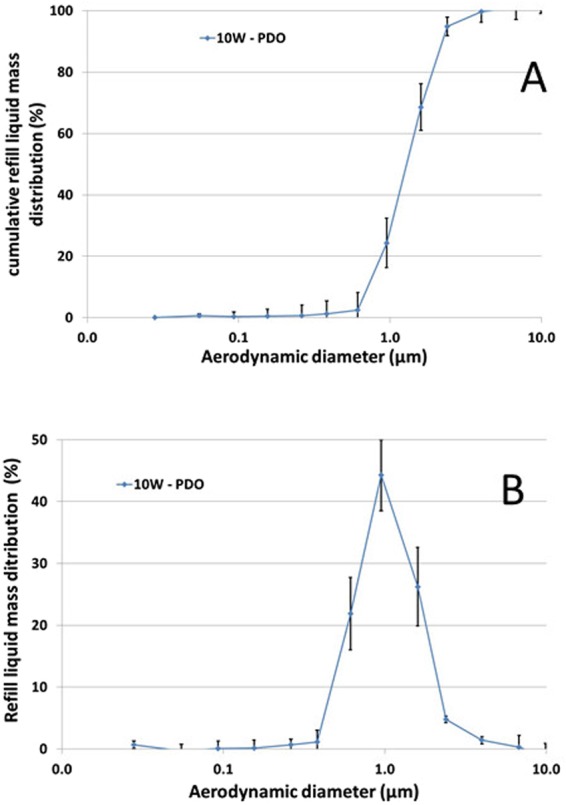
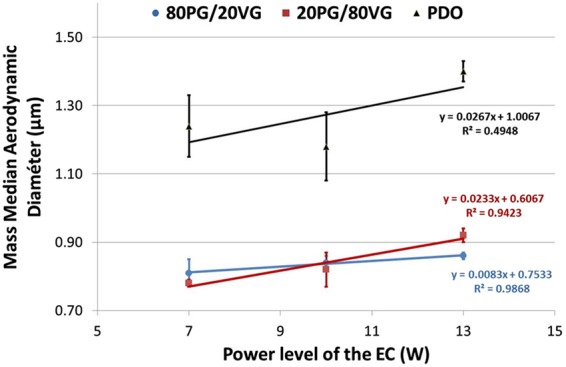
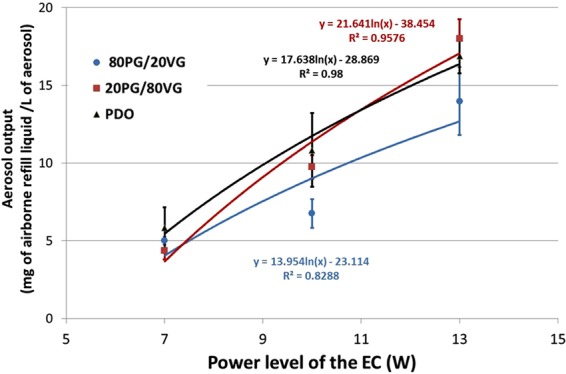
Electronic cigarette has the potential to serve as a tobacco cessation aid if the prerequisites which are safety and efficacy in term of nicotine delivery are achieved. The nicotine-based liquids are mainly composed by propylene glycol and glycerol playing the important role of airborne carriers. 1,3 propanediol is proposed as a propylene glycol substitute to potentially improve the thermal stability, nicotine delivery and to decrease inhaled flavors concentrations. We have implemented various thermal, physicochemical and computational methods to evaluate the use of 1,3 propanediol as a substitute (or additional ingredient) to propylene glycol in e-liquids compositions. Our results indicate that 1,3 propanediol is stable upon heating when electronic cigarette are used in recommended conditions. We demonstrate that 1,3 propanediol gave better thermic profile compared to propylene glycol and glycerol, showing less thermal decomposition by-products. In addition, 1,3 propanediol gives to nicotine a more basic environment ensuring a high level of free base nicotine form. We have also established a quantum mechanical based computational method to validate e-liquids as flavor enhancer. Our findings showed that globally 1,3 propanediol seems to have better flavoring properties than glycerol and propylene glycol. Finally, 1,3 propanediol seems to induce quite similar aerodynamic properties compared to propylene glycol and glycerol.
Conflict of interest statement
The authors are independent from tobacco industry. VB and AP are employees of Laboratoires Cérès, France
Figures
References
-
- World health Organization. WHO report on the global tobacco epidemic. WHO Available at: http://www.who.int/tobacco/mpower/2008/en/ (2008).
-
- World health Organization. WHO report on the global tobacco epidemic. Available at: http://www.who.int/tobacco/global_report/2015/report/en/ (2015).
-
- World health Organization. WHO report on ‘Electronic nicotine delivery systems and electronic non-nicotine delivery systems (ENDS/ENNDS)’. Available at: http://www.who.int/tobacco/industry/product_regulation/eletronic-cigaret.... (2016).
-
- Use TT. and Dependence: 2008 Update U.S. Public Health Service Clinical Practice Guideline Executive Summary. Respir. Care. 2012;53:1217. - PubMed
-
- Stead LF, et al. Nicotine replacement therapy for smoking cessation. Cochrane Database Syst. Rev. 2012 - PubMed
MeSH terms
Substances
LinkOut - more resources
Full Text Sources
Other Literature Sources
Medical
