


An exploration into the motivation for gluten avoidance in the absence of coeliac disease
- PMID: 30013751
- PMCID: PMC6040027
An exploration into the motivation for gluten avoidance in the absence of coeliac disease
Abstract
Aim: To explore the motivation for gluten avoidance in the absence of coeliac disease (CD) and ascertain what symptoms are triggered by gluten and what beliefs/reasons influence this decision.
Background: Links between physical/psychological symptoms and gluten in CD are well known but less is known about those who self-select a gluten-free diet (GFD) in the absence of CD.
Methods: An empirical study using responses to an anonymous on-line questionnaire. Closed questions were used as a screening tool to exclude participants who had CD, wheat allergy or were following a low FODMAP diet. Data from participants using a GFD in the absence of a medical diagnosis was then analysed using thematic analysis.
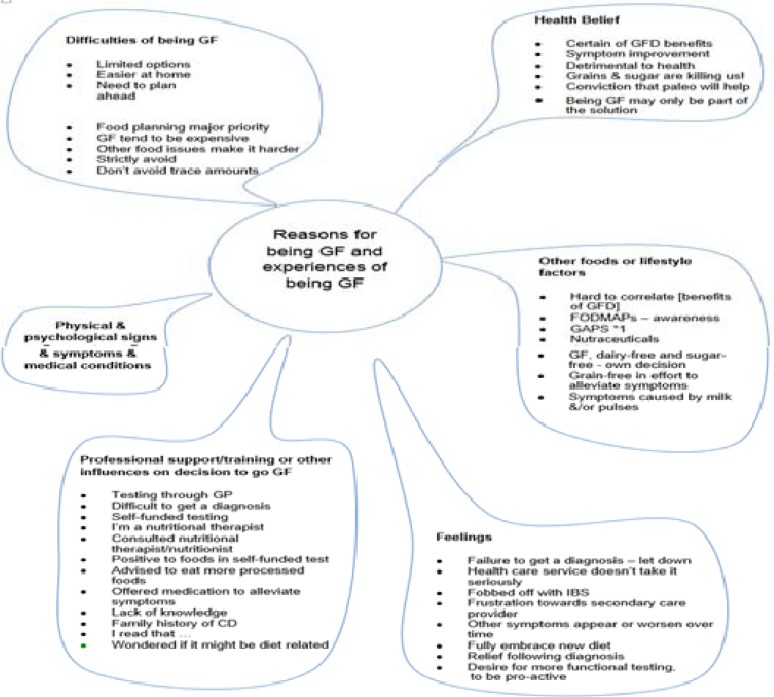
Results: 120 initial responses, 87 were completed in full. 23 respondents fulfilled the inclusion criteria for thematic analysis. 7 different themes emerged, including one for signs/symptoms. Other themes identified included difficulties of a GFD, health beliefs, feelings and influence on decision to follow a GFD. Responses indicate that the reasons for gluten avoidance are in the most part reasoned and logical and were based around participants' self-management of symptoms.
Conclusion: Symptoms included those typical of irritable bowel syndrome (IBS), but also infertility, low mood/energy, immune function and weight management and visual and auditory hallucinations. It appears the majority of responses analysed thematically could fit into the spectrum of non-coeliac gluten sensitivity (NCGS). Findings also suggest more support at all levels of medical care may help patients establish if it is gluten, rather than wheat or FODMAPs particularly fructans that are contributing to signs/symptoms.
Keywords: Coeliac disease; Gluten intolerance; Gluten-free; Non-celiac wheat sensitivity; Non-coeliac gluten sensitivity; Self-management of symptoms.
Figures
References
-
- Terazano E. Healthy appetites drive jump in sales of gluten-free foods. Financial Times. 2017
-
- Aziz I, Sanders DS. Emerging concepts: from coeliac disease to non-coelic gluten sensitivity. Proc Nutr Soc. 2012;71:576–80. - PubMed
-
- Levinovitz A. The Gluten Lie. New York: Regan Arts; 2015 .
-
- Kluger J. Eat More Gluten: The Diet Fad Must Die. Time Magazine. 2014
LinkOut - more resources
Full Text Sources