Heme Oxygenase-1: Clinical Relevance in Ischemic Stroke
- PMID: 30014798
- PMCID: PMC6302555
- DOI: 10.2174/1381612824666180717101104
Heme Oxygenase-1: Clinical Relevance in Ischemic Stroke
Abstract
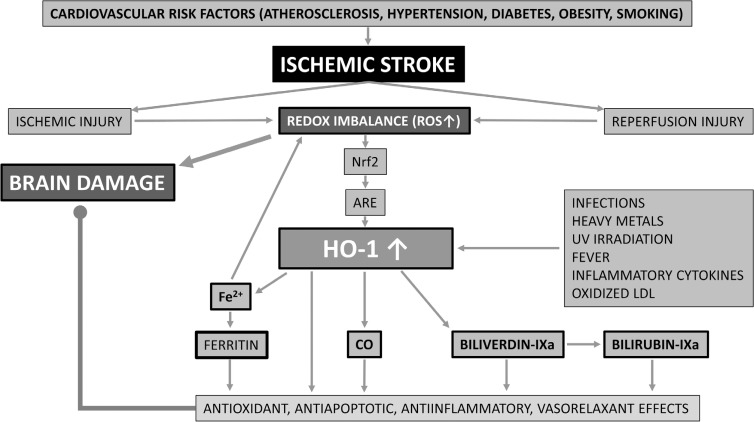
Stroke is the second-leading cause of death and a leading cause of serious long-term disability worldwide, with an increasing global burden due to the growing and aging population. However, strict eligibility criteria for current treatment opportunities make novel therapeutic approaches desirable. Oxidative stress plays a pivotal role during cerebral ischemia, eventually leading to neuronal injury and cell death. The significant correlation between redox imbalance and ischemic stroke has led to various treatment strategies targeting the endogenous antioxidant system in order to ameliorate the adverse prognosis in patients with cerebral infarction. One of the most extensively investigated cellular defense pathway in this regard is the Nrf2-heme oxygenase-1 (HO-1) axis. In this review, our aim is to focus on the potential clinical relevance of targeting the HO-1 pathway in ischemic stroke.
Keywords: Ischemic stroke; antioxidant system; cerebral infarction; cerebral ischemia; heme oxygenase-1; oxidative stress..
Copyright© Bentham Science Publishers; For any queries, please email at epub@benthamscience.org.
Figures
References
-
- Mozaffarian D., Benjamin E.J., Go A.S., et al. Heart disease and stroke statistics - 2016 update. A report from the American Heart Association. Circulation. 2016;133:e38–e360. - PubMed
-
- Powers W.J., Rabinstein A.A., Ackerson T., et al. 2018 Guidelines for the early management of patients with acute ischemic stroke. A guideline for healthcare professionals from the American Heart Association/American Stroke Association. Stroke. 2018;49:e46–e110. - PubMed
Publication types
MeSH terms
Substances
LinkOut - more resources
Full Text Sources
Other Literature Sources
Medical