


Misdiagnosed coronary artery disease-acute aortic syndrome: A case report
- PMID: 30017541
- PMCID: PMC6085229
- DOI: 10.1016/j.cjtee.2018.02.006
Misdiagnosed coronary artery disease-acute aortic syndrome: A case report
Erratum in
-
Erratum regarding missing Declaration of Competing Interest statements in previously published articles.Chin J Traumatol. 2025 Sep;28(5):388. doi: 10.1016/j.cjtee.2020.12.005. Epub 2020 Dec 25. Chin J Traumatol. 2025. PMID: 33371992 Free PMC article. No abstract available.
Abstract
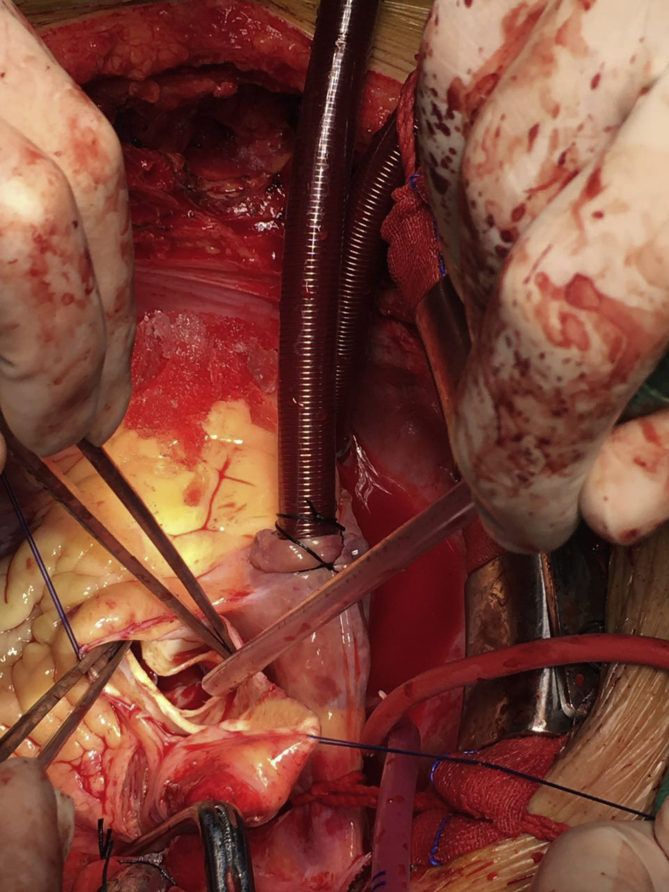
It is estimated that 15% of traffic accidents cause trauma to large vessels. In about 70%-95% of cases, aortic rupture took place in the distal ligament of the left subclavian artery, whereas in the remaining cases rupture occurred in the ascending aorta above the aortic valve. Trauma to the aortic sinus and coronary arteries is rarely found in traffic accident victims. Therefore, coronary artery trauma is often misdiagnosed as coronary atherosclerotic heart disease. The present case is a 42 years old male who survived from a traffic accident. He presented with aortic sinus and left coronary artery trauma. He was misdiagnosed as having coronary atherosclerotic heart disease, and therefore wrongly given antiplatelet medicine, such as aspirin, in another hospital. Definite diagnosis was achieved in our hospital, and the patient underwent Bentall and mitral valve replacement, as well as tricuspid valvuloplasty. The aortic occlusion time during surgery was 47 min, and the total cardiopulmonary bypass time was 63 min. After surgery, transthoracic echocardiography confirmed that all the artificial valves worked sufficiently. The patient felt good and symptoms such as asthma and decreased exercise tolerance disappeared. This case taught us that acute aortic syndrome cannot be ignored when patients present with pectoralgia; antiplatelet medication should not be given before definite diagnosis.
Keywords: Acute aortic syndrome; Chest trauma; Traffic accidents.
Copyright © 2018. Production and hosting by Elsevier B.V.
Figures

References
-
- Atanasijevic T.C., Popovic V.M., Nikolic S.D. Characteristics of chest injury in falls from heights. Leg Med (Tokyo) 2009;11(suppl 1):S315–S317. - PubMed
-
- Goldstein S.A., Evangelista A., Abbara S. Multimodality imaging of diseases of the thoracic aorta in adults: from the American Society of Echocardiography and the European Association of Cardiovascular Imaging: endorsed by the Society of Cardiovascular Computed Tomography and Society for Cardiovascular Magnetic Resonance. J Am Soc Echocardiogr. 2015;28(2):119–182. - PubMed
-
- Meredith E.L., Masani N.D. Echocardiography in the emergency assessment of acute aortic syndromes. Eur J Echocardiogr. 2009;10(1):i31–i39. - PubMed
-
- Vignon P., Guéret P., Vedrinne J.M. Role of transesophageal echocardiography in the diagnosis and management of traumatic aortic disruption. Circulation. 1995;92(10):2959–2968. - PubMed
-
- Erbel R., Aboyans V., Boileau C. 2014 ESC Guidelines on the diagnosis and treatment of aortic diseases: document covering acute and chronic aortic diseases of the thoracic and abdominal aorta of the adult. The task force for the diagnosis and treatment of aortic diseases of the European Society of Cardiology (ESC) Eur Heart J. 2014;35(41):2873–2926. - PubMed
Publication types
MeSH terms
LinkOut - more resources
Full Text Sources
Other Literature Sources
Medical