


Nutritional ketosis delays the onset of isoflurane induced anesthesia
- PMID: 30021521
- PMCID: PMC6052562
- DOI: 10.1186/s12871-018-0554-0
Nutritional ketosis delays the onset of isoflurane induced anesthesia
Abstract
Background: Ketogenic diet (KD) and exogenous ketone supplements can evoke sustained ketosis, which may modulate sleep and sleep-like effects. However, no studies have been published examining the effect of ketosis on the onset of general isoflurane induced anesthesia. Therefore, we investigated the effect of the KD and different exogenous ketogenic supplements on the onset of akinesia induced by inhalation of isoflurane.
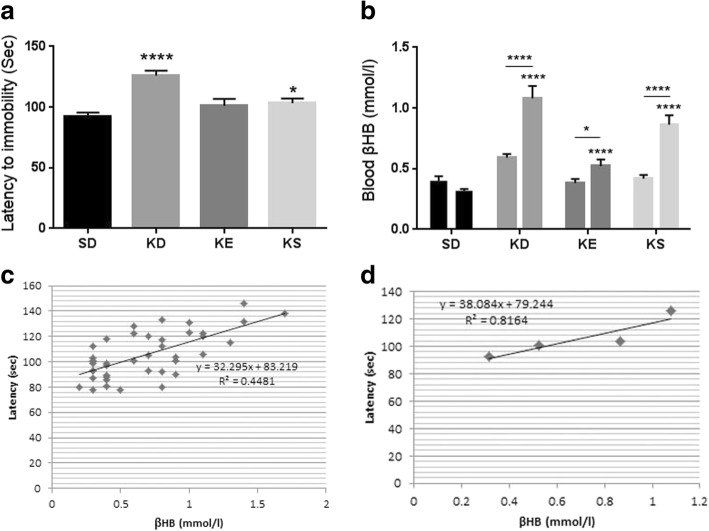
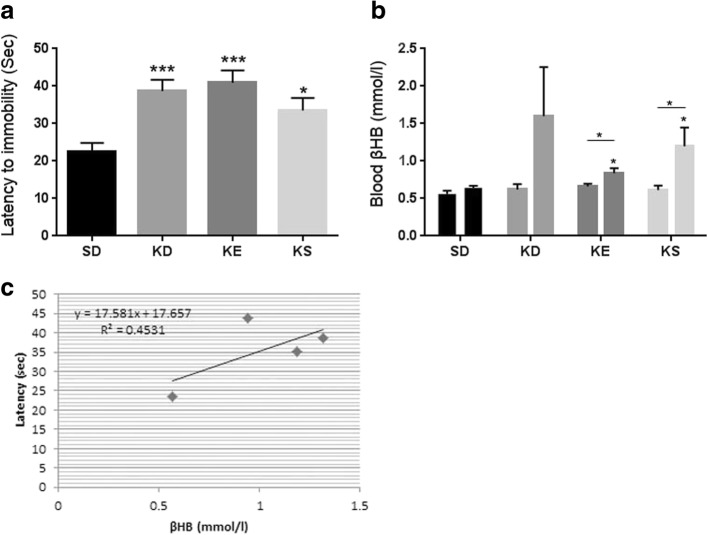
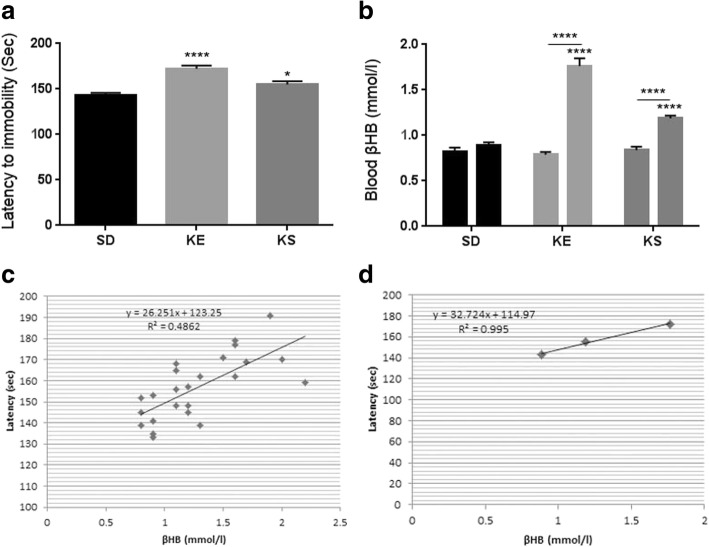
Methods: We used a high fat, medium protein and low carbohydrate diet (KD) chronically (10 weeks) in the glucose transporter 1 (GLUT1) deficiency (G1D) syndrome mice model and sub-chronically (7 days) in Sprague-Dawley (SPD) rats. To investigate the effect of exogenous ketone supplements on anesthetic induction we also provided either 1) a standard rodent chow diet (SD) mixed with 20% ketone salt supplement (KS), or 2) SD mixed with 20% ketone ester supplement (KE; 1,3 butanediol-acetoacetate diester) to G1D mice for 10 weeks. Additionally, SPD rats and Wistar Albino Glaxo Rijswijk (WAG/Rij) rats were fed the SD, which was supplemented by oral gavage of KS or KE for 7 days (SPD rats: 5 g/kg body weight/day; WAG/Rij rats: 2.5 g/kg body weight/day). After these treatments (10 weeks for the mice, and 7 days for the rats) isoflurane (3%) was administered in an anesthesia chamber, and the time until anesthetic induction (time to immobility) was measured. Blood ketone levels were measured after anesthetic induction and correlation was calculated for blood beta-hydroxybutyrate (βHB) and anesthesia latency.
Results: Both KD and exogenous ketone supplementation increased blood ketone levels and delayed the onset of isoflurane-induced immobility in all investigated rodent models, showing positive correlation between the two measurements. These results demonstrate that elevated blood ketone levels by either KD or exogenous ketones delayed the onset of isoflurane-induced anesthesia in these animal models.
Conclusions: These findings suggest that ketone levels might affect surgical anesthetic needs, or could potentially decrease or delay effects of other narcotic gases.
Keywords: Anesthesia; Anesthetic induction; Exogenous ketogenic supplements; Isoflurane; Ketogenic diet; Ketones; Ketosis; Latency; Rodent models.
Conflict of interest statement
Ethics approval and consent to participate
Animal treatments were carried out according to the University of South Florida Institutional Animal Care and Use Committee (IACUC) guidelines (Protocol #00001749 and # 00000457), Hungarian Act of Animal Care and Experimentation (1998, XXVIII, section 243), European Communities Council Directive 24 November 1986 (86/609/EEC) and EU Directive 2010/63/EU to use and treat animals in experimental laboratories. The experimental design was approved by the Animal Care and Experimentation Committee of the Eötvös Loránd University (Savaria Campus) and National Scientific Ethical Committee on Animal Experimentation (Hungary) under license number VA/ÉBNTF02/85–8/2016.
Consent for publication
Not applicable.
Competing interests
International Patent # PCT/US2014/031237, University of South Florida for DPD: “Compositions and Methods for Producing Elevated and Sustained Ketosis”. Non provisional patent No. 210112–9018-US01 for CA and DPD: “Methods of Increasing Latency to Anesthetic Induction using Ketone Supplementation”. Technology Title: “Methods of Increasing Latency of Anesthetic Induction Using Ketone Supplementation”. All authors declare that there are no additional conflicts of interest.
Publisher’s Note
Springer Nature remains neutral with regard to jurisdictional claims in published maps and institutional affiliations.
Figures
References
-
- D'Agostino DP, Pilla R, Held HE, Landon CS, Puchowicz M, Brunengraber H, Ari C, Arnold P, Dean JB. Therapeutic ketosis with ketone ester delays central nervous system oxygen toxicity seizures in rats. Am J Physiol Regul Integr Comp Physiol. 2013;304(10):829–836. doi: 10.1152/ajpregu.00506.2012. - DOI - PubMed
Publication types
MeSH terms
Substances
LinkOut - more resources
Full Text Sources
Other Literature Sources
Medical
Miscellaneous
