


The Toronto Cognitive Assessment (TorCA): normative data and validation to detect amnestic mild cognitive impairment
- PMID: 30021658
- PMCID: PMC6052695
- DOI: 10.1186/s13195-018-0382-y
The Toronto Cognitive Assessment (TorCA): normative data and validation to detect amnestic mild cognitive impairment
Erratum in
-
Correction to: The Toronto cognitive assessment (TorCA): normative data and validation to detect amnestic mild cognitive impairment.Alzheimers Res Ther. 2018 Dec 7;10(1):120. doi: 10.1186/s13195-018-0446-z. Alzheimers Res Ther. 2018. PMID: 30526675 Free PMC article.
Abstract
Background: A need exists for easily administered assessment tools to detect mild cognitive changes that are more comprehensive than screening tests but shorter than a neuropsychological battery and that can be administered by physicians, as well as any health care professional or trained assistant in any medical setting. The Toronto Cognitive Assessment (TorCA) was developed to achieve these goals.
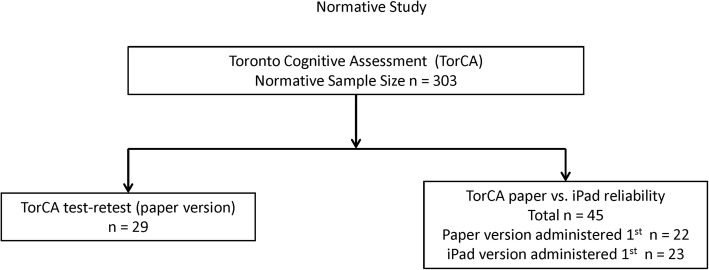
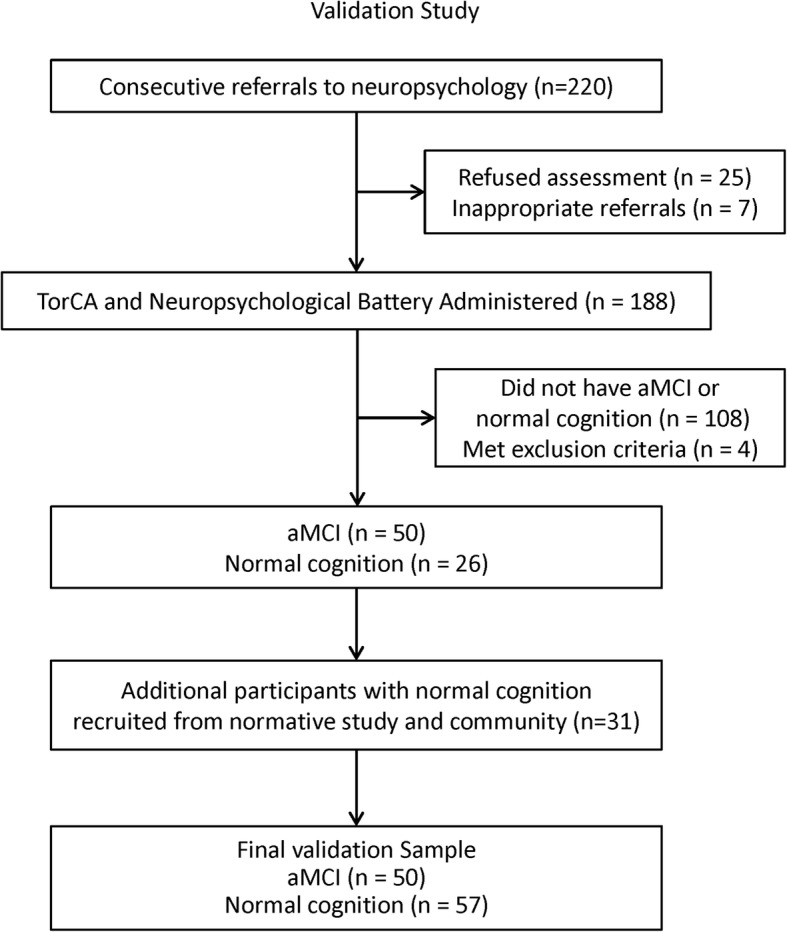
Methods: We obtained normative data on the TorCA (n = 303), determined test reliability, developed an iPad version, and validated the TorCA against neuropsychological assessment for detecting amnestic mild cognitive impairment (aMCI) (n = 50/57, aMCI/normal cognition). For the normative study, healthy volunteers were recruited from the Rotman Research Institute registry. For the validation study, the sample was comprised of participants with aMCI or normal cognition based on neuropsychological assessment. Cognitively normal participants were recruited from both healthy volunteers in the normative study sample and the community.
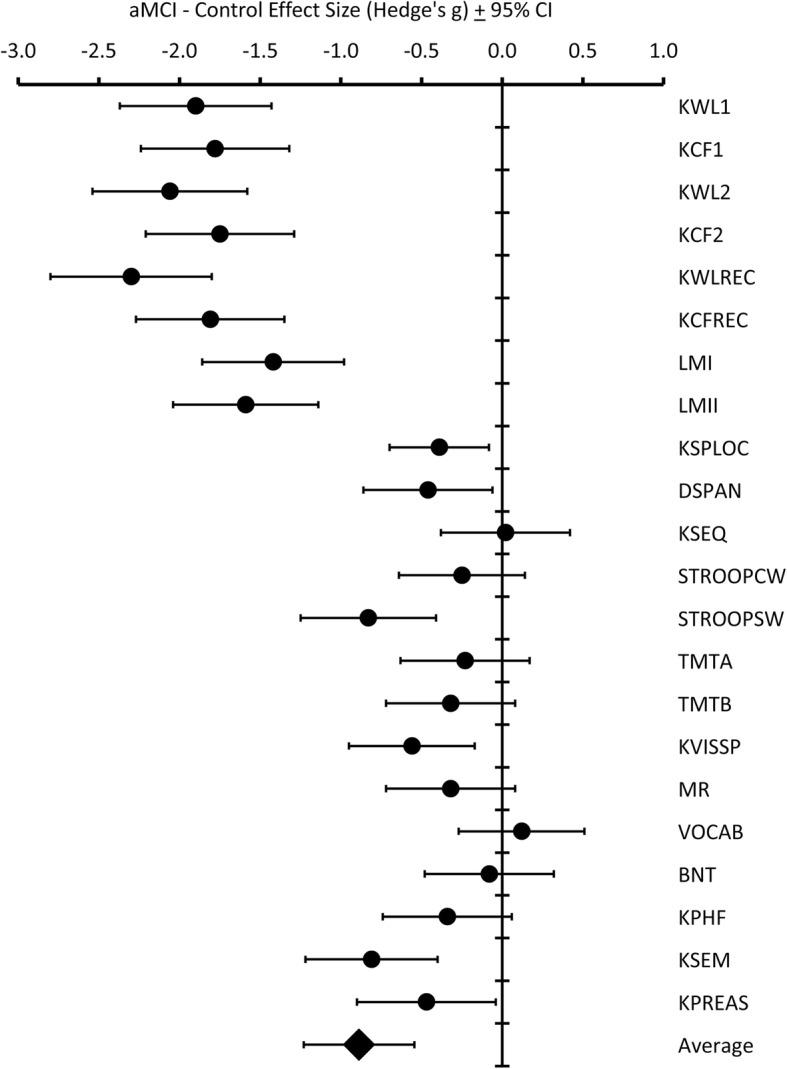
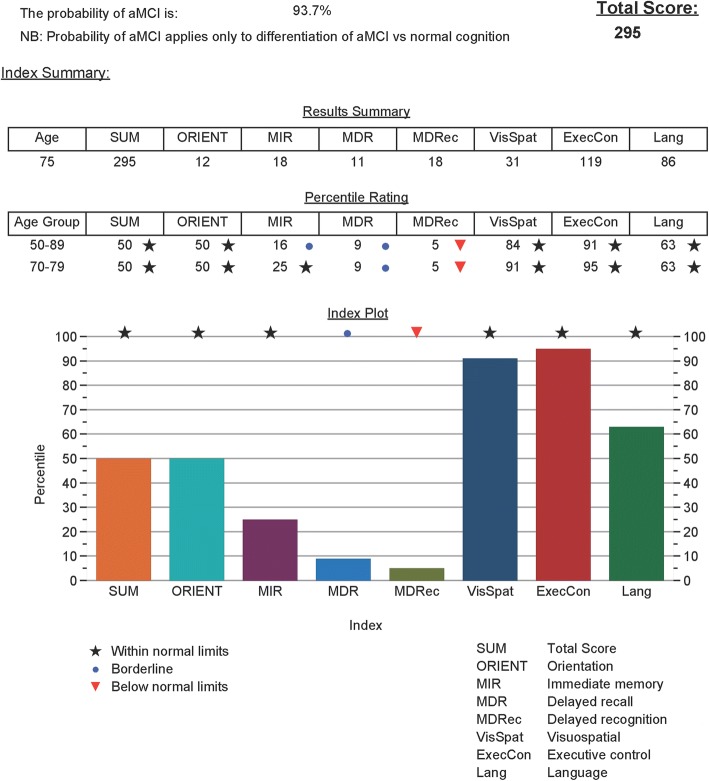
Results: The TorCA provides a stable assessment of multiple cognitive domains. The total score correctly classified 79% of participants (sensitivity 80%; specificity 79%). In an exploratory logistic regression analysis, indices of Immediate Verbal Recall, Delayed Verbal and Visual Recall, Visuospatial Function, and Working Memory/Attention/Executive Control, a subset of the domains assessed by the TorCA, correctly classified 92% of participants (sensitivity 92%; specificity 91%). Paper and iPad version scores were equivalent.
Conclusions: The TorCA can improve resource utilization by identifying patients with aMCI who may not require more resource-intensive neuropsychological assessment. Future studies will focus on cross-validating the TorCA for aMCI, and validation for disorders other than aMCI.
Keywords: Cognitive assessment; Diagnosis; Mild cognitive impairment; Normative study; TorCA; Toronto Cognitive Assessment; Validation.
Conflict of interest statement
Authors' information
Tom Gee is now at Indoc Research, Toronto, ON, Canada. Barry D. Greenberg is now at Department of Neurology, Johns Hopkins University School of Medicine, Baltimore, MD, USA.
Ethics approval and consent to participate
The study was approved by the Research Ethics Board at Baycrest Health Sciences. Written informed consent was obtained from all participants.
Competing interests
MF received financial support for a Behavioural Neurology fellow from Eli Lilly Canada, served on an advisory board for Eli Lilly Canada, receives royalties for a book on Clock Drawing from Oxford University Press, is listed on a provisional patent related to methods and kits for differential diagnosis of Alzheimer’s disease vs frontotemporal dementia using blood biomarkers, and may be listed on the planned patent application, and serves on the editorial board of
Publisher’s Note
Springer Nature remains neutral with regard to jurisdictional claims in published maps and institutional affiliations.
Figures
References
-
- Morris JC, Mohs RC, Rogers H, Fillenbaum G, Heyman A. Consortium to Establish a Registry for Alzheimer’s Disease (CERAD) clinical and neuropsychological assessment of Alzheimer's disease. Psychopharmacol Bull. 1988;24:641–652. - PubMed
-
- Possin KL, Laluz VR, Alcantar OZ, Miller BL, Kramer JH. Distinct neuroanatomical substrates and cognitive mechanisms of figure copy performance in Alzheimer's disease and behavioral variant frontotemporal dementia. Neuropsychologia. 2011;49:43–48. doi: 10.1016/j.neuropsychologia.2010.10.026. - DOI - PMC - PubMed
Publication types
MeSH terms
Grants and funding
LinkOut - more resources
Full Text Sources
Other Literature Sources
Medical
