


A meta-analysis and systematic review evaluating the use of erythropoietin in total hip and knee arthroplasty
- PMID: 30022832
- PMCID: PMC6044356
- DOI: 10.2147/TCRM.S159134
A meta-analysis and systematic review evaluating the use of erythropoietin in total hip and knee arthroplasty
Abstract
Purpose: The debate is still ongoing on the effectiveness and safety of erythropoietin (EPO) treatment in orthopedic surgeries. Specifically, previous studies have not compared the dynamic change of hemoglobin (Hb) levels between different transfusion methods. Besides, complications or side effects of this alternative have not been quantitatively analyzed. We conducted a meta-analysis and systemic review to evaluate the efficacy of EPO on Hb levels observed during the whole perioperative period as well as the volume of allogeneic blood transfusion (ABT), the risk of venous thromboembolism, and application frequency of ABT in hip and knee surgery.
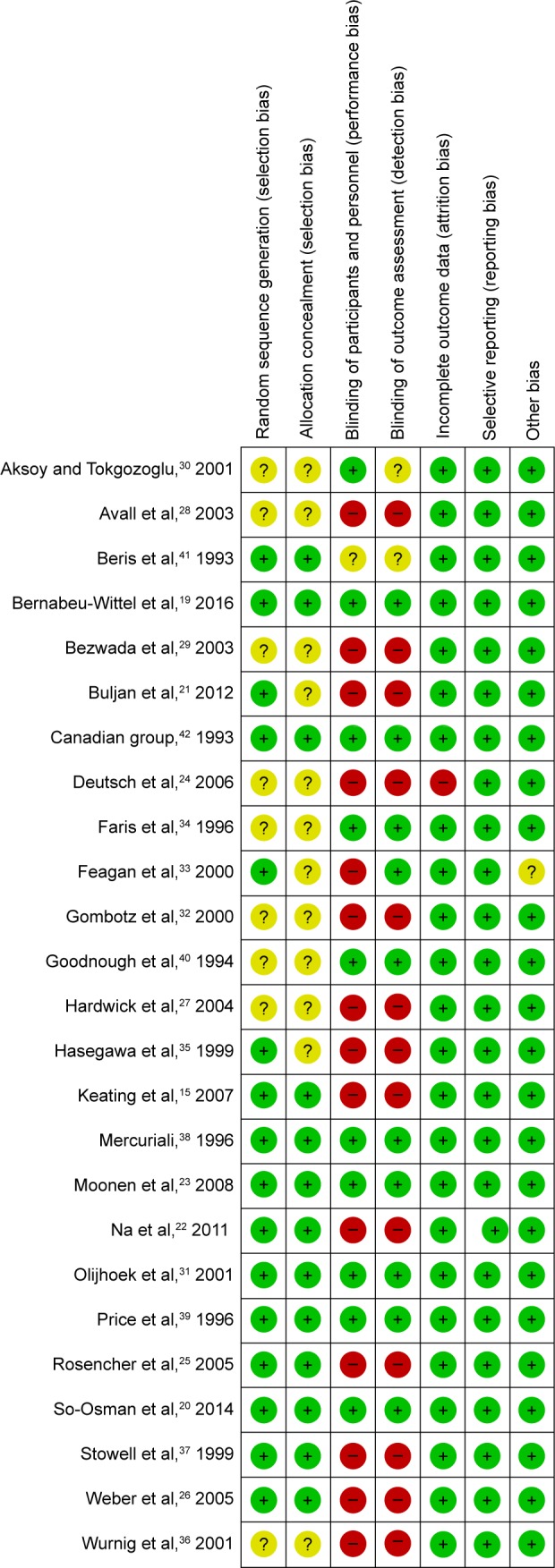
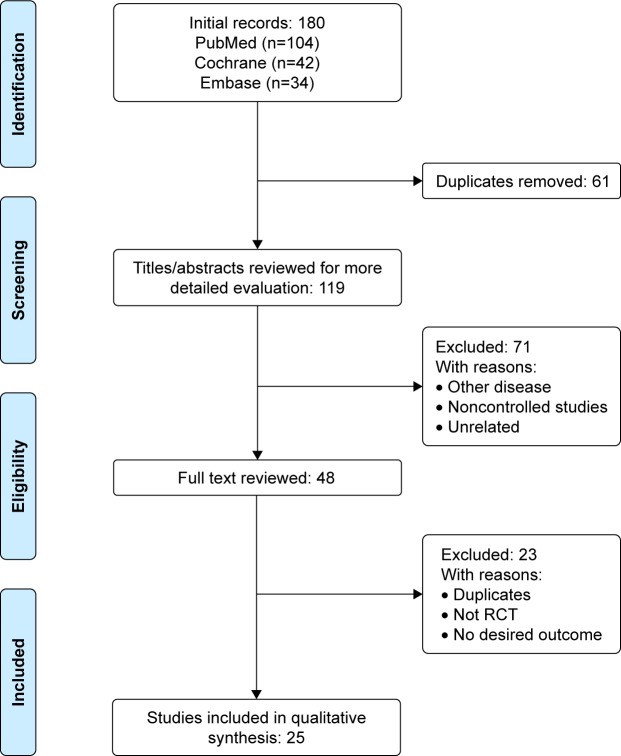
Materials and methods: PubMed, Embase, Web of Science, and the Cochrane library were systematically searched from inception to November 2017. The data from randomized controlled trials were extracted and the risk of bias assessed using Cochrane's Collaboration's tool.
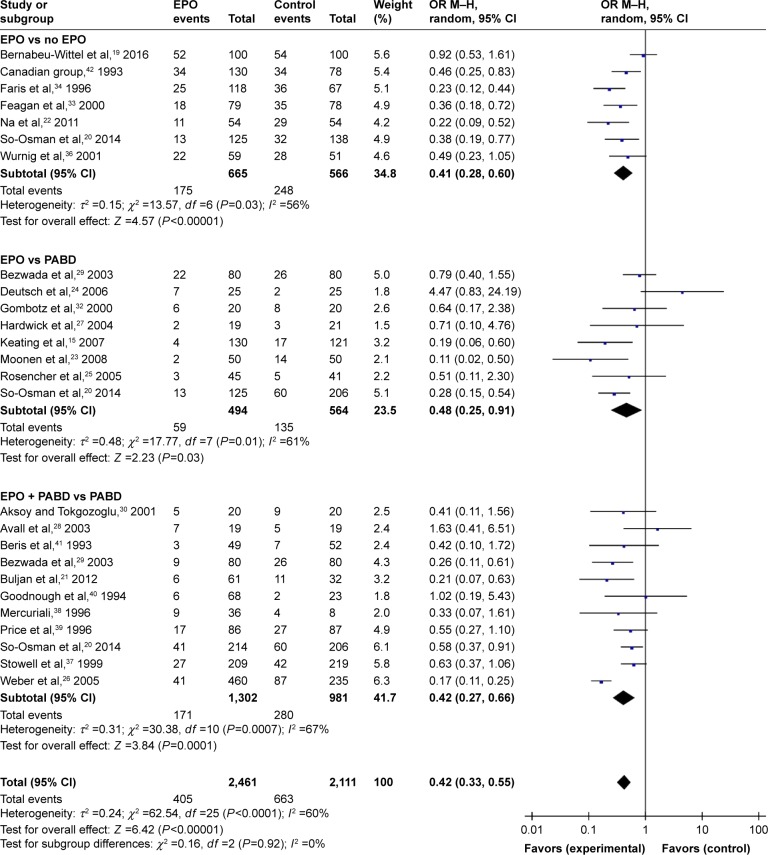
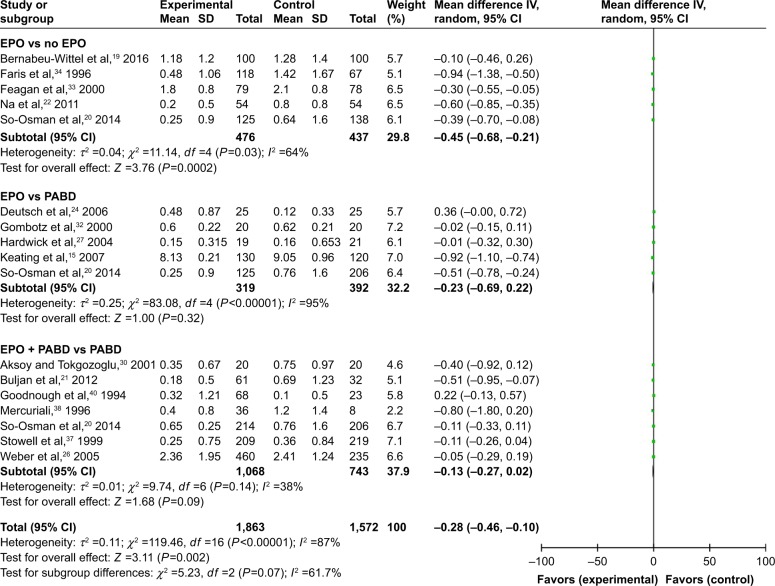
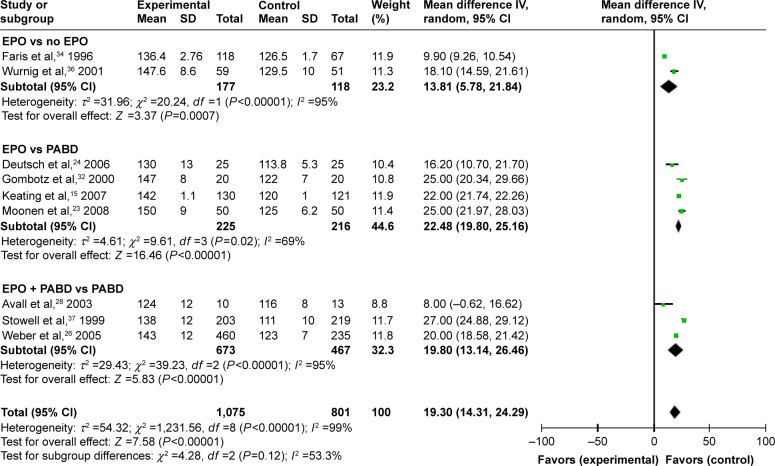
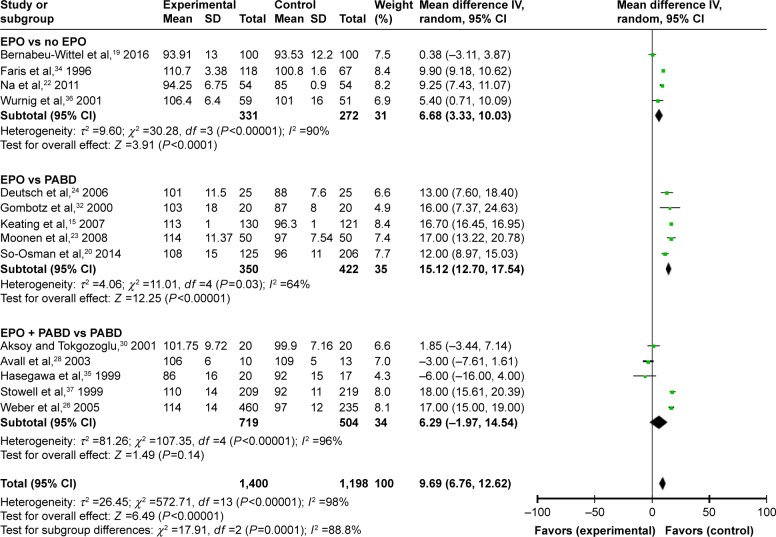
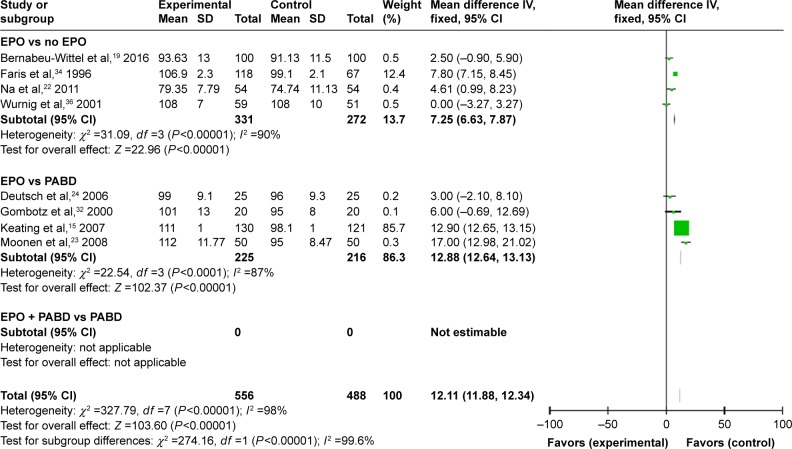
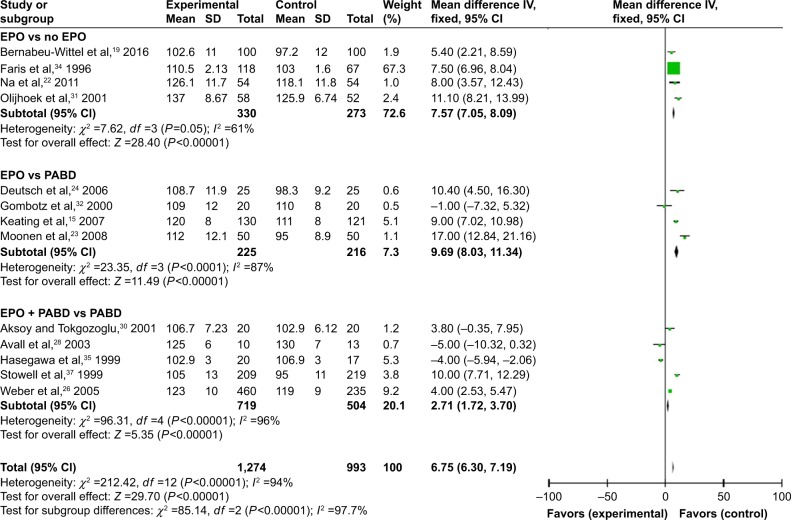
Results: Twenty-five randomized controlled trials involving 4,159 patients were included in this meta-analysis. EPO could reduce exposure to allogeneic blood transfused (odds ratio [OR] =0.42, P=0.001) and reduce the average volume of allogeneic blood transfused (OR = -0.28, P=0.002). When EPO and preoperative autologous blood donation (PABD) were compared, the use of EPO was associated with lower exposure to ABT (OR =0.48, P=0.03), but no significant decrease in the average volume of allogeneic blood transfused (OR = -0.23, P=0.32). The use of EPO was associated with a higher level of Hb with or without use of PABD at all the 4 time points (preoperation, 24-48 hours postoperation, 3-5 days postoperation, discharge of last observation) (P<0.0001), which means EPO could increase the level of Hb significantly during the perioperative period. The results also indicated EPO does not increase the risk of a venous thromboembolism event.
Conclusion: Preoperative administration of EPO was shown to generally increase Hb levels during the whole perioperative period; however, the extent of the positive effects varies with time points. Additionally, EPO minimizes the need for transfusion significantly in patients undergoing hip or knee surgery without increasing the chance of developing thrombotic complications. Therefore, EPO offers an alternative blood management strategy in total hip arthroplasty and total knee arthroplasty.
Keywords: allogeneic transfusion; autologous blood donation; erythropoietin; hemoglobin; total hip arthroplasty; total knee arthroplasty.
Conflict of interest statement
Disclosure The authors report no conflicts of interest in this work.
Figures
References
-
- Tran DHD, Wong GT, Chee YE, Irwin MG. Effectiveness and safety of erythropoiesis-stimulating agent use in the perioperative period. Expert Opin Biol Ther. 2014;14(1):51–61. - PubMed
-
- Voorn VMA, van der Hout A, So-Osman C, et al. Erythropoietin to reduce allogeneic red blood cell transfusion in patients undergoing total hip or knee arthroplasty. Vox Sang. 2016;111(3):219–225. - PubMed
-
- Alsaleh K, Alotaibi GS, Almodaimegh HS, Aleem AA, Kouroukis CT. The use of preoperative erythropoiesis-stimulating agents (ESAs) in patients who underwent knee or hip arthroplasty. J Arthroplasty. 2013;28(9):1463–1472. - PubMed
-
- Stivelman JC. Target-based anemia management with erythropoiesis stimulating agents (risks and benefits relearned) and iron (still more to learn) Semin Dial. 2017;30(2):142–148. - PubMed
Publication types
LinkOut - more resources
Full Text Sources
Other Literature Sources
Medical
Research Materials
