


Aqueous Extract of Pepino (Solanum muriactum Ait) Leaves Ameliorate Lipid Accumulation and Oxidative Stress in Alcoholic Fatty Liver Disease
- PMID: 30037014
- PMCID: PMC6073701
- DOI: 10.3390/nu10070931
Aqueous Extract of Pepino (Solanum muriactum Ait) Leaves Ameliorate Lipid Accumulation and Oxidative Stress in Alcoholic Fatty Liver Disease
Abstract
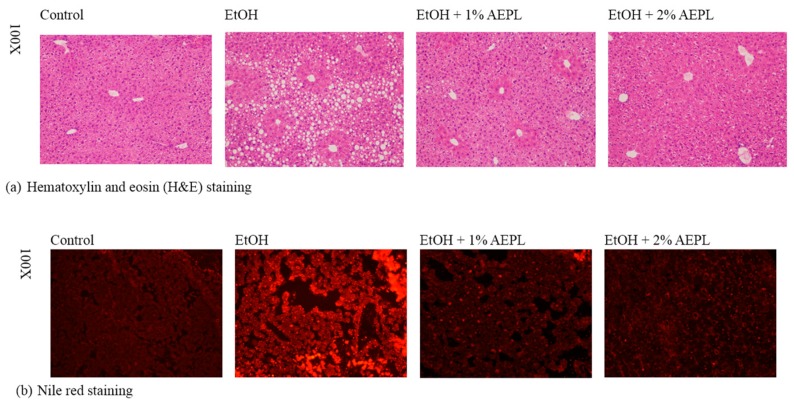
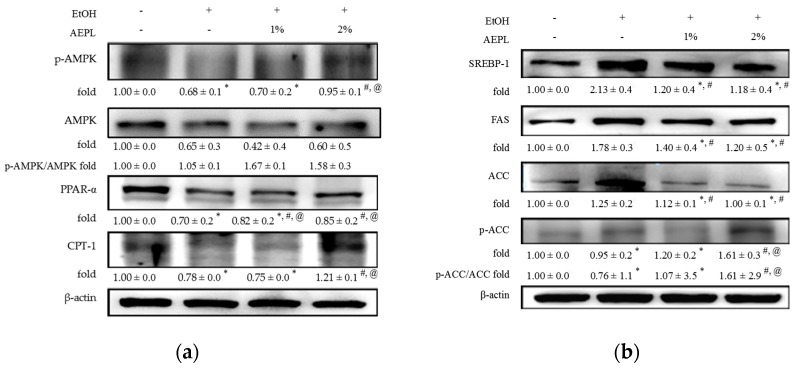
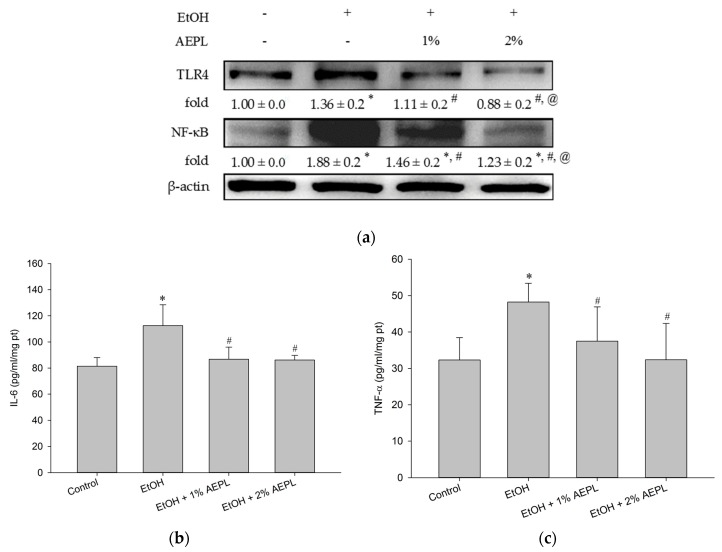
Chronic alcohol intake leads to alcoholic fatty liver. The pathogenesis of alcoholic fatty liver is related to abnormal lipid accumulation, oxidative stress, endotoxins, and cytokines. Solanum muricatum Ait. (Pepino) is a plant food commonly cultivated in the Penghu island, Taiwan. Previous studies indicated that the aqueous extract of pepino was able to attenuate diabetic progression via its antioxidative and anti-inflammatory effects. However, the mechanisms of the antioxidative and anti-inflammatory effects of pepino leaf in preventing alcoholic fatty liver remain unknown. In this study, Lieber⁻DeCarli ethanol-containing liquid diet was used to induce alcoholic hepatic injury in C57BL/6 mice. The hepatoprotective effects and the related mechanisms of aqueous extract of pepino leaf (AEPL) were examined. Our results showed that 2% AEPL treatments protected the liver from ethanol-induced injury through reducing serum levels of aspartate aminotransferase (AST), alanine aminotransferase (ALT), total cholesterol (TC) and triglyceride (TG) (all p < 0.05). AEPL had the effects in improving the ethanol-induced lipid accumulation in mice under histological examination. Molecular data indicated that the anti-lipid accumulation effect of AEPL might be mediated via inducing hepatic levels of phospho-adenosine monophosphate-activated kinase (p-AMPK) and peroxisome proliferator-activated receptor (PPAR)-α, and reducing the expressions of hepatic lipogenic enzymes, including sterol regulatory element-binding protein (SREBP)-1c, acetyl-CoA carboxylase (ACC), and fatty acid synthase (FAS) (all p < 0.05). AEPL also decreased hepatic levels of thiobarbituric acid relative substances (TBARS), tumor necrosis factor (TNF)-α, and interleukin (IL)-6, as well as the expression of nuclear factor kappa B (NF-κB) (all p < 0.05). Moreover, AEPL significantly elevated the activities of superoxide dismutase (SOD), catalase, and glutathione peroxidase (GPx), and glutathione (GSH) content compared to the ethanol-fed group (all p < 0.05). Our present study suggests that AEPL could protect the liver against ethanol-induced oxidative injury and lipid accumulation.
Keywords: alcoholic fatty liver disease; anti-inflammation; aqueous extract of pepino leaf; functional foods; oxidative stress.
Conflict of interest statement
The authors declare no conflict of interest.
Figures
References
-
- Li Y., Xu S., Mihaylova M.M., Zheng B., Hou X., Jiang B., Park O., Luo Z., Lefai E., Shyy J.Y., et al. AMPK phosphorylates and inhibits SREBP activity to attenuate hepatic steatosis and atherosclerosis in diet-induced insulin-resistant mice. Cell Metab. 2011;13:376–388. doi: 10.1016/j.cmet.2011.03.009. - DOI - PMC - PubMed
MeSH terms
Substances
LinkOut - more resources
Full Text Sources
Other Literature Sources
Medical
Research Materials
Miscellaneous
