


A prospective longitudinal study of Reactive Attachment Disorder following early institutional care: considering variable- and person-centered approaches
- PMID: 30037301
- PMCID: PMC6344314
- DOI: 10.1080/14616734.2018.1499208
A prospective longitudinal study of Reactive Attachment Disorder following early institutional care: considering variable- and person-centered approaches
Abstract
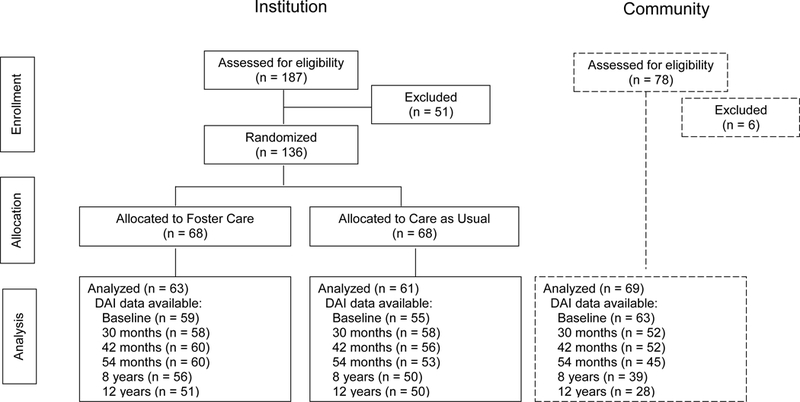
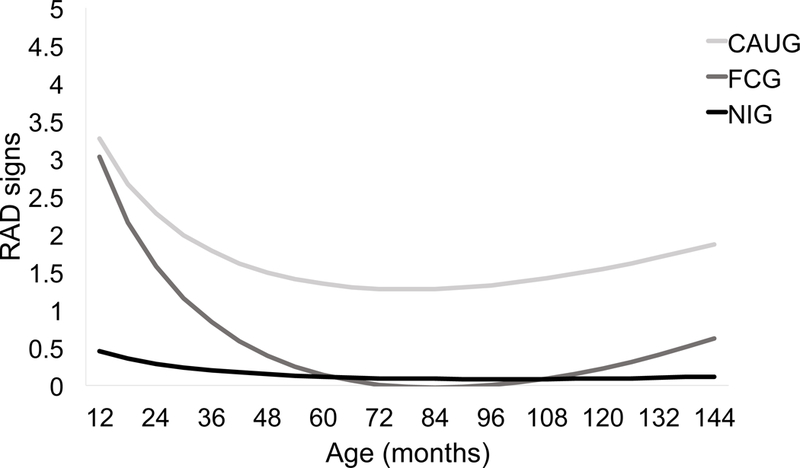
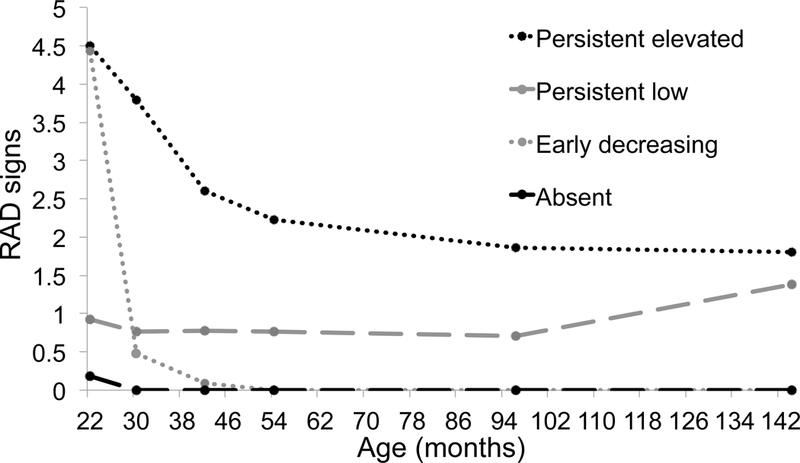
Although the study of reactive attachment disorder (RAD) in early childhood has received considerable attention, there is emerging interest in RAD that presents in school age children and adolescents. We examined the course of RAD signs from early childhood to early adolescence using both variable-centered (linear mixed modeling) and person-centered (growth mixture modeling) approaches. One-hundred twenty-four children with a history of institutional care from the Bucharest Early Intervention Project, a randomized controlled trial of foster care as an alternative to institutional care, as well as 69 community comparison children were included in the study. While foster care was associated with steep reductions in RAD signs across development, person-centered approaches indicated that later age of placement into families and greater percent time in institutional care were each associated with prolonged elevated RAD signs. Findings suggest the course of RAD is variable but substantially influenced by early experiences.
Keywords: Reactive attachment disorder; deprivation; institutional care; person-centered analyses; variable-centered analyses.
Figures
References
-
- American Psychiatric Association. (1980). Diagnostic and statistical manual of mental disorders (3rd ed.). Washington, DC: Author.
-
- American Psychiatric Association. (2013). Diagnostic and Statistical Manual of Mental Disorders, 5th Edition (DSM-5) Diagnostic and Statistical Manual of Mental Disorders 4th edition TR. Arlington, VA: American Psychiatric Publishing.
-
- American Psychiatric Association, & Association, A. A. P. (1994). DSM-IV-TR: Diagnostic and Statistical Manual of Mental Disorders. Washington, DC, Virginia: American Psychiatric Association.
Publication types
MeSH terms
Grants and funding
LinkOut - more resources
Full Text Sources
Other Literature Sources
