


Analysis and Correction of Inappropriate Image Duplication: the Molecular and Cellular Biology Experience
- PMID: 30037982
- PMCID: PMC6168979
- DOI: 10.1128/MCB.00309-18
Analysis and Correction of Inappropriate Image Duplication: the Molecular and Cellular Biology Experience
Abstract
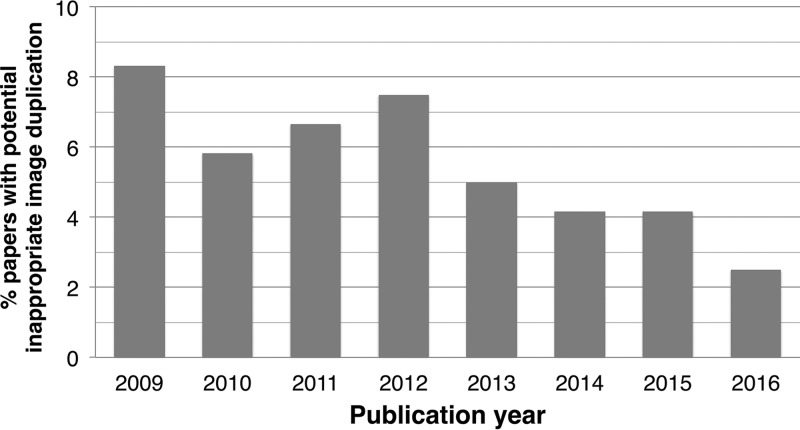
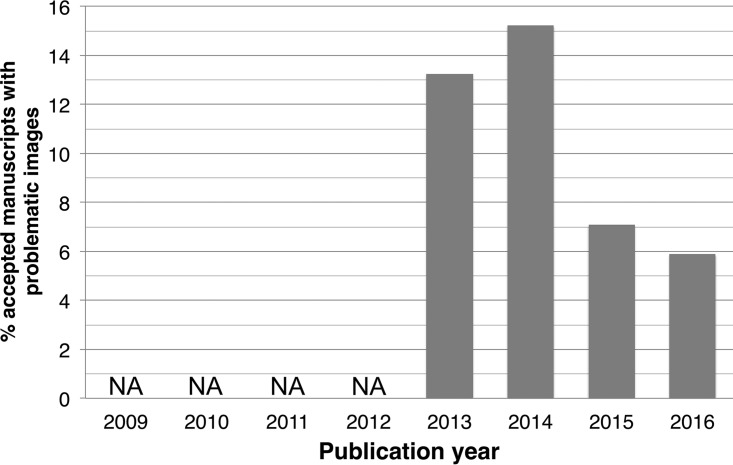
We analyzed 960 papers published in Molecular and Cellular Biology (MCB) from 2009 to 2016 and found 59 (6.1%) to contain inappropriately duplicated images. The 59 instances of inappropriate image duplication led to 41 corrections, 5 retractions, and 13 instances in which no action was taken. Our experience suggests that the majority of inappropriate image duplications result from errors during figure preparation that can be remedied by correction. Nevertheless, ∼10% of papers with inappropriate image duplications in MCB were retracted (∼0.5% of total). If this proportion is representative, then as many as 35,000 papers in the literature are candidates for retraction due to inappropriate image duplication. The resolution of inappropriate image duplication concerns after publication required an average of 6 h of journal staff time per published paper. MCB instituted a pilot program to screen images of accepted papers prior to publication that identified 12 manuscripts (14.5% out of 83) with image concerns in 2 months. The screening and correction of papers before publication required an average of 30 min of staff time per problematic paper. Image screening can identify papers with problematic images prior to publication, reduces postpublication problems, and requires less staff time than the correction of problems after publication.
Keywords: duplications; image; publication.
Copyright © 2018 American Society for Microbiology.
Figures
References
MeSH terms
LinkOut - more resources
Full Text Sources
Other Literature Sources
