


Exposure to galactic cosmic radiation compromises DNA repair and increases the potential for oncogenic chromosomal rearrangement in bronchial epithelial cells
- PMID: 30038404
- PMCID: PMC6056477
- DOI: 10.1038/s41598-018-29350-5
Exposure to galactic cosmic radiation compromises DNA repair and increases the potential for oncogenic chromosomal rearrangement in bronchial epithelial cells
Abstract
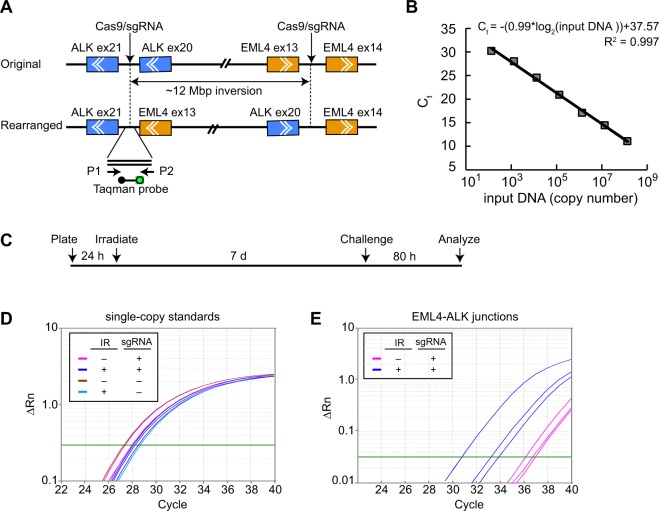
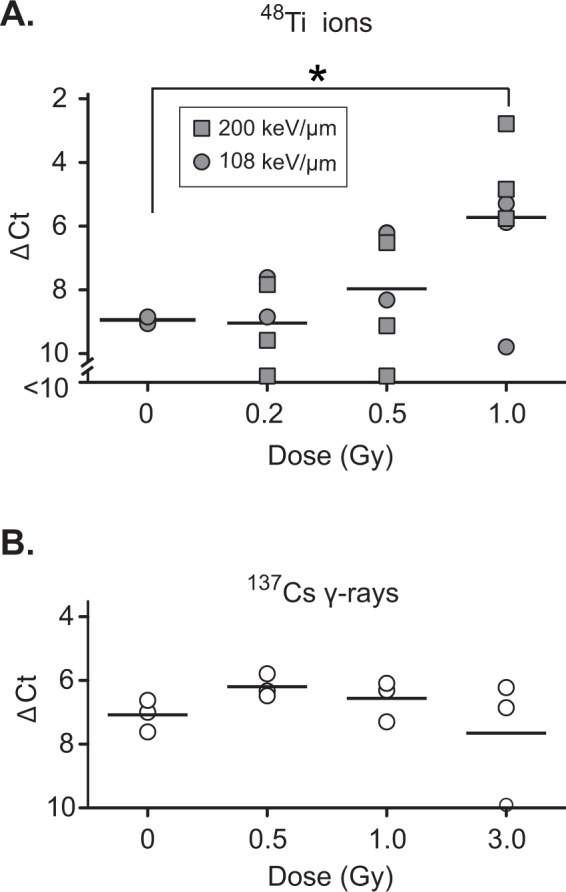
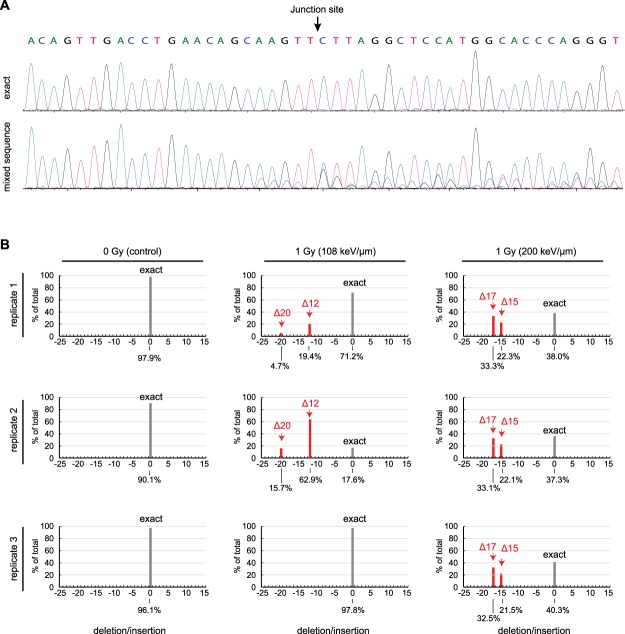
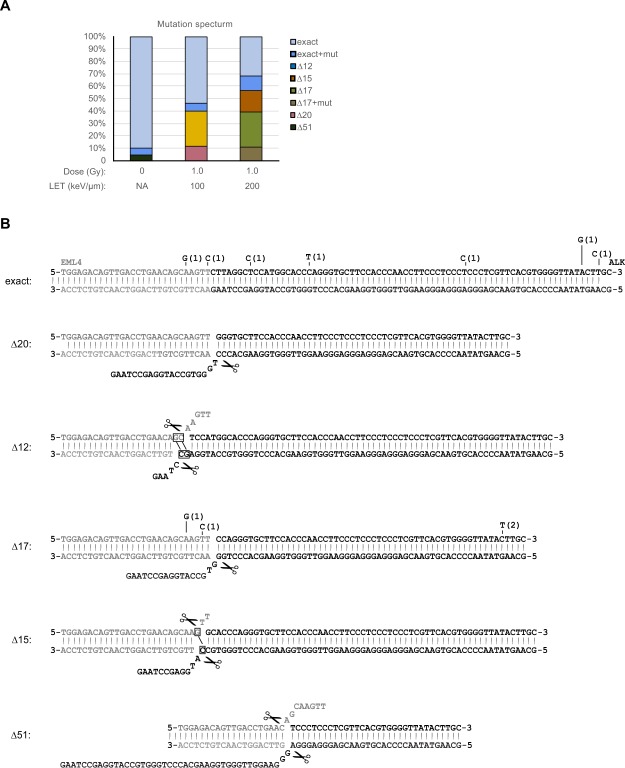
Participants in deep space missions face protracted exposure to galactic cosmic radiation (GCR). In this setting, lung cancer is a significant component of the overall risk of radiation-exposure induced death. Here we investigate persistent effects of GCR exposure on DNA repair capacity in lung-derived epithelial cells, using an enzyme-stimulated chromosomal rearrangement as an endpoint. Replicate cell cultures were irradiated with energetic 48Ti ions (a GCR component) or reference γ-rays. After a six-day recovery, they were challenged by expression of a Cas9/sgRNA pair that creates double-strand breaks simultaneously in the EML4 and ALK loci, misjoining of which creates an EML4-ALK fusion oncogene. Misjoining was significantly elevated in 48Ti-irradiated populations, relative to the baseline rate in mock-irradiated controls. The effect was not seen in γ-ray irradiated populations exposed to equal or higher radiation doses. Sequence analysis of the EML4-ALK joints from 48Ti-irradiated cultures showed that they were far more likely to contain deletions, sometimes flanked by short microhomologies, than equivalent samples from mock-irradiated cultures, consistent with a shift toward error-prone alternative nonhomologous end joining repair. Results suggest a potential mechanism by which a persistent physiological effect of GCR exposure may increase lung cancer risk.
Conflict of interest statement
The authors declare no competing interests.
Figures
References
Publication types
MeSH terms
Grants and funding
- NNX15AD63G/NASA/NASA/United States
- NNX11AC30G/NASA/NASA/United States
- NNX11AC54G/National Aeronautics and Space Administration (NASA)/International
- NNX15AD63G/NASA/NASA/United States
- NNX11AC30G/NASA/NASA/United States
- NNX11AC54G/National Aeronautics and Space Administration (NASA)/International
- NNX15AD63G/NASA/NASA/United States
- NNX11AC30G/NASA/NASA/United States
- NNX11AC54G/National Aeronautics and Space Administration (NASA)/International
- NNX15AD63G/NASA/NASA/United States
- NNX11AC30G/NASA/NASA/United States
- NNX11AC54G/National Aeronautics and Space Administration (NASA)/International
- NNX15AD63G/NASA/NASA/United States
- NNX11AC30G/NASA/NASA/United States
- NNX11AC54G/National Aeronautics and Space Administration (NASA)/International
- NNX15AD63G/NASA/NASA/United States
- NNX11AC30G/NASA/NASA/United States
- NNX11AC54G/National Aeronautics and Space Administration (NASA)/International
- NNX11AC30G/NASA/NASA/United States
- NNX11AC54G/National Aeronautics and Space Administration (NASA)/International
- NNX15AD63G/NASA/NASA/United States
- NNX11AC30G/NASA/NASA/United States
- NNX15AD63G/NASA/NASA/United States
- NNX11AC30G/NASA/NASA/United States
- NNX11AC54G/National Aeronautics and Space Administration (NASA)/International
LinkOut - more resources
Full Text Sources
Other Literature Sources
Research Materials
