


The legacy of 4,500 years of polyculture agroforestry in the eastern Amazon
- PMID: 30038410
- PMCID: PMC6119467
- DOI: 10.1038/s41477-018-0205-y
The legacy of 4,500 years of polyculture agroforestry in the eastern Amazon
Abstract
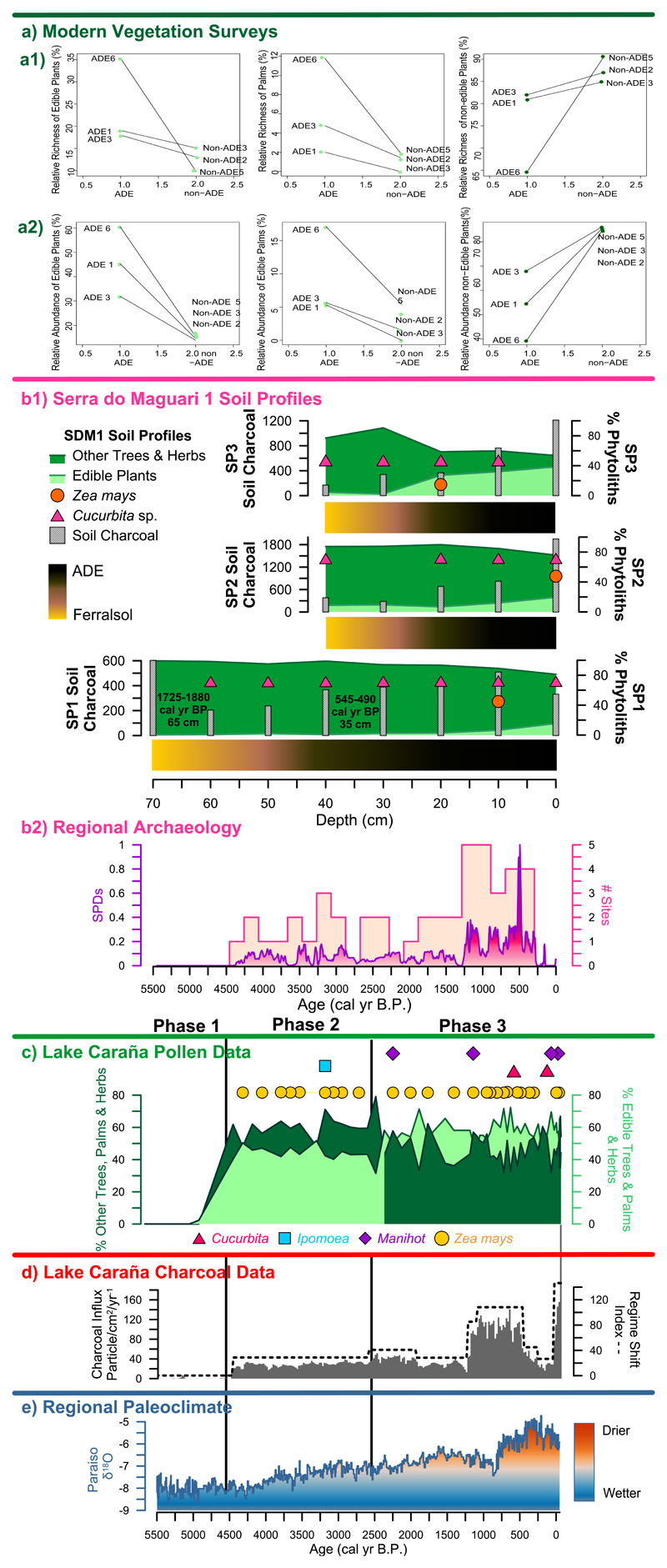
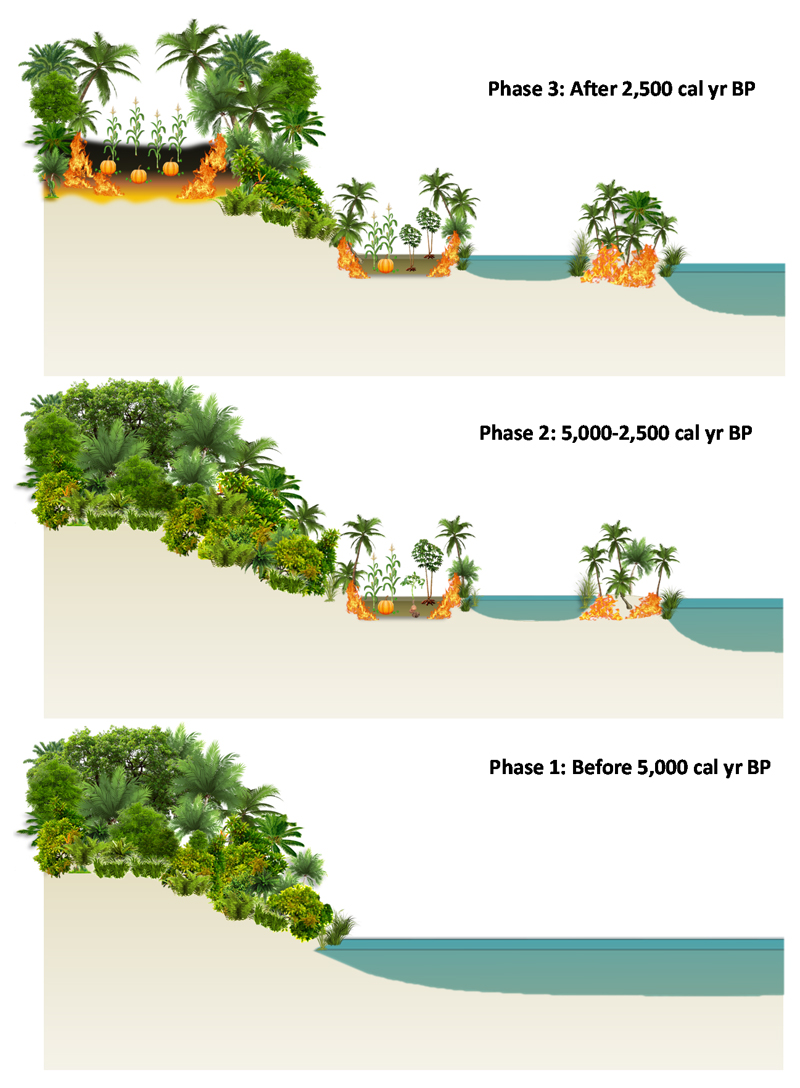
The legacy of pre-Columbian land use in the Amazonian rainforest is one of the most controversial topics in the social1-10 and natural sciences11,12. Until now, the debate has been limited to discipline-specific studies, based purely on archaeological data8, modern vegetation13, modern ethnographic data3 or a limited integration of archaeological and palaeoecological data12. The lack of integrated studies to connect past land use with modern vegetation has left questions about the legacy of pre-Columbian land use on the modern vegetation composition in the Amazon, unanswered11. Here, we show that persistent anthropogenic landscapes for the past 4,500 years have had an enduring legacy on the hyperdominance of edible plants in modern forests in the eastern Amazon. We found an abrupt enrichment of edible plant species in fossil lake and terrestrial records associated with pre-Columbian occupation. Our results demonstrate that, through closed-canopy forest enrichment, limited clearing for crop cultivation and low-severity fire management, long-term food security was attained despite climate and social changes. Our results suggest that, in the eastern Amazon, the subsistence basis for the development of complex societies began ~4,500 years ago with the adoption of polyculture agroforestry, combining the cultivation of multiple annual crops with the progressive enrichment of edible forest species and the exploitation of aquatic resources. This subsistence strategy intensified with the later development of Amazonian dark earths, enabling the expansion of maize cultivation to the Belterra Plateau, providing a food production system that sustained growing human populations in the eastern Amazon. Furthermore, these millennial-scale polyculture agroforestry systems have an enduring legacy on the hyperdominance of edible plants in modern forests in the eastern Amazon. Together, our data provide a long-term example of past anthropogenic land use that can inform management and conservation efforts in modern Amazonian ecosystems.
Figures
References
-
- Schaan DP. Sacred Geographies of Ancient Amazonia: Historical Ecology of Social Complexity. Left Coast Press; Walnut Creek, CA: 2012.
-
- Balee W. Cultural Forests of the Amazon. A Historical Ecology of People and Their Landscapes. University of Alabama Press; 2013.
-
- Roberts P, Hunt C, Arroyo-Kalin M, Evans D, Boivin NL. The deep human prehistory of global tropical forests and its relevance for modern conservation. Nat Plants. 2017:1–9. - PubMed
Publication types
MeSH terms
Grants and funding
LinkOut - more resources
Full Text Sources
Other Literature Sources
Molecular Biology Databases
Miscellaneous
