. 2018 Jul 23;19(7):2140.
doi: 10.3390/ijms19072140.

Effects and Mechanism of Nano-Copper Exposure on Hepatic Cytochrome P450 Enzymes in Rats

Affiliations

Effects and Mechanism of Nano-Copper Exposure on Hepatic Cytochrome P450 Enzymes in Rats

Huaqiao Tang et al. Int J Mol Sci. .

Abstract

Although nano-copper is currently used extensively, the adverse effects on liver cytochrome P450 (CYP450) enzymes after oral exposure are not clear. In this study, we determined the effects and mechanisms of action of nano- and micro-copper on the expression and activity of CYP450 enzymes in rat liver. Rats were orally exposed to micro-copper (400 mg/kg), Cu ion (100 mg/kg), or nano-copper (100, 200 and 400 mg/kg) daily for seven consecutive days. Histopathological, inflammatory and oxidative stress were measured in the livers of all rats. The mRNA levels and activity of CYP450 enzymes, as well as the mRNA levels of select nuclear receptors, were determined. Exposure to nano-copper (400 mg/kg) induced significant oxidative stress and inflammation relative to the controls, indicated by increased levels of interleukin (IL)-2, IL-6, interferon (IFN)-γ, macrophage inflammatory protein (MIP-1), total antioxidant capacity (T-AOC), malondialdehyde (MDA), inducible nitric oxide synthase (iNOS) and nitric oxide (NO) after exposure. The levels of mRNA expression of pregnane X receptor (PXR), constitutive androstane receptor (CAR) and aryl hydrocarbon receptor (AHR) were significantly decreased in 400 mg/kg nano-copper treated rats. Nano-copper activated the expression of the NF-kappa B (NF-κB), mitogen-activated protein kinase (MAPK) and signal transducer and activator of transcription (STAT)3 signaling pathways. Nano-copper decreased the mRNA expression and activity of CYP 1A2, 2C11, 2D6, 2E1 and 3A4 in a dose-dependent manner. The adverse effects of micro-copper are less severe than those of nano-copper on the CYP450 enzymes of rats after oral exposure. Ingestion of large amounts of nano-copper in animals severely affects the drug metabolism of the liver by inhibiting the expression of various CYP450 enzymes, which increases the risk of drug-drug interactions in animals.

Keywords: CYP450 enzymes; liver toxicity; mechanism; nano-copper; oral exposure.


Conflict of interest statement

The authors declare no conflict of interest.

Figures
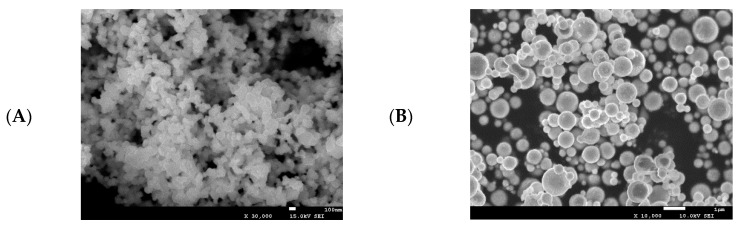
Figure 1
Figure 1
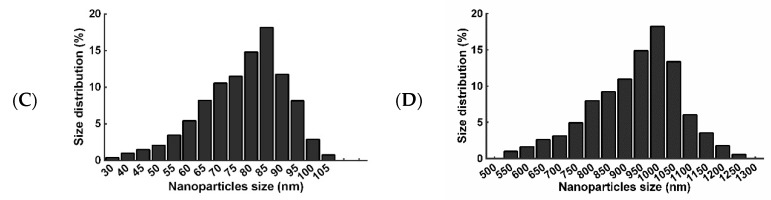
Physiochemical characterization of nano- and micro-copper. Nano-copper (A,C), micro-copper (B,D). The average particle diameters of nano- and micro-copper were 80 nm and 1 μm, respectively.
Figure 1
Figure 1
Physiochemical characterization of nano- and micro-copper. Nano-copper (A,C), micro-copper (B,D). The average particle diameters of nano- and micro-copper were 80 nm and 1 μm, respectively.
Figure 2
Figure 2
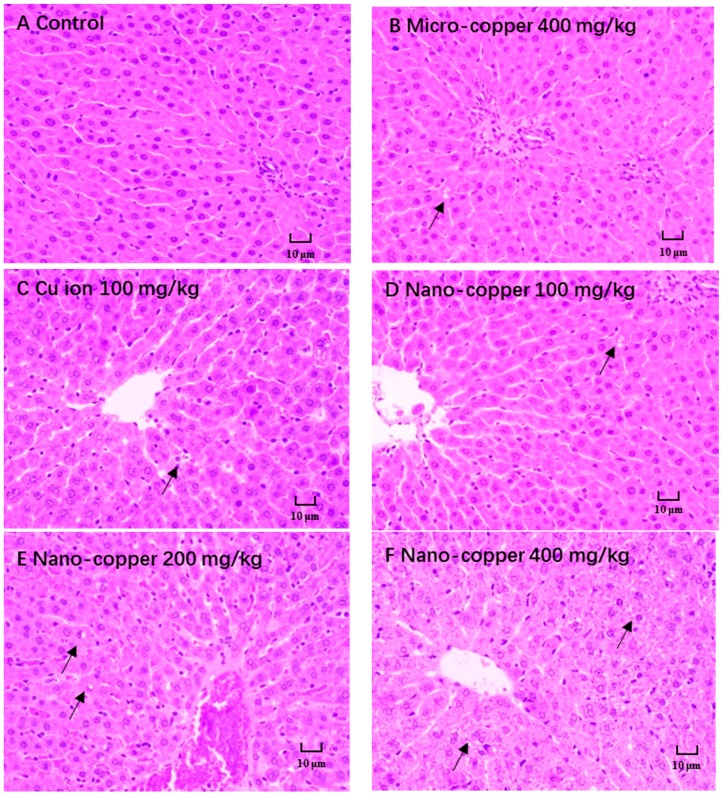
The histopathological changes of different copper treatments on rat liver. (A) Control group, (B) micro-copper treated group, (C) CuCl2·2H2O treated group, (DF) nano-copper treated group. Lesion severity (→) increase with increasing doses of nano-copper.
Figure 3
Figure 3
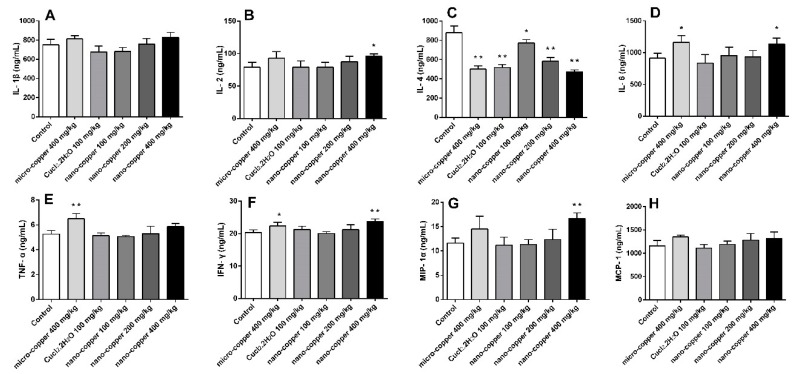
The levels of cytokines in copper treated rats. IL-1β (A), IL-2 (B), IL-4 (C), IL-6 (D), IFN-γ (E), TNF-α (F), MIP-1 (G), MCP-1 (H). * p < 0.05, ** p < 0.01 vs. control group. High dose of nano-copper significantly induced the level of cytokines in liver of rats. Micro-copper also induced the release of some of the cytokines, though the species of rat treated differed, and the Cu ion has no induction effect on cytokines.
Figure 4
Figure 4
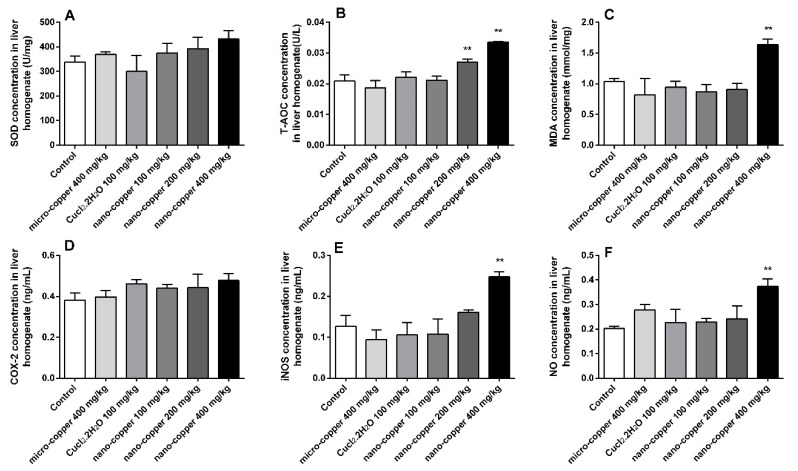
Oxidative index changes in rat livers. SOD (A), T-AOC (B), COX-2 (C), MDA (D), iNOS (E), NO (F). * p < 0.05, ** p < 0.01 vs. control group. Only 400 mg/kg of nano-copper induced the production of oxidative stress in hepatocytes of rats.
Figure 5
Figure 5
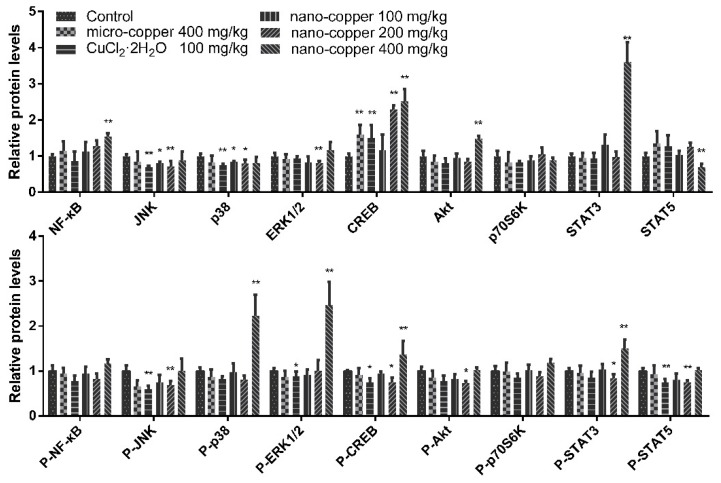
Changes in select signaling pathways in rat livers. * p < 0.05, ** p < 0.01 vs. control group. The P- showed the level of phosphorylated protein. The total signal proteins of NF-κB, CREB, Akt and STAT3, and the phosphorylated signal proteins of p-38, p-ERK1/2, CREB and STAT3 were induced by nano-copper.
Figure 6
Figure 6
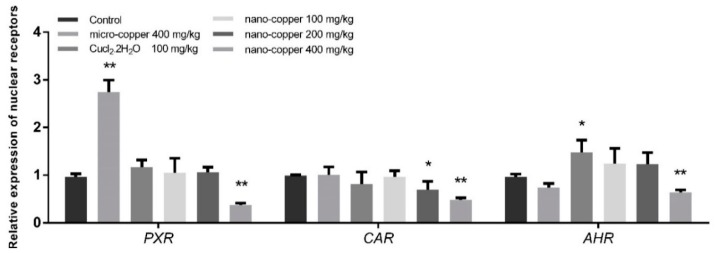
The mRNA levels of nuclear receptors in rat livers. * p < 0.05, ** p < 0.01 vs. control group. Nano-copper decreased the expression of PXR, AHR and CAR, but Micro-copper and CuCl2 increased the level of PXR and AHR, respectively.
Figure 7
Figure 7
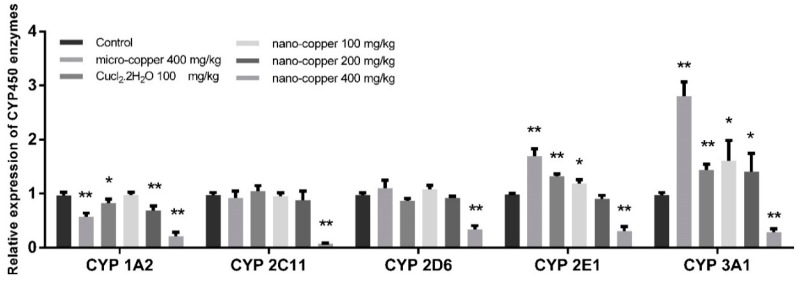
The mRNA levels of CYP450 enzymes in rat livers. * p < 0.05, ** p < 0.01. The expression of CYP450 enzymes were inhibited by nano-coper (200 mg/kg), but CYP 3A1 and CYP 2E1 were induced by Micro-copper, CuCl2 and low doses of nano-copper.
Figure 8
Figure 8
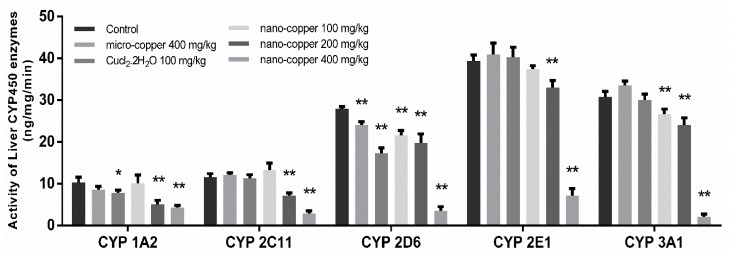
The activity of CYP450 enzymes. * p < 0.05, ** p < 0.01 vs. control group. The activity of CYP450 is inhibited by nano-copper in a dose-dependent manner.
Figure 9
Figure 9
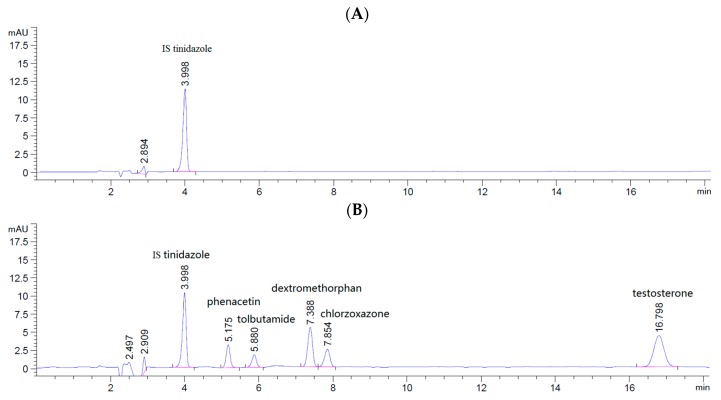
Chromatograms of five cocktail probe drugs and tinidazole (IS) in the incubation system. IS in blank sample (A); sample spiked with five cocktail probe drugs and IS (B).

References

    1. Santini C., Pellei M., Gandin V., Porchia M., Tisato F., Marzano C. Advances in copper complexes as anticancer agents. Chem. Rev. 2013;114:815–862. doi: 10.1021/cr400135x. - DOI - PubMed
    1. Dobrovolný K., Ulbrich P., Švecová M., Rimpelová S., Malinčík J., Kohout M., Bartůněk V. Copper nanoparticles in glycerol-polyvinyl alcohol matrix: In situ preparation, stabilisation and antimicrobial activity. J. Alloys Compd. 2017;697:147–155. doi: 10.1016/j.jallcom.2016.12.144. - DOI
    1. Ognik K., Sembratowicz I., Cholewińska E., Jankowski J., Kozłowski K., Juśkiewicz J., Zduńczyk Z. The effect of administration of copper nanoparticles to chickens in their drinking water on the immune and antioxidant status of the blood. Anim. Sci. J. 2017;89 doi: 10.1111/asj.12956. - DOI - PubMed
    1. Liu G., Li X., Qin B., Xing D., Guo Y., Fan R. Investigation of the mending effect and mechanism of copper nano-particles on a tribologically stressed surface. Tribol. Lett. 2004;17:961–966. doi: 10.1007/s11249-004-8109-6. - DOI
    1. Cioffi N., Ditaranto N., Torsi L., Picca R.A., Sabbatini L., Valentini A., Zambonin P.G. Analytical characterization of bioactive fluoropolymer ultra-thin coatings modified by copper nanoparticles. Anal. Bioanal. Chem. 2005;381:607–616. doi: 10.1007/s00216-004-2761-4. - DOI - PubMed

MeSH terms

LinkOut - more resources