


General Pathways of Pain Sensation and the Major Neurotransmitters Involved in Pain Regulation
- PMID: 30042373
- PMCID: PMC6121522
- DOI: 10.3390/ijms19082164
General Pathways of Pain Sensation and the Major Neurotransmitters Involved in Pain Regulation
Abstract
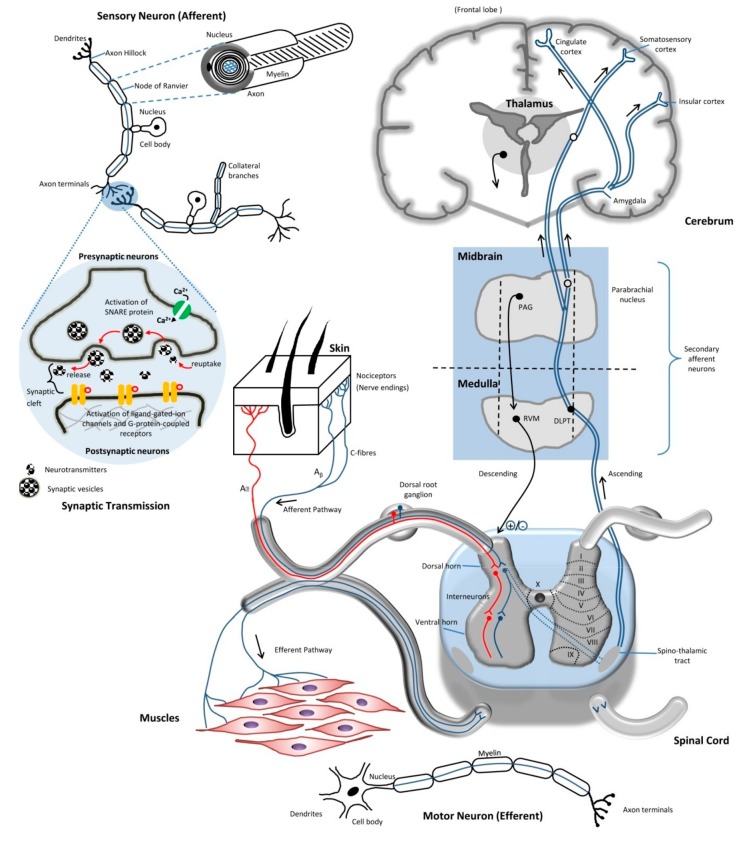
Pain has been considered as a concept of sensation that we feel as a reaction to the stimulus of our surrounding, putting us in harm's way and acting as a form of defense mechanism that our body has permanently installed into its system. However, pain leads to a huge chunk of finances within the healthcare system with continuous rehabilitation of patients with adverse pain sensations, which might reduce not only their quality of life but also their productivity at work setting back the pace of our economy. It may not look like a huge deal but factor in pain as an issue for majority of us, it becomes an economical burden. Although pain has been researched into and understood by numerous researches, from its definition, mechanism of action to its inhibition in hopes of finding an absolute solution for victims of pain, the pathways of pain sensation, neurotransmitters involved in producing such a sensation are not comprehensively reviewed. Therefore, this review article aims to put in place a thorough understanding of major pain conditions that we experience-nociceptive, inflammatory and physiologically dysfunction, such as neuropathic pain and its modulation and feedback systems. Moreover, the complete mechanism of conduction is compiled within this article, elucidating understandings from various researches and breakthroughs.
Keywords: inflammatory; neurons; neuropathic; neurotransmitters; nociceptive; pain sensitization; pain transmission; presynaptic and postsynaptic; synaptic transmission.
Conflict of interest statement
The authors declare no conflict of interest.
Figures
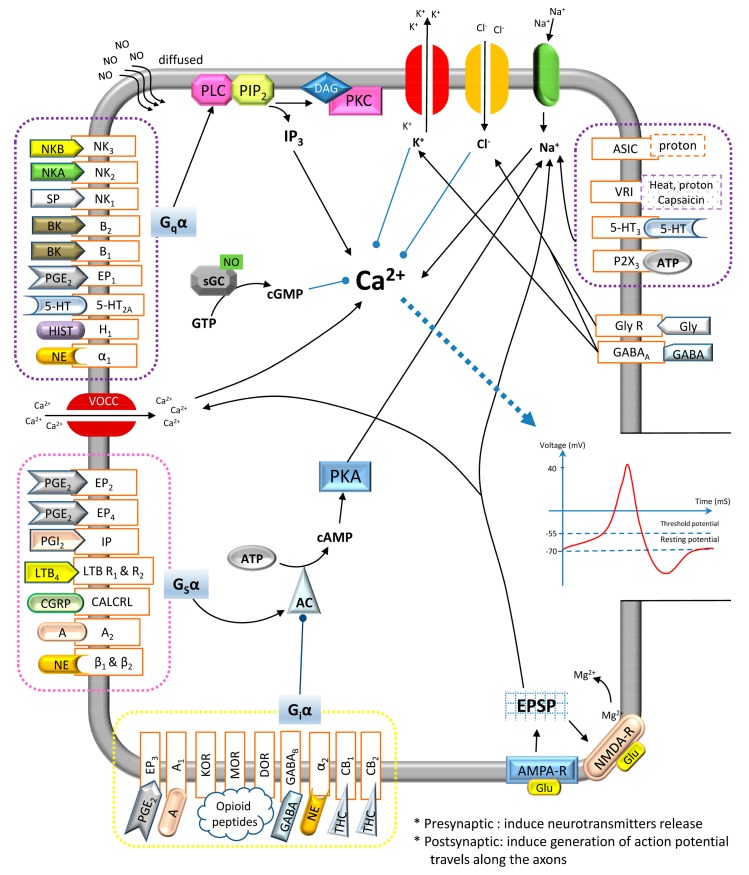
 : Activate/Enhance production;
  : Inhibit/Reduce production;
  : Generate/Lead to.
References
-
- Hall J.E. Guyton and Hall Textbook of Medical Physiology e-Book. Elsevier Health Sciences; Philadelphia, PA, USA: 2010.
-
- Purves D., Augustine G., Fitzpatrick D., Hall W.C., LaMantia A., Mooney R., White L.E. Neuroscience. Sinauer; Sunderland, MA, USA: 2018.
Publication types
MeSH terms
Substances
LinkOut - more resources
Full Text Sources
Other Literature Sources
Medical
