


Weight loss and metabolic health effects from energy-restricted Mediterranean and Central-European diets in postmenopausal women: A randomized controlled trial
- PMID: 30042488
- PMCID: PMC6057942
- DOI: 10.1038/s41598-018-29495-3
Weight loss and metabolic health effects from energy-restricted Mediterranean and Central-European diets in postmenopausal women: A randomized controlled trial
Erratum in
-
Author Correction: Weight loss and metabolic health effects from energy-restricted Mediterranean and Central-European diets in postmenopausal women: A randomized controlled trial.Sci Rep. 2019 Oct 31;9(1):16077. doi: 10.1038/s41598-019-51387-3. Sci Rep. 2019. PMID: 31666591 Free PMC article.
Abstract
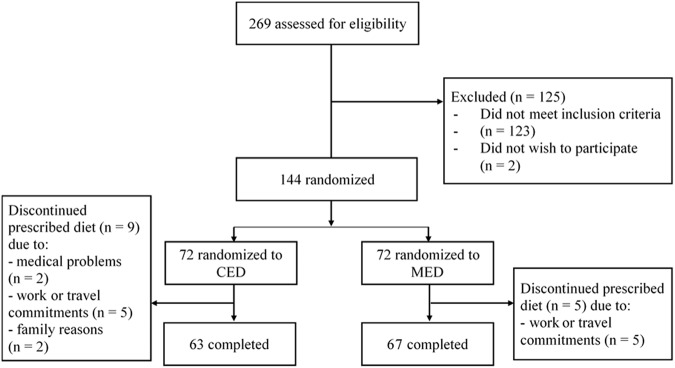
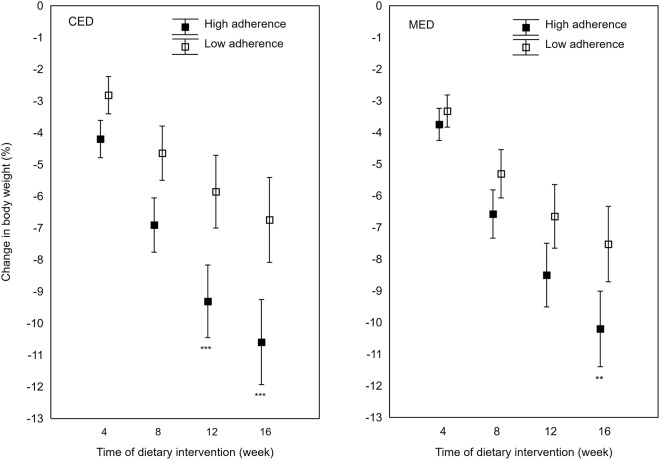
We conducted a randomized controlled trial to examine the effect of two energy-restricted diets on body weight (BW), visceral fat (VF) loss, and the risk factors for metabolic syndrome. A total of 144 centrally obese postmenopausal women were assigned to the moderate in fat Mediterranean diet (MED) or to the Central European diet (CED), which is moderate in carbohydrates and high in dietary fiber (DF), for 16 weeks. BW, waist circumference and VF were significantly reduced by 8.8%, 7.0%, and 24.6%, respectively, over the trial (P < 0.001), with no difference between groups. A similar trend was seen for total cholesterol, triglycerides, glucose, and blood pressure. Within each diet group, the more adherent participants lost significantly more BW than did their less adherent counterparts. VF was significantly reduced only in women who were more adherent to the CED, and the reduction in VF correlated with an increase in the proportion of DF. Short-term dietary treatment with the CED or the MED was associated with similar improvements in some anthropometric, lipid, and nonlipid parameters; however, adequate adherence to the prescribed diet is important in weight loss success and in achieving improvements in metabolic health.
Conflict of interest statement
The authors declare no competing interests.
Figures
References
-
- Aude YW, et al. The national cholesterol education program diet vs. a diet lower in carbohydrates and higher in protein and monounsaturated fat: A randomized trial. Arch. Intern. Med. 2004;164:2141–2146. - PubMed
Publication types
MeSH terms
Substances
LinkOut - more resources
Full Text Sources
Other Literature Sources
Medical
Miscellaneous
