. 2018 Sep 4;28(3):490-503.e7.
doi: 10.1016/j.cmet.2018.06.001. Epub 2018 Jun 28.

Etomoxir Inhibits Macrophage Polarization by Disrupting CoA Homeostasis

Affiliations

Etomoxir Inhibits Macrophage Polarization by Disrupting CoA Homeostasis

Ajit S Divakaruni et al. Cell Metab. .

Abstract

Long-chain fatty acid (LCFA) oxidation has been shown to play an important role in interleukin-4 (IL-4)-mediated macrophage polarization (M(IL-4)). However, many of these conclusions are based on the inhibition of carnitine palmitoyltransferase-1 with high concentrations of etomoxir that far exceed what is required to inhibit enzyme activity (EC90 < 3 μM). We employ genetic and pharmacologic models to demonstrate that LCFA oxidation is largely dispensable for IL-4-driven polarization. Unexpectedly, high concentrations of etomoxir retained the ability to disrupt M(IL-4) polarization in the absence of Cpt1a or Cpt2 expression. Although excess etomoxir inhibits the adenine nucleotide translocase, oxidative phosphorylation is surprisingly dispensable for M(IL-4). Instead, the block in polarization was traced to depletion of intracellular free coenzyme A (CoA), likely resulting from conversion of the pro-drug etomoxir into active etomoxiryl CoA. These studies help explain the effect(s) of excess etomoxir on immune cells and reveal an unappreciated role for CoA metabolism in macrophage polarization.

Keywords: CPT-1; CPT-2; coenzyme A; interleukin 4; long-chain fatty acid oxidation; macrophage polarization; mitochondria; oxidative phosphorylation; pantothenate.


Conflict of interest statement

Declaration of Interests

K.C., B.P.D., D.A.F., and G.W.R. are employees and shareholders of Agilent Technologies.

Figures
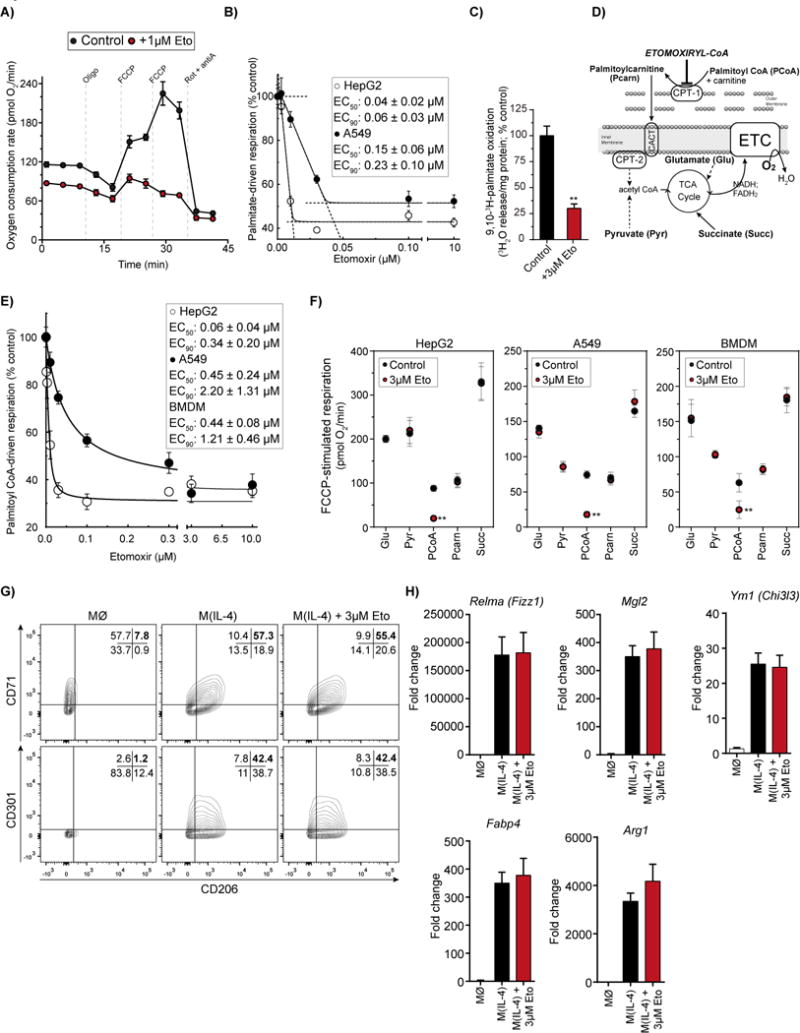
Figure 1
Figure 1. Etomoxir concentrations that specifically inhibit CPT-1 do not inhibit M(IL-4) polarization
(A) Respirometry trace with intact HepG2 cells ± 1 μM etomoxir (Eto) offered albumin-buffered palmitate as substrate. (n = 6 technical replicates) (B) Concentration-response curve of FCCP-stimulated respiration in intact HepG2 and A549 cells [as in (A)] in response to increasing concentrations of etomoxir. (n = 6 technical replicates). Inset: Aggregate values for EC50 (concentration required for 50% inhibition) and EC90 (90% inhibition) from n ≥ 4 independent biological replicates. (C) Fatty acid oxidation as measured by 3H2O release from 9,10-3H-palmitate ± 3 μM etomoxir (Eto). (n = 4 independent biological replicates). (D) Schematic depicting respiratory substrates used for permeabilized cell respirometry. CPT, carnitine palmitoyl transferase; CACT, carnitine acyl carnitine transferase; ETC, electron transport chain. (E) Sample concentration-response curve of FCCP-stimulated oxygen consumption in permeabilized HepG2 and A549 cells (BMDMs omitted for clarity) in response to increasing concentrations of etomoxir (n=6 technical replicates). Cells were offered palmitoyl CoA with carnitine and malate as substrates. Inset: Aggregate values for EC50 and EC90 in all cell types tested. (n ≥ 4 independent biological replicates). (F) Effect of etomoxir on various respiratory substrates in permeabilized cells. Glu, glutamate/malate; Pyr, pyruvate/malate; PCoA, palmitoyl CoA/carnitine/malate; Pcarn, palmitoylcarnitine/malate; Succ, succinate/rotenone. (n = 3 independent biological replicates) (G) Flow cytometric analysis of the IL-4-associated cell surface markers CD206, CD301, and CD71 in BMDMs 24 hr after the indicated treatment. Cells were co-treated with IL-4 (20 ng/mL) and etomoxir (3 μM). Numbers in the top-right quandrant indicate cells positive for both markers measured. The data shown are from one experiment and representative of a total of six independent biological replicates. (H) qPCR analysis of the IL-4-associated genes Relma, Mgl2, Ym1, Fabp4, and Arg1 after 24 hr of IL-4 ± 3 μM etomoxir co-treatment. (n = 4 independent biological replicates) All data are presented as mean ± S.E.M. *, p<0.05; **, p<0.01; ***, p<0.001; ****, p<0.0001
Figure 2
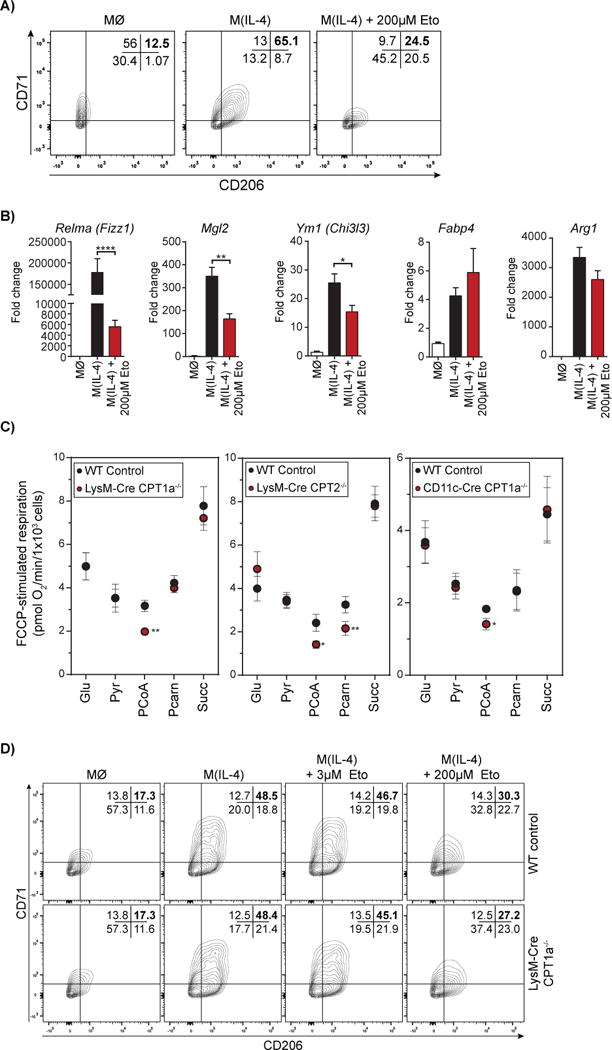
Figure 2. High concentrations of etomoxir block M(IL-4) polarization independently of CPT-1 activity
(A) Flow cytometric analysis of CD206 and CD71 on macrophages treated with IL-4 ± 200 μM etomoxir co-treatment after 24 hr. The data shown are from one experiment representative of a total of six independent biological replicates. (B) qPCR analysis of Relma, Mgl2, Ym1, Fabp4, and Arg1 in BMDM with IL-4 ± 200 μM etomoxir co-treatment after 24 hr. (n = 6 independent biological replicates) (C) Effect of various respiratory substrates in permeabilized WT, Cpt1−/−, and Cpt2−/− BMDMs. Glu, glutamate/malate; Pyr, pyruvate/malate; PCoA, palmitoyl CoA/carnitine/malate; Pcarn, palmitoylcarnitine/malate; Succ, succinate/rotenone. (n = 4 independent biological replicates) (D) Flow cytometric analysis for the CD206+/CD71+ population in WT and Cpt1a−/− BMDMs differentiated with IL-4 ± 3 μM or 200 μM etomoxir. The data shown are from one experiment representative of a total of four independent biological replicates. See also Supplementary Fig. 1
Figure 3
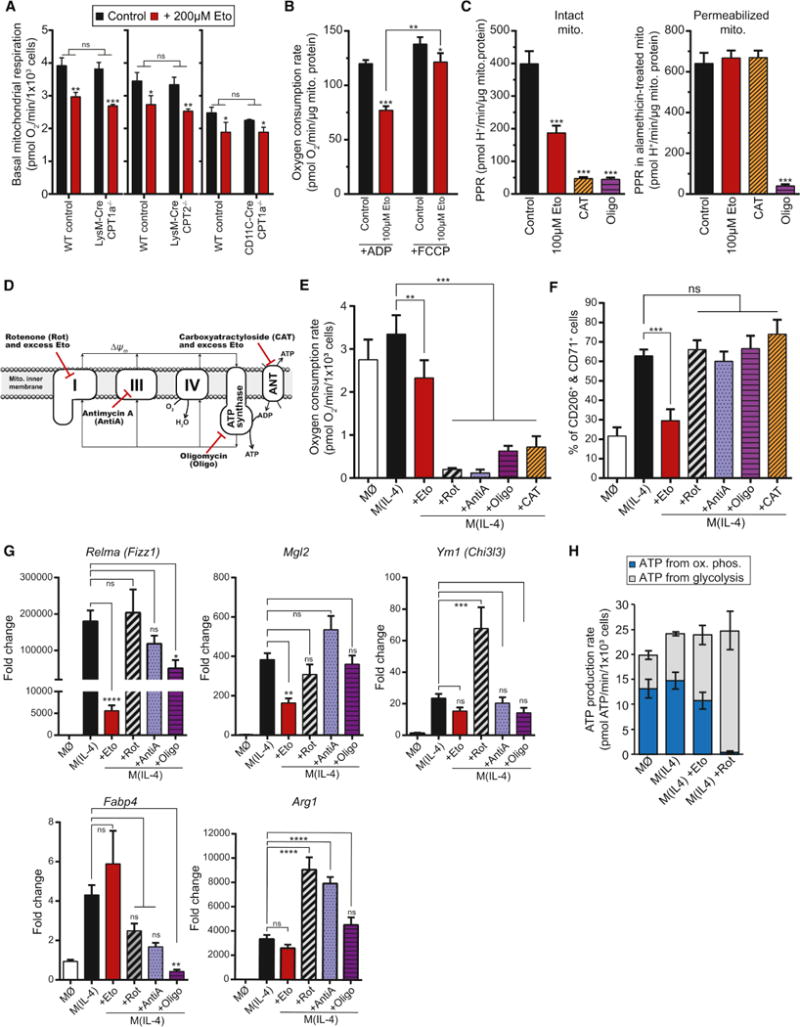
Figure 3. Excess etomoxir has off-target effects on mitochondrial bioenergetics, but these cannot explain its inhibition of M(IL-4)
(A) Effects of 200 μM etomoxir on basal mitochondrial respiration in intact WT, Cpt1a−/−, and Cpt2−/− BMDMs. Cells were offered 8 mM glucose, 2 mM glutamine, and 2 mM pyruvate (no fatty acids or carnitine) in the experimental medium. (n = 4 independent biological replicates) (B) ADP-stimulated (State 3) or maximal FCCP-stimulated respiration was measured ± 100 μM etomoxir in isolated rat liver mitochondria. Mitochondria were offered pyruvate/malate as respiratory substrates. (n = 4 independent biological replicates) (C) Inhibition of ANT activity was assessed by measuring the rate of ATP hydrolysis in both intact (left) and permeabilized (right) rat liver mitochondria. ATP hydrolysis acidifies the experimental medium (see Supplemental Figure S3). Mitochondria were treated with alamethicin to permeabilize the inner membrane to small solutes such as ATP to discriminate between effects of ATP transport versus hydrolysis, Eto., etomoxir (100 μM); CAT, carboxyatractyloside (7.5 ng/mg mito. protein); Oligo., oligomycin (3 ng/mg mito. protein). (n = 4 independent biological replicates) (D) Scheme depicting sites of action for mitochondrial inhibitors used in (E-G). (E) Basal mitochondrial respiration in intact BMDMs after 24 hr treatment with 200 μM etomoxir (Eto), 200 nM rotenone (Rot), 200 nM antimycin A (antiA), 1.2 μM oligomycin (Oligo), or 5 μM carboxyatractyloside (CAT). (n = 4 independent biological replicates) (F) Flow cytometric analysis of the CD206+/CD71+ population after 48 hr treatment with 200 μM etomoxir or mitochondrial effectors as in (E). (n = 6 independent biological replicates) (G) qPCR analysis of Relma, Mgl2, Ym1, Fabp4, and Arg1 after 24 hr treatment of compounds used in E & F. (n = 4 independent biological replicates) (H) Cellular ATP production rates were estimated as the sum of ATP generated from oxidative phosphorylation and glycolysis. BMDMs were treated with IL-4 for 24 hr ± 200 μM etomoxir or 200 nM rotenone. (n = 4 independent biological replicates) See also Supplementary Figs. 2–4
Figure 4
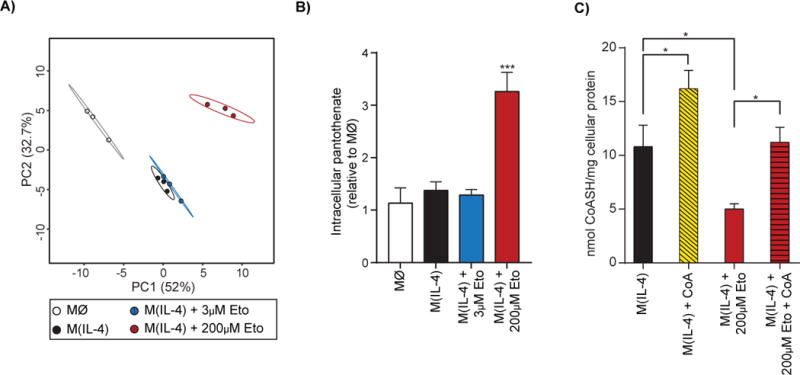
Figure 4. Etomoxir disrupts intracellular CoA homeostasis
(A) Principal component analysis of untargeted metabolomics data from WT BMDM after 24 hr. IL-4-treatment ± 3 μM or 200 μM etomoxir (co-treated with IL-4; n = 3 technical replicates). The percent variance explained is indicated. Prediction ellipses are drawn such that a new observation from the same group will fall inside the ellipse with 95% certainty. (B) Intracellular pantothenate levels as measured by LC/MS in conditions as in (A). (C) Intracellular free coenzyme A (CoASH) measurement in BMDMs after 20 hr treatment with IL-4 ± 200 μM etomoxir and ± 500 μM CoA (all co-treatments with IL-4). The data shown are three independent biological replicates. See also Supplementary Fig. 5
Figure 5
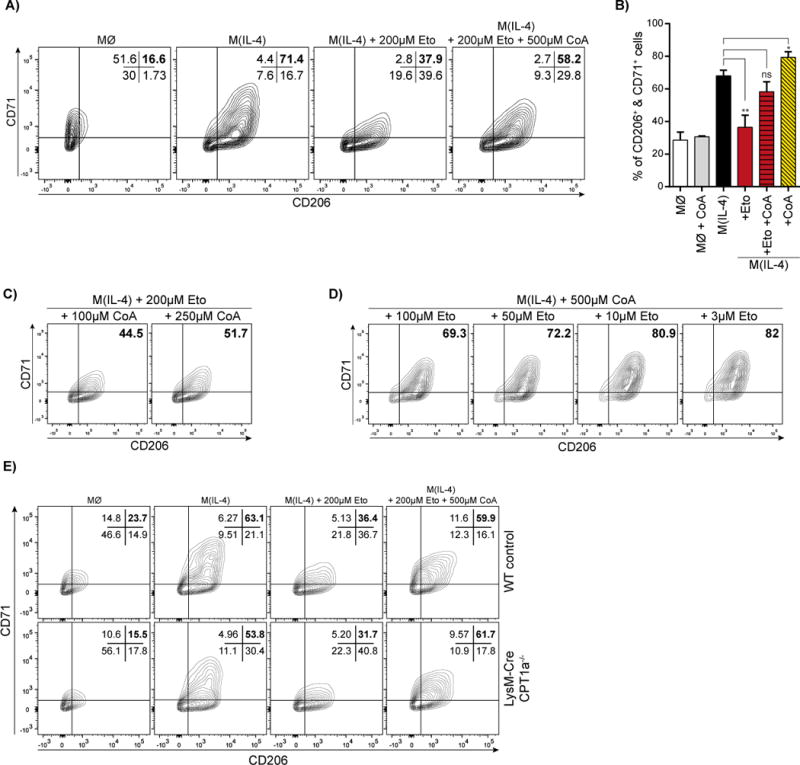
Figure 5. Coenzyme A (CoA) rescues inhibition of M(IL-4) polarization by excess etomoxir
(A) Flow cytometric analysis of CD206+/CD71+ BMDMs after 24 hr treatment with 200 μM etomoxir ± 500 μM CoA. The data shown are from one experiment representative of a total of six independent biological replicates. (B) Aggregate data of the CD206+/CD71+ population in response to 200 μM etomoxir with or without 500 μM CoA. (n = 6 independent biological replicates) (C) Flow cytometric analysis of BMDMs showing CD206+/CD71+ in the presence of 200 μM etomoxir and varying the concentration of added CoA. The data shown are from one experiment representative of a total of three independent biological replicates. (D) Flow cytometric analysis of CD206+/CD71+ BMDMs in the presence of 500 μM CoA and varying the etomoxir concentration between 3-100 μM etomoxir. The data shown are from one experiment representative of a total of three independent biological replicates. (E) Flow cytometric analysis of the CD206+/CD71+ population in WT and Cpt1a−/− BMDMs in response to IL-4 ± 200 μM etomoxir ± 500 μM CoA. The data shown are from one experiment representative of a total of four independent biological replicates. See also Supplementary Fig. 5

Comment in

References

    1. Agius L, Meredith EJ, Sherratt H, Stanley A. Stereospecificity of the inhibition by etomoxir of fatty acid and cholesterol synthesis in isolated rat hepatocytes. Biochem Pharmacol. 1991;42:1717–1720. - PubMed
    1. Bartlett K, Bone AJ, Koundakjian P, Meredith E, Turnbull DM, Sherratt HS. Inhibition of mitochondrial β-oxidation at the stage of carnitine palmitoyltransferase I by the coenzyme A esters of some substituted hypoglycaemic oxirane-carboxylic acids. Biochem Soc Trans. 1981;9:574–575.
    1. Bentebibel A, Sebastian D, Herrero L, Lopez-Vinas E, Serra D, Asins G, Gomez-Puertas P, Hegardt FG. Novel effect of C75 on carnitine palmitoyltransferase I activity and palmitate oxidation. Biochemistry. 2006;45:4339–4350. - PubMed
    1. Caton ML, Smith-Raska MR, Reizis B. Notch-RBP-J signaling controls the homeostasis of CD8-dendritic cells in the spleen. J Exp Med. 2007;204:1653–64. - PMC - PubMed
    1. Ceccarelli SM, Chomienne O, Gubler M, Arduini A. Carnitine Palmitoyltransferase (CPT) Modulators: A Medicinal Chemistry Perspective on 35 Years of Research. J Med Chem. 2011;54:3109–3152. - PubMed

Publication types

MeSH terms