


The use of self-report measures to examine changes in perception in response to fittings using different signal processing parameters
- PMID: 30052097
- PMCID: PMC6364848
- DOI: 10.1080/14992027.2018.1490035
The use of self-report measures to examine changes in perception in response to fittings using different signal processing parameters
Abstract
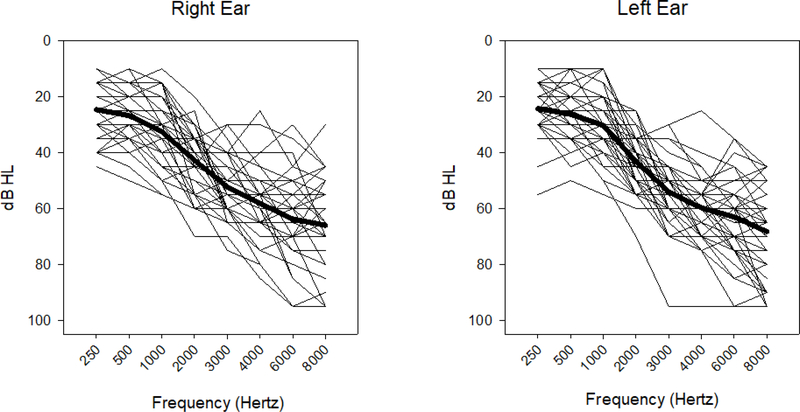
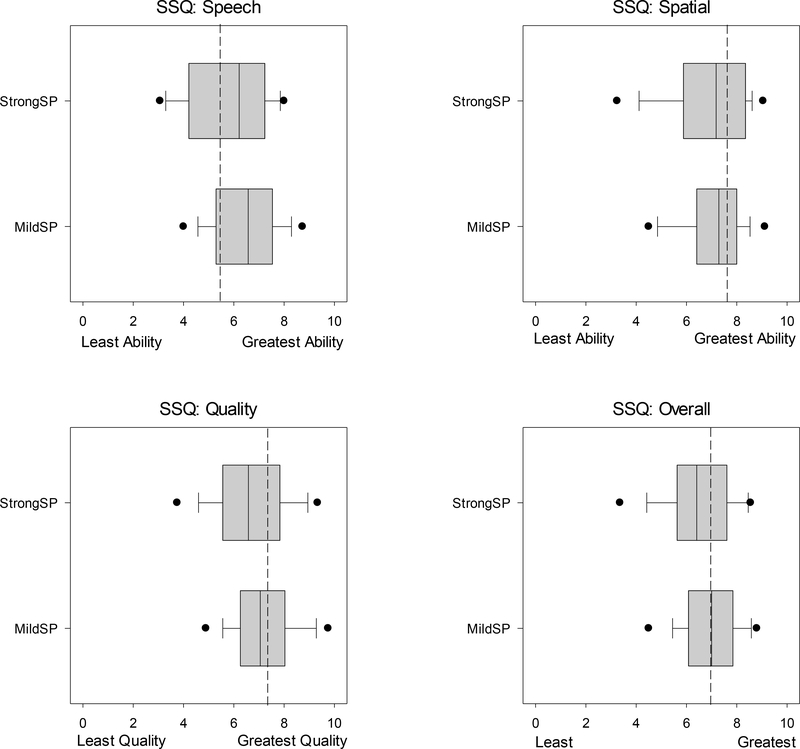
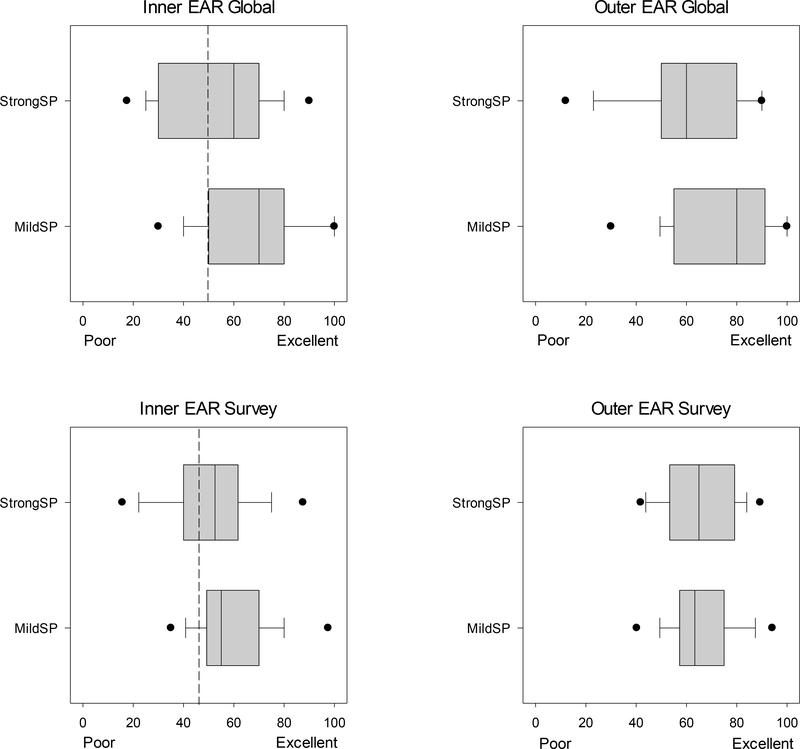
Clinicians have long used self-report methods to assess hearing aid benefit. However, there are fewer data as to whether self-report instruments can be used to compare differences between signal processing settings. This study examined how self-perceived performance varied as a function of modifications in signal processing using two self-report measures. Data were collected as part of a double-blind randomised crossover clinical trial. Participants were fit with two fittings: mild processing (slow time constants, disabled frequency lowering) and strong processing (fast time constants, frequency lowering enabled). The speech, spatial, and qualities of hearing (SSQ) questionnaire and the Effectiveness of Auditory Rehabilitation (EAR) questionnaire were collected at multiple time points. Older adults with sensorineural hearing loss who had not used hearing aids within the previous year participated (49 older adults were consented; 40 were included in the final data analyses). Findings show that listeners report a difference in perceived performance when hearing aid features are modified. Both self-report measures were able to capture this change in perceived performance. Self-report measures provide a tool for capturing changes in perceived performance when hearing aid processing features are modified and may enhance provision of an evidence-based hearing aid fitting.
Trial registration: ClinicalTrials.gov NCT02448706.
Keywords: Hearing aid satisfaction; clinical trial; hearing aid; signal perception.
Conflict of interest statement
Disclosure
No conflict of interest is reported by the authors.
Figures
References
-
- Abrams HB, Chisolm TH, McManus M, and McArdle R (2012). Initial-fit approach versus verified prescription: comparing self-perceived hearing aid benefit. Journal of the American Academy of Audiology, 23(10), 768–778. - PubMed
-
- Alcántara JI, Moore BCJ, and Marriage J (2004). Comparison of three procedures for initial fitting of compression hearing aids. II. Experienced users, fitted unilaterally. International Journal of Audiology, 43(1), 3–14. - PubMed
-
- American Academy of Audiology Task Force (2006). Guideline for audiologic management of the adult patient. Audiology Online.
-
- Bates D, Maechler M, Bolker B, and Walker S (2015). Fitting Linear Mixed-Effects Models Using lme4. Journal of Statistical Software, 67(1), 1–48. doi: 10.18637/jss.v067.i01. - DOI
Publication types
MeSH terms
Associated data
Grants and funding
LinkOut - more resources
Full Text Sources
Other Literature Sources
Medical
