


Association of malalignment, muscular dysfunction, proprioception, laxity and abnormal joint loading with tibiofemoral knee osteoarthritis - a systematic review and meta-analysis
- PMID: 30055600
- PMCID: PMC6064629
- DOI: 10.1186/s12891-018-2202-8
Association of malalignment, muscular dysfunction, proprioception, laxity and abnormal joint loading with tibiofemoral knee osteoarthritis - a systematic review and meta-analysis
Abstract
Background: To investigate (1) the association of specific biomechanical factors with knee osteoarthritis and knee osteoarthritis development, and (2) the impact of other relevant risk factors on this association.
Methods: MEDLINE, EMBASE, CINAHL and SPORTDiscus were searched up until April 2017. Studies were included if they fulfilled the following criteria: the study 1) assessed the association of a biomechanical factor with knee osteoarthritis, or knee osteoarthritis development; 2) reported on skeletal malalignment, muscular dysfunction, impaired proprioception, laxity and abnormal loading during gait; 3) was a cohort study with participants developing knee osteoarthritis and participants not developing knee osteoarthritis, or a case-control or cross-sectional study with participants with knee osteoarthritis and without knee osteoarthritis. Risk of bias was assessed with the QUIPS tool and meta-analyses were performed using random effects models.
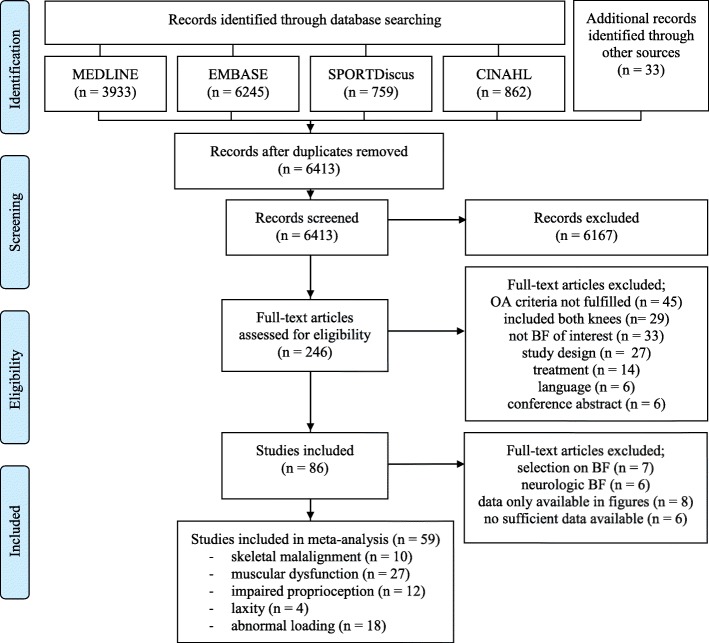
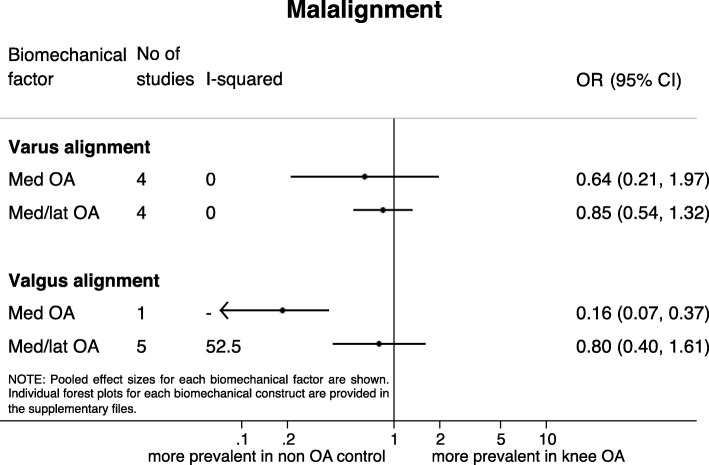
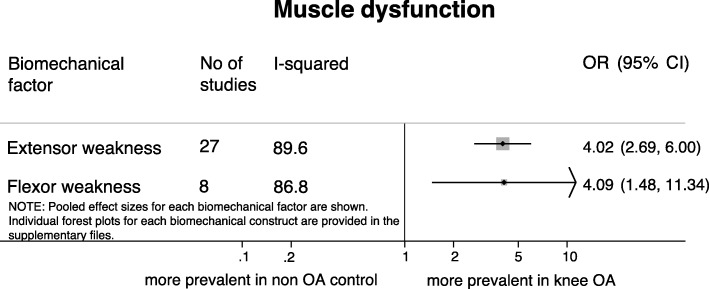
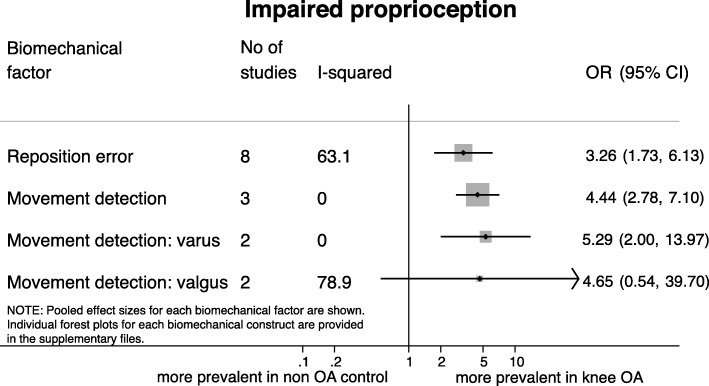
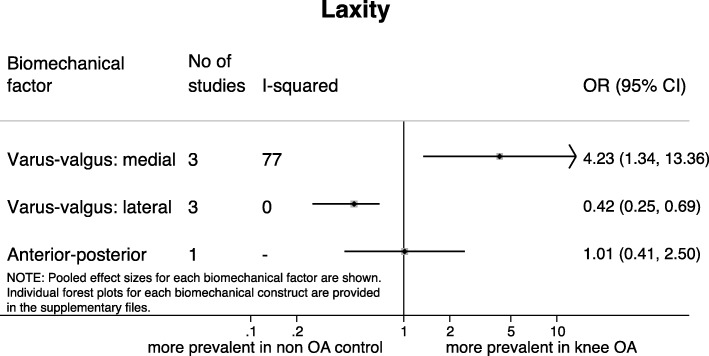
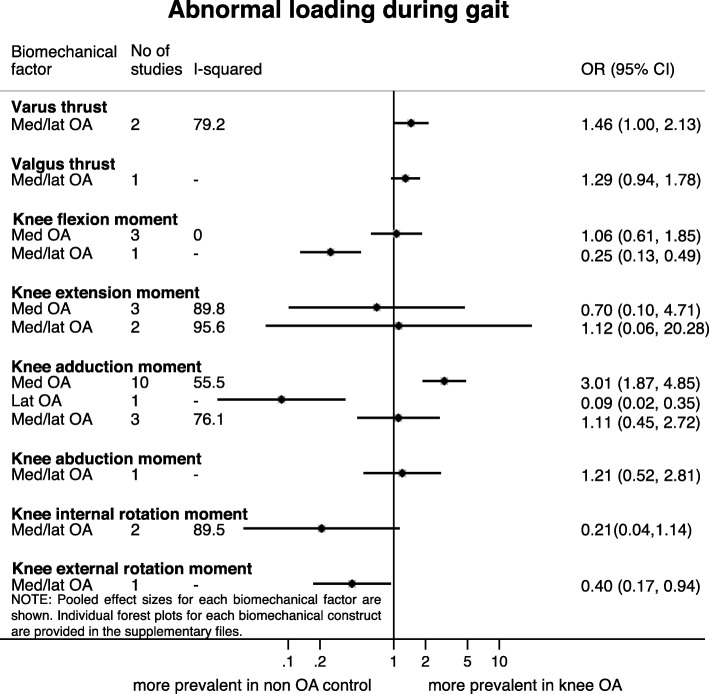
Results: Of 6413 unique studies identified, 59 cross-sectional studies were eligible for meta-analyses (9825 participants, 5328 with knee osteoarthritis). No cohort studies fulfilled the inclusion criteria. Compared with healthy controls, patients with knee osteoarthritis have higher odds of having lower muscle strength, proprioception deficits, more medial varus-valgus laxity and less lateral varus-valgus laxity. Patients with medial knee osteoarthritis have higher odds of having a higher knee adduction moment than healthy controls. Level of evidence was graded as 'very low' to 'moderate' quality. Due to large between study differences moderation of other risk factors on biomechanical risk factors could not be evaluated.
Conclusions: Patients with knee osteoarthritis are more likely to display a number of biomechanical characteristics. The causal relationship between specific biomechanical factors and the development of knee osteoarthritis could not be determined as no longitudinal studies were included. There is an urgent need for high quality, longitudinal studies to evaluate the impact of specific biomechanical factors on the development of knee osteoarthritis.
Trial registration: (PROSPERO ID: CRD42015025092 ).
Keywords: Biomechanics; Knee; Meta-analysis; Osteoarthritis; Systematic review.
Conflict of interest statement
Ethics approval and consent to participate
Not applicable.
Consent for publication
Not applicable.
Competing interests
The authors declare that they have no competing interests.
Publisher’s Note
Springer Nature remains neutral with regard to jurisdictional claims in published maps and institutional affiliations.
Figures
References
Publication types
MeSH terms
Grants and funding
LinkOut - more resources
Full Text Sources
Other Literature Sources
Medical
Miscellaneous
