


Endometrial sampling in low-risk patients with abnormal uterine bleeding: a systematic review and meta-synthesis
- PMID: 30060741
- PMCID: PMC6066914
- DOI: 10.1186/s12875-018-0817-3
Endometrial sampling in low-risk patients with abnormal uterine bleeding: a systematic review and meta-synthesis
Abstract
Background: One million women per year seek medical advice for abnormal uterine bleeding (AUB) in the United Kingdom. Many low-risk patients who could be managed exclusively in primary care are referred to hospital based gynaecology services. Performing endometrial sampling (ES) in the community may improve care, reduce the rate of referrals and minimise costs. We aimed to search and synthesise the literature on the effectiveness of ES (Pipelle versus other devices) in managing AUB in low-risk patients.
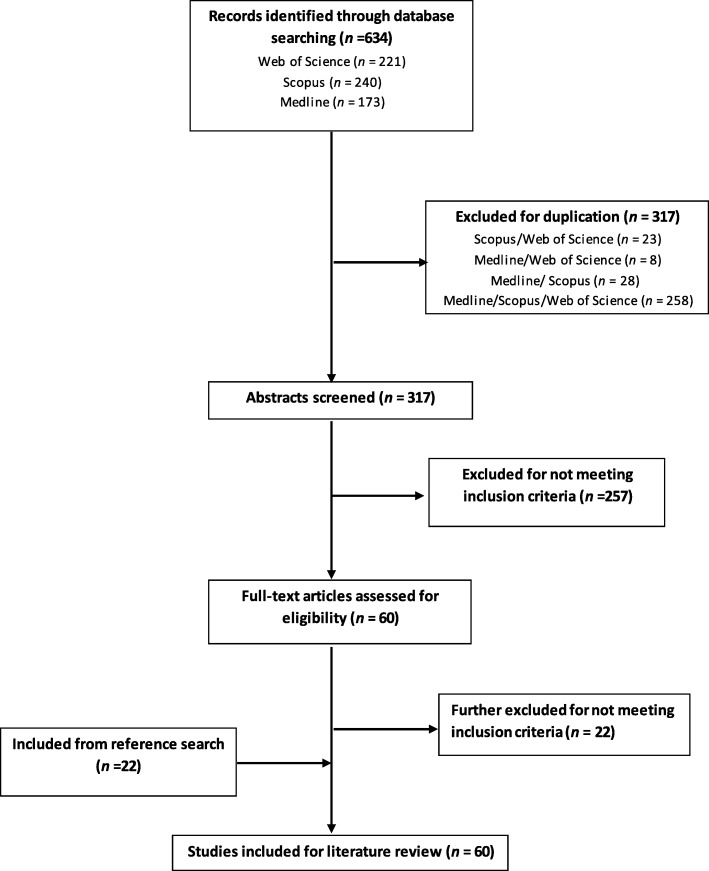
Methods: We undertook an electronic literature search in MEDLINE via OvidSP, Scopus, and Web of Science for relevant English-language articles from 1984 to 2016 using a combination of MeSH and keywords. Two reviewers independently pre-selected 317 articles and agreed on 60 articles reporting data from over 7300 patients. Five themes were identified: sample adequacy, test performance, pain and discomfort, cost-effectiveness, and barriers and complications of office ES.
Results: Pipelle seems to perform as well as dilation and curettage and, as well or better than other ES devices in terms of sampling adequacy and sensitivity. It also seems to be better regarding pain/discomfort and costs. However, Pipelle can disrupt the sonographic appearance of the endometrium and may be limited by cervical stenosis, pelvic organ prolapse and endometrial atrophy.
Conclusions: The current evidence supports the use of Pipelle in the management of low-risk women presenting in the outpatient setting with symptomatic AUB when combined with clinical assessment and ultrasound scanning. However, the implications of its widespread use in primary care are uncertain and more research is required.
Keywords: Abnormal uterine bleeding; Dilation and curettage; Endometrial cancer; Endometrial hyperplasia; Endometrial sampling; Perimenopausal; Pipelle; Premenopausal.
Conflict of interest statement
Ethics approval and consent to participate
Not required.
Consent for publication
Not applicable.
Competing interests
The authors declare that they have no competing interests.
Publisher’s Note
Springer Nature remains neutral with regard to jurisdictional claims in published maps and institutional affiliations.
Figures
References
-
- Munro M, Critchley H, Broder M, Fraser ID. ftFWGoM. FIGO classification system (FIGO-COEIN) for causes of abnormal uterine bleeding in nongravid women of reproductive age. Int J Gynaecol Obstet. 2011;113(1):3-13. - PubMed
-
- Fraser I, Langham SU-HK. Health-related quality of life and economic burden of abnormal uterine bleeding. Expert Rev Obstet Gynecol. 2009;4:179–189. doi: 10.1586/17474108.4.2.179. - DOI
-
- Garside R, Stein K, Wyatt K, Round APA. The effectiveness and cost-effectiveness of microwave and thermal balloon endometrial ablation for heavy menstrual bleeding: a systematic review and economic modelling. Health Technol Assess (Rockv) 2004;8ii:155. - PubMed
-
- McCormick A, Fleming D, Charlton J, Royal College of General Practitioners GB S. OoPCa. Morbidity statistics from general practice: fourth national study. 1995.
Publication types
MeSH terms
LinkOut - more resources
Full Text Sources
Other Literature Sources
Medical
