Review
. 2018 Nov;28(11):911-925.
doi: 10.1016/j.tcb.2018.07.002. Epub 2018 Jul 27.

CDK4/6 Inhibition in Cancer: Beyond Cell Cycle Arrest

Affiliations
Review

CDK4/6 Inhibition in Cancer: Beyond Cell Cycle Arrest

Shom Goel et al. Trends Cell Biol. 2018 Nov.

Abstract

Pharmacologic inhibitors of cyclin-dependent kinases 4 and 6 (CDK4/6) have recently entered the therapeutic armamentarium of clinical oncologists, and show promising activity in patients with breast and other cancers. Although their chief mechanism of action is inhibition of retinoblastoma (RB) protein phosphorylation and thus the induction of cell cycle arrest, CDK4/6 inhibitors alter cancer cell biology in other ways that can also be leveraged for therapeutic benefit. These include modulation of mitogenic kinase signaling, induction of a senescence-like phenotype, and enhancement of cancer cell immunogenicity. We describe here the less-appreciated effects of CDK4/6 inhibitors on cancer cells, and suggest ways by which they might be exploited to enhance the benefits of these agents for cancer patients.

Keywords: CDK4/6; cell cycle; immunotherapy; targeted therapy.


Figures

Figure 1.
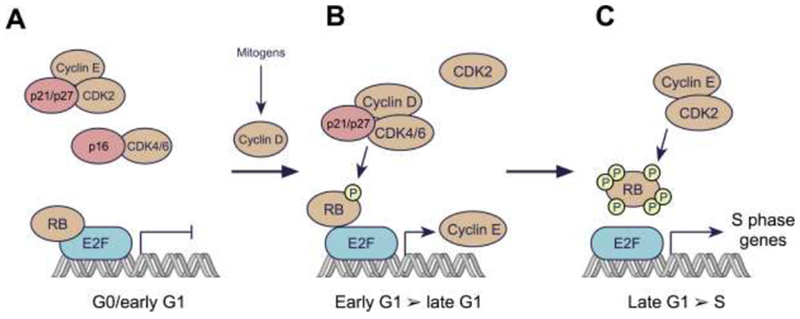
Figure 1.. The classical model for regulation of the G1/S transition by cyclins and CDKs.
A: In resting cells, CDK4/6 and CDK2 are inactive. D-type cyclin levels are low due to the lack of mitogenic stimulus, limiting CDK4/6 activity. Moreover, CDKs 4 and 6 are bound by INK4 family members (e.g. p16), establishing binary complexes that lack kinase activity. CDK2 complexes are inhibited by the CIP/KIP proteins p21 and p27. Collectively, the suppression of CDK4/6 and CDK2 leads to RB hypo-phosphorylation, and hence repressed expression of E2F target genes. This repression is mediated by direct blockade of the E2F transactivation domain by RB, and by recruitment of histone modifiers to RB that further silence E2F target gene expression. B: Levels of D-type cyclins increase in response to mitogenic stimuli, due to both enhancement of cyclin D gene expression and an increase in cyclin D protein stability. D-type cyclins bind to CDK4/6, forming complexes that are stabilized by p21 or p27. Cyclin D:CDK4/6 complexes then enter the nucleus and phosphorylate RB. This partially de-represses expression of E2F target genes, including those for the E-type cyclins. The partial phosphorylation of RB facilitates progression through G1. C: As the levels of E-type cyclins rise in late G1, CDK2 is activated resulting in RB hyperphosphorylation and inactivation. Hyperphosphorylated RB is released from E2F, enabling increased transcription of E2F target genes necessary for the cell to proceed into S phase.
Figure 2.
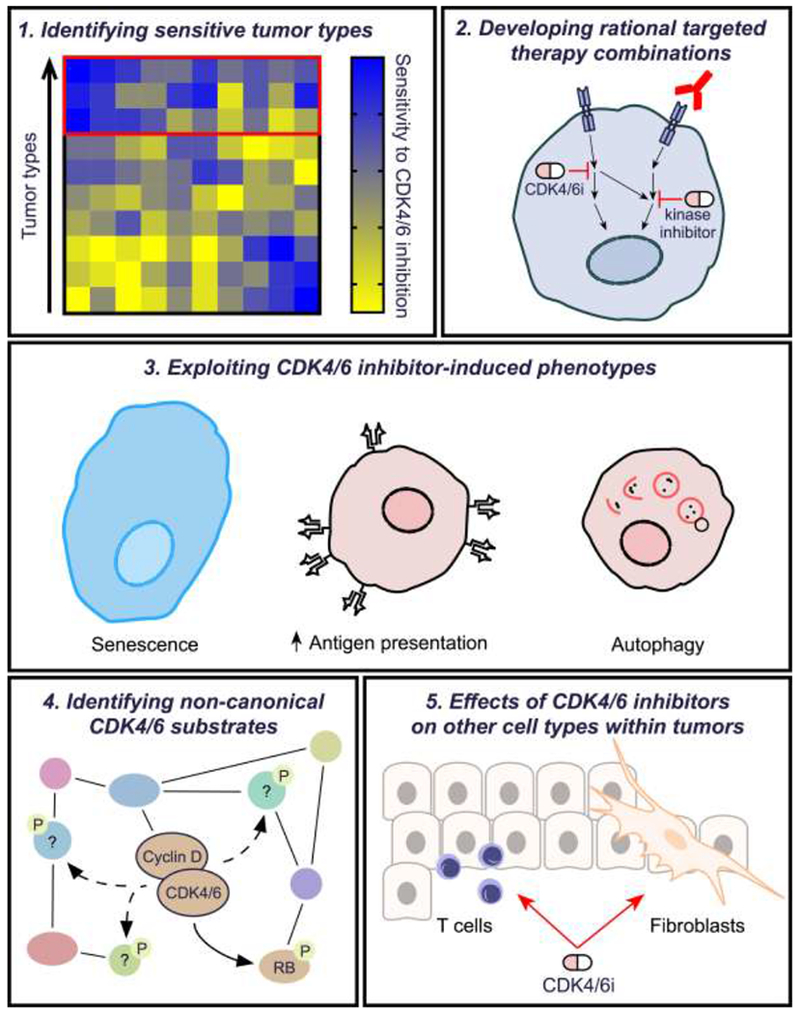
Figure 2.. Key Figure. Strategies for deriving maximal clinical benefit from CDK4/6 inhibition.
Although CDK4/6 inhibitors have shown impressive activity in the treatment of estrogen-receptor positive breast cancer, their full clinical potential has not been realized. This figure summarizes key areas that should be explored to expand the benefits of these agents in clinical practice. 1: Identification of sensitive tumor types using high throughput multi-omic analyses. In vitro studies to determine molecular predictors of cancer cell sensitivity and resistance to CDK4/6 inhibitors are critical for guiding patient selection in future clinical trials. Such studies should be performed using high-throughput techniques to maximize efficiency. Examples include CRISPR or RNAi screens (ideally performed both with and without concomitant CDK4/6 inhibitor treatment), pharmacologic compound screens that identify synergistic CDK4/6 inhibitor-containing combinations, and bioinformatic analyses that determine associations between cancer cells’ CDK4/6 inhibitor sensitivity and their genomic and transcriptomic profiles. 2: Understanding cross-talk and cooperativity between parallel pro-survival signaling pathways. The CDK4/6 signaling pathway intersects with other key mitogenic pathways (e.g. PI3K-AKT; Ras-Raf-MEK-ERK; steroid hormone signaling) in tumor cells. Synergistic anti-tumor effects have been observed through co-inhibition of CDK4/6 and these other pathways, using combination regimens incorporating either small molecule kinase inhibitors (depicted as pills) or inhibitory monoclonal antibodies (shown in red). Relatively few studies have systematically explored the impact of CDK4/6 inhibition on the phospho-proteome and signal transduction networks in cancer cells, and more are urgently required. 3. Exploiting biologic phenotypes induced by CDK4/6 inhibitors in cancer cells. Short-term treatment of cancer cells with CDK4/6 inhibitors induces RB-dependent G1 arrest. However, more prolonged exposure can induce profoundly different biological phenotypes in tumor cells, in a manner also reflective of sustained RB activation. Capitalizing upon these phenotypes might improve the efficacy of CDK4/6 inhibitors. For example, CDK4/6 inhibition invokes many hallmarks of cellular senescence (cellular enlargement, increased beta-galactosidase activity), raising the question of whether they should be combined with “senolytic” compounds (e.g. bcl-2/bcl-xl inhibitors). CDK4/6 inhibitors also increase tumor cell neoantigen presentation via cell surface MHC Class I, providing rationale for immunotherapy combinations. In addition, CDK4/6 inhibitors can induce tumor cell autophagy, and co-treatment with autophagy inhibitors (e.g. bafilomycin, hydroxychloroquine) can increase their efficacy. 4: Identification of non-canonical CDK4/6 substrates. Aside from their canonical substrate RB, CDKs 4 and 6 also bind to and phosphorylate a range of other protein substrates involved in diverse biologic processes. Key examples are the transcription factor FOXM1, certain glycolytic enzymes, and Nuclear Factor of Activated T cell (NFAT) family members. Inhibiting the phosphorylation of these substrates with CDK4/6 inhibitors can have wide-ranging effects on tumor cell biology, even in cells that lack RB function. 5. Understanding effects in cells of the tumor stroma. CDK4/6 inhibition can impact stromal cell biology within solid tumors. For example, fibroblasts (shown in yellow) can senesce in response to CDK4/6 inhibitor treatment, releasing cytokines that impair anti-tumor immunity and thus limit drug efficacy. Conversely, CDK4/6 inhibition can directly enhance effector functions in T lymphocytes (blue) to strengthen anti-tumor immune responses. Better understanding the effects of CDK4/6 inhibitors on these and other non-tumor cells could result in novel strategies that enhance drug activity and/or mitigate therapeutic resistance.
Figure 3.
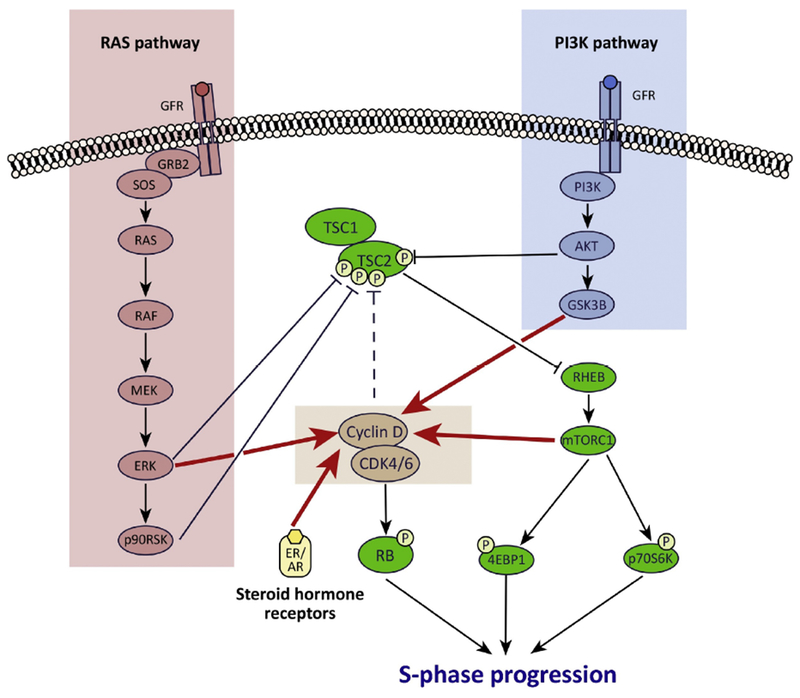
Figure 3.. Cross-talk between the CDK4/6 and mitogenic signaling pathways in cancer.
Extensive cross-talk exists between mitogenic signaling pathways and the CDK4/6 pathway in cancer cells. First, mitogenic signaling increases cyclin D1 levels to increase CDK4/6 activity via several mechanisms (red arrows): (a) PI3K pathway signaling reduces cyclin D1 turnover via GSK3β; (b) Ras pathway signaling promotes an ERK-dependent upregulation of transcription factors that drive cyclin D gene expression; (c) mTORC1 increases cyclin D protein translation; (d) CCND1 transcription is increased directly by activated ER (breast cancer) and AR (prostate cancer). In addition, these pathways also interact via their convergence on TSC2 and thus mTORCl: (a) ART, ERK, and p90RSK each directly phosphorylate TSC2 to activate mTORCl; (b) cyclin D-CDK4/6 also bind to and probably phosphorylate TSC2 to increase mTORCl activity (dashed line). Rationale for synergistic combination therapy regimens: CDK4/6 inhibitors limit cell proliferation by reducing RB phosphorylation, but can also partially suppress TSC2 phosphorylation. Co-inhibiting the PI3K and/or Ras pathway not only reduces cyclin D1 levels (further enforcing RB activation), but also increases the suppression of TSC2 phosphorylation, maximizing mTORCl inhibition. Collectively, combined activation of RB and inhibition of mTORCl inhibition potently blocks progression of cells into S phase.

References

    1. Hanahan D and Weinberg RA (2011) Hallmarks of cancer: the next generation. Cell 144 (5), 646–74. - PubMed
    1. Fry DW et al. (2004) Specific inhibition of cyclin-dependent kinase 4/6 by PD 0332991 and associated antitumor activity in human tumor xenografts. Mol Cancer Ther 3 (11), 1427–38. - PubMed
    1. Kim S et al. (2014) LEE011: An orally bioavailable, selective small molecule inhibitor of CDK4/6-Reactivating Rb in cancer. Molecular Cancer Therapeutics 12 (PR02–PR02).
    1. Gelbert LM et al. (2014) Preclinical characterization of the CDK4/6 inhibitor LY2835219: in-vivo cell cycle-dependent/independent anti-tumor activities alone/in combination with gemcitabine. Invest New Drugs 32 (5), 825–37. - PMC - PubMed
    1. Finn RS et al. (2009) PD 0332991, a selective cyclin D kinase 4/6 inhibitor, preferentially inhibits proliferation of luminal estrogen receptor-positive human breast cancer cell lines in vitro. Breast Cancer Res 11 (5), R77. - PMC - PubMed

Publication types

MeSH terms