Review
. 2017 Jun 26;2(3):311-327.
doi: 10.1016/j.jacbts.2016.11.010. eCollection 2017 Jun.

Enabling Precision Cardiology Through Multiscale Biology and Systems Medicine

Affiliations
Review

Enabling Precision Cardiology Through Multiscale Biology and Systems Medicine

Kipp W Johnson et al. JACC Basic Transl Sci. .

Abstract

The traditional paradigm of cardiovascular disease research derives insight from large-scale, broadly inclusive clinical studies of well-characterized pathologies. These insights are then put into practice according to standardized clinical guidelines. However, stagnation in the development of new cardiovascular therapies and variability in therapeutic response implies that this paradigm is insufficient for reducing the cardiovascular disease burden. In this state-of-the-art review, we examine 3 interconnected ideas we put forth as key concepts for enabling a transition to precision cardiology: 1) precision characterization of cardiovascular disease with machine learning methods; 2) the application of network models of disease to embrace disease complexity; and 3) using insights from the previous 2 ideas to enable pharmacology and polypharmacology systems for more precise drug-to-patient matching and patient-disease stratification. We conclude by exploring the challenges of applying a precision approach to cardiology, which arise from a deficit of the required resources and infrastructure, and emerging evidence for the clinical effectiveness of this nascent approach.

Keywords: CAD, coronary artery disease; EHR, electronic health record; GWAS, genome-wide association studies; HF, heart failure; cardiology; clinical informatics; multi-omics; precision medicine; translational bioinformatics.


Figures
None
Graphical abstract
Figure 1
Figure 1
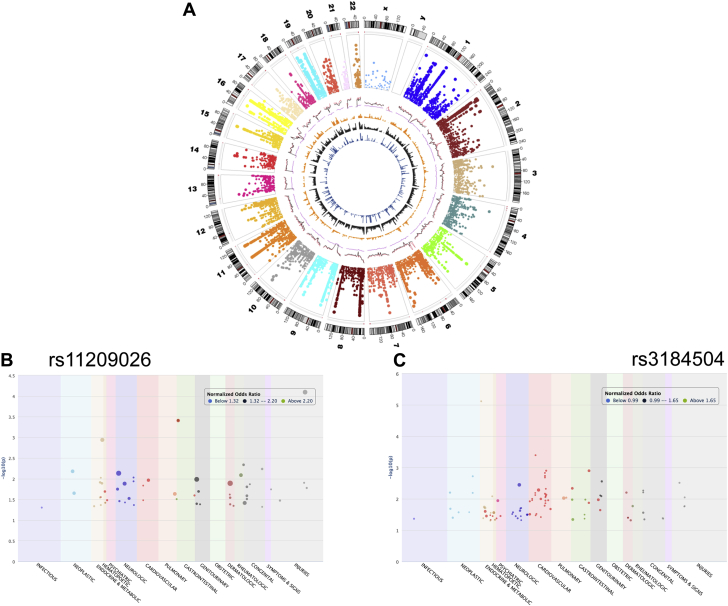
Genome and Phenome-Wide Associations of Coronary Atherosclerosis, a Fundamental Mechanism Driving Several Cardiovascular Diseases (A) Circos plot representing genome-wide associations of coronary atherosclerosis with each section representing human chromosomes. Phenome-wide associations of cardiovascular disease variants across other disease categories are represented in different colors. (B) rs11209026, a coding variant (c.G>A: R381Q) localized on interleukin-23 receptor (IL-23R); and (C) rs3184504 coding variant (c.784T>C: W262R) localized to PH domain of the SH2B3 protein.
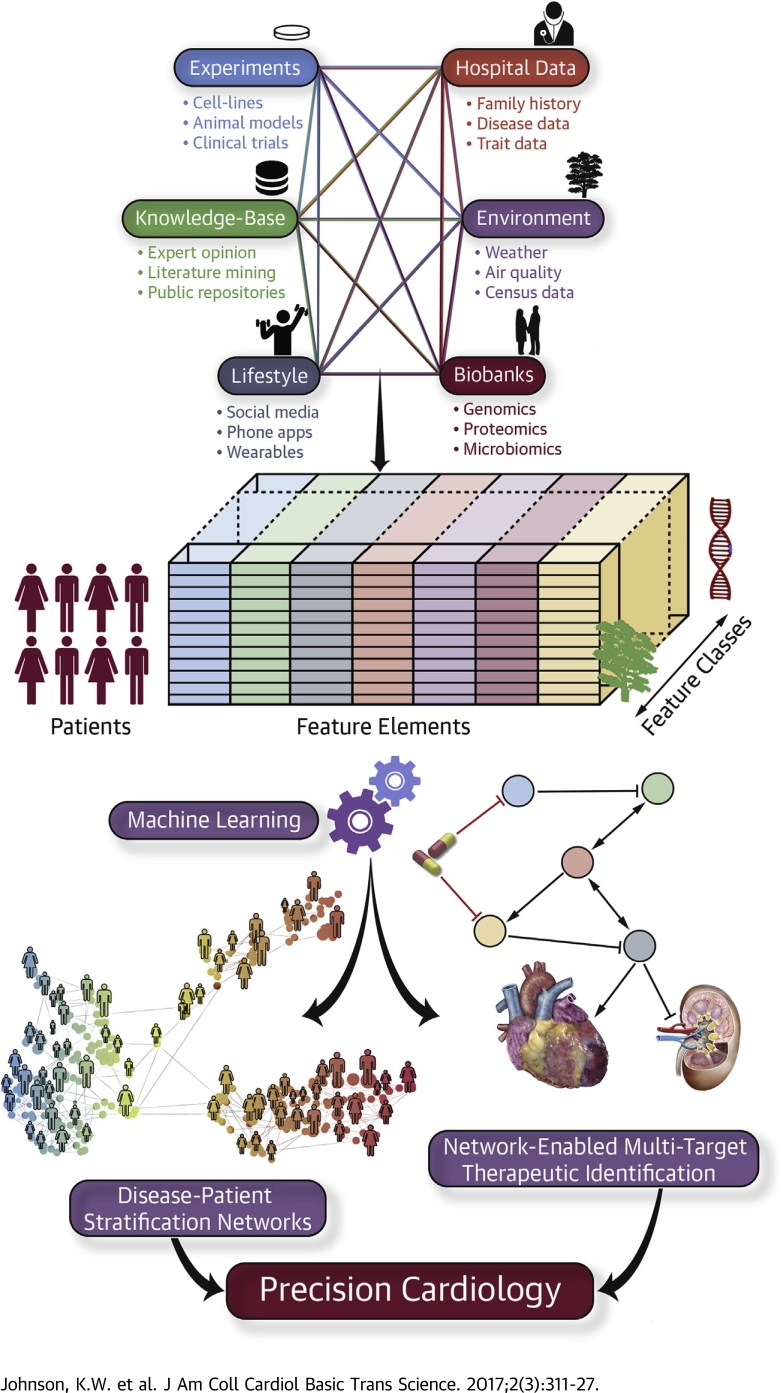
Central Illustration
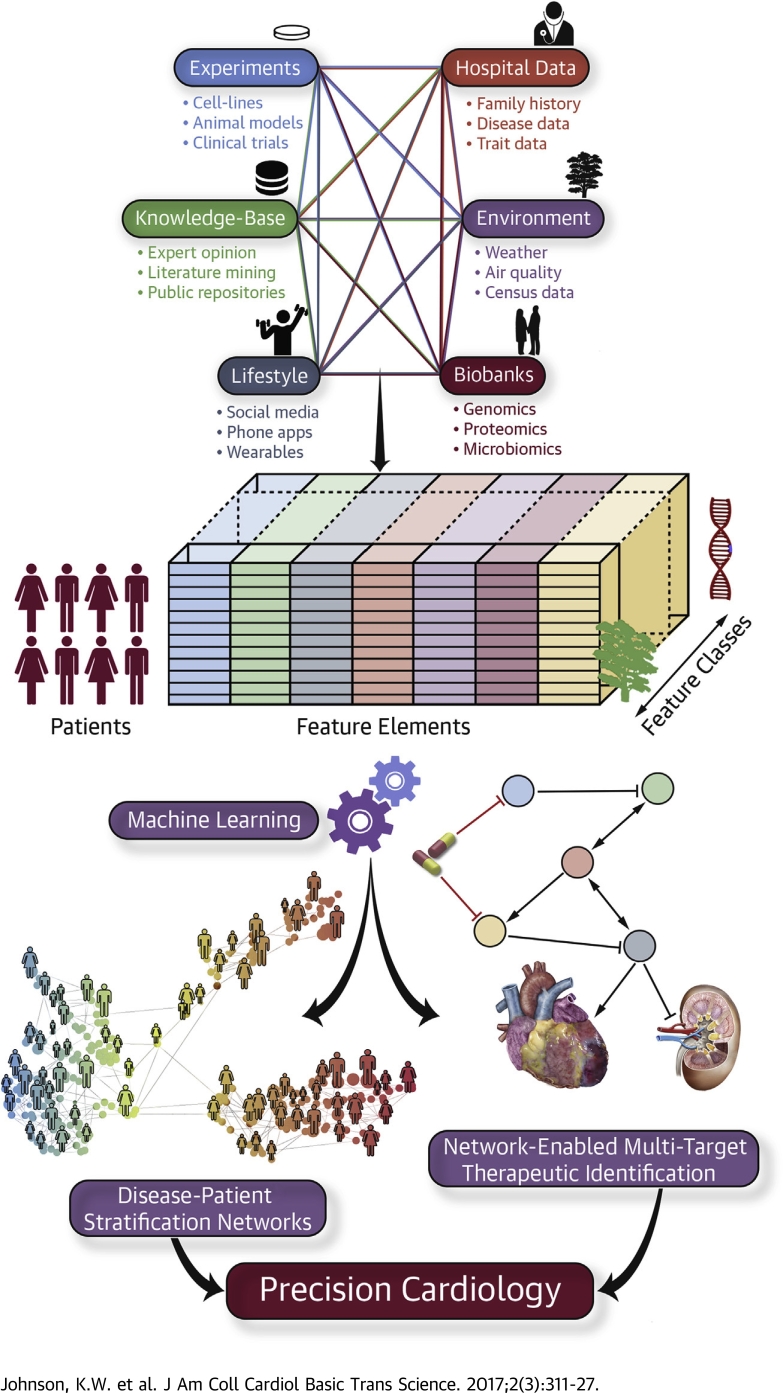
Machine Learning-Driven Precision Cardiology Multiple sources of heterogeneous data, including experimental evidence, bioinformatics databases, lifestyle measurements, electronic health records, environmental influences, and biobank findings, can be incorporated together using machine learning algorithms to identify causal disease networks, stratify patients, and ultimately predict more efficacious therapies.
Figure 2
Figure 2
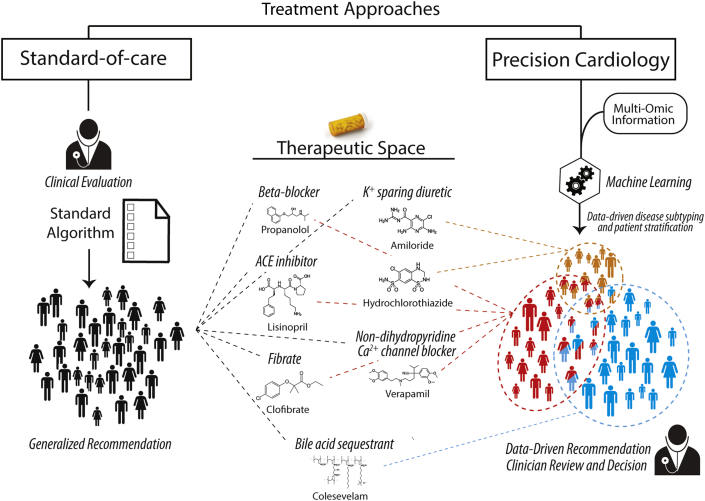
Conceptualization of a Personalized Medicine Approach to Cardiology Contrasted With the Current Standard of Care In the precision approach to cardiology, multi-omic information is incorporated to identify subtle strata of patients which can be differentially treated within the existing therapeutic space. ACE = angiotensin-converting enzyme.
Figure 3
Figure 3
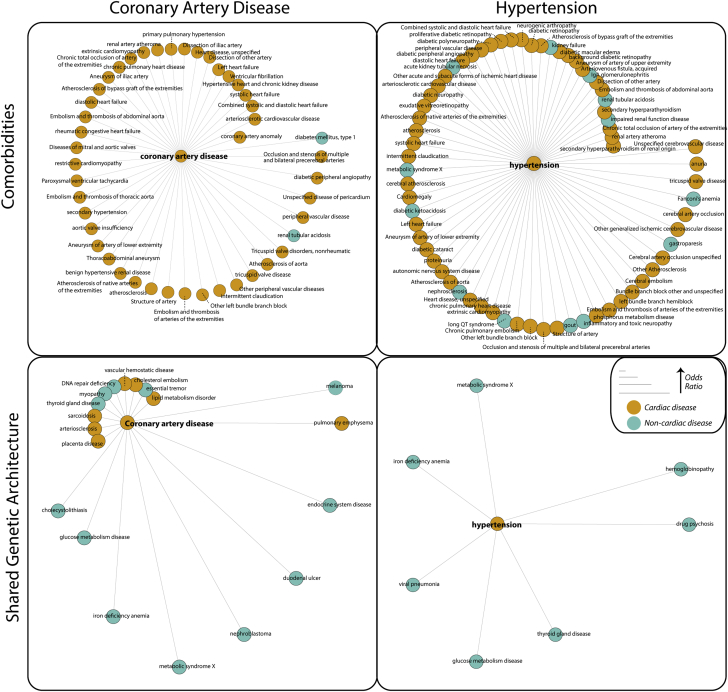
Comorbidity and Shared Genetic Architecture Between Hypertension and Coronary Artery Disease (Top) Example of disease comorbidity networks for coronary artery disease (CAD) and hypertension (HTN), with comorbid diseases ascertained from Mount Sinai Hospital’s electronic health record data arranged around the central node. Distance from the central node is proportional to comorbidity odds ratio. We calculated comorbidity from ICD-9 codes using a logistic regression model controlling for age, sex, and self-reported ethnicity. Due to space limitations, we only show disease comorbidities with odds ratio ≥2. (Bottom) Networks of shared genetic architecture between CAD and HTN and other diseases, with shared genetic architecture defined as shared genome-wide association studies (GWAS) loci (gene level) between the 2 diseases. We compiled all data from GWASdb version 2 (August 2015) and associated genes to a disease if they were GWAS threshold significant (p < 5 × 10−6) and conferred an increased risk. We calculated shared genetic architecture using a 1-sided Fisher exact test. Distance from central node is proportional to odds ratio. DNA = deoxyribonucleic acid.
Figure 4
Figure 4
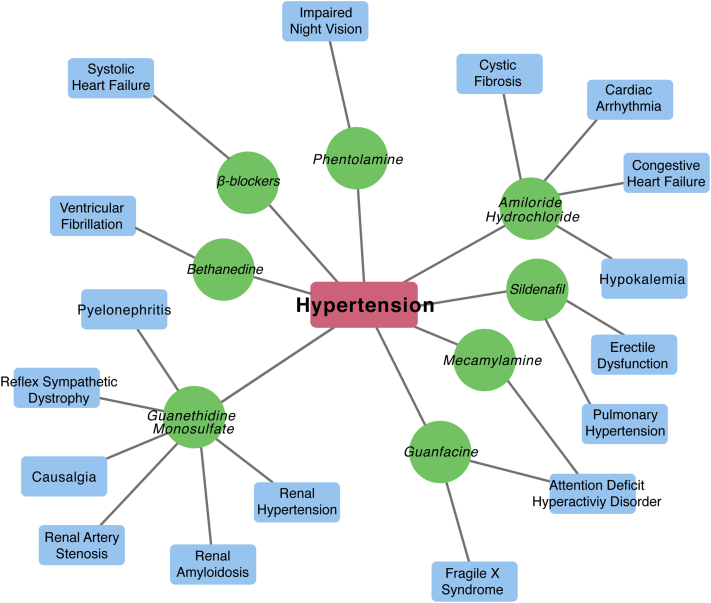
Hypertension Drug Repositioning Bipartite Network From RepurposeDB Example of drugs originally developed or used for hypertension that have been repurposed for other indications.

References

    1. Iqbal J., Gunn J., Serruys P.W. Coronary stents: historical development, current status and future directions. Br Med Bull. 2013;106:193–211. - PubMed
    1. Cushman D.W., Ondetti M.A. History of the design of captopril and related inhibitors of angiotensin converting enzyme. Hypertension. 1991;17:589–592. - PubMed
    1. Fox K.A., Steg P.G., Eagle K.A. Decline in rates of death and heart failure in acute coronary syndromes, 1999–2006. JAMA. 2007;297:1892–1900. - PubMed
    1. Ho P.M., Magid D.J., Shetterly S.M. Medication nonadherence is associated with a broad range of adverse outcomes in patients with coronary artery disease. Am Heart J. 2008;155:772–779. - PubMed
    1. Sidney S., Quesenberry C.P., Jr., Jaffe M.G. Recent trends in cardiovascular mortality in the United States and public health goals. JAMA Cardiol. 2016;1:594–599. - PubMed