


Syphilis prevalence trends in adult women in 132 countries - estimations using the Spectrum Sexually Transmitted Infections model
- PMID: 30065272
- PMCID: PMC6068092
- DOI: 10.1038/s41598-018-29805-9
Syphilis prevalence trends in adult women in 132 countries - estimations using the Spectrum Sexually Transmitted Infections model
Abstract
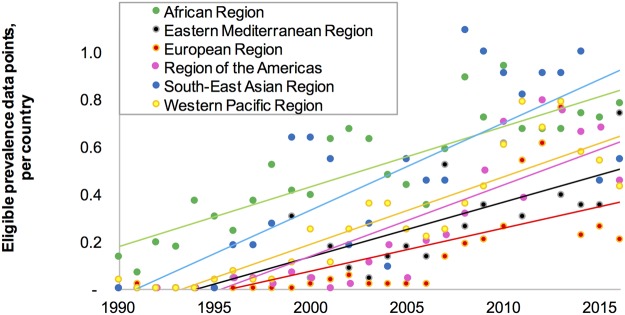
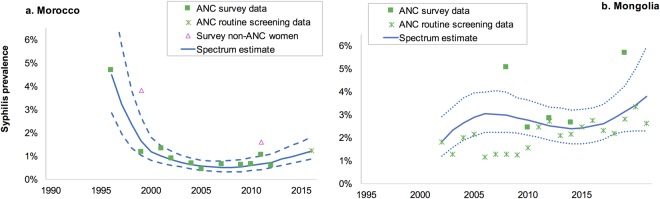
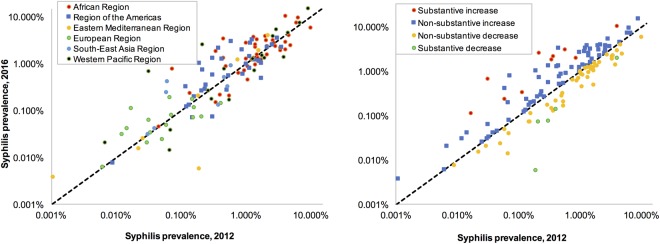
We estimated national-level trends in the prevalence of probable active syphilis in adult women using the Spectrum Sexually Transmitted Infections (STI) model to inform program planning, target-setting, and progress evaluation in STI control. The model fitted smoothed-splines polynomial regressions to data from antenatal clinic surveys and screening and representative household surveys, adjusted for diagnostic test performance and weighted by national coverage. Eligible countries had ≥1 data point from 2010 or later and ≥3 from 2000 or later from adult populations considered representative of the general female population (pregnant women or community-based studies). Between 2012 and 2016, the prevalence of probable active syphilis in women decreased in 54 (41%) of 132 eligible countries; this decrease was substantive (≥10% proportionally, ≥0.10% percentage-point absolute difference and non-overlapping 95% confidence intervals in 2012 and 2016) in 5 countries. Restricting eligible data to prevalence measurements of dual treponemal and non-treponemal testing limited estimates to 85 countries; of these, 45 countries (53%) showed a decrease. These standardized trend estimates highlight the need for increased investment in national syphilis surveillance and control efforts if the World Health Organization target of a 90% reduction in the incidence of syphilis between 2018 and 2030 is to be met.
Conflict of interest statement
The authors declare no competing interests.
Figures
References
-
- World Health Organization. Global health sector strategy on sexually transmitted infections 2016–2021. Towards ending STIs. Report No. WHO/RHR/16.09, (Geneva, 2016).
-
- World Health Organization. The global elimination of congenital syphilis: rationale and strategy for action. 48 (Geneva, 2007).
Publication types
MeSH terms
Grants and funding
LinkOut - more resources
Full Text Sources
Other Literature Sources
Medical
Miscellaneous
