


Transcatheter Cryoablation Procedures without Fluoroscopy in Pediatric Patients with Atrioventricular Nodal Reentrant Tachycardia: A Single-Center Experience
- PMID: 30065572
- PMCID: PMC6066944
- DOI: 10.6515/ACS.201807_34(4).20180326A
Transcatheter Cryoablation Procedures without Fluoroscopy in Pediatric Patients with Atrioventricular Nodal Reentrant Tachycardia: A Single-Center Experience
Abstract
Background: Atrioventricular nodal reentrant tachycardia (AVNRT) is one of the most common supraventricular tachycardia substrates. The aim of this study was to demonstrate the excellent outcomes of cryoablation without fluoroscopy in pediatric patients with AVNRT.
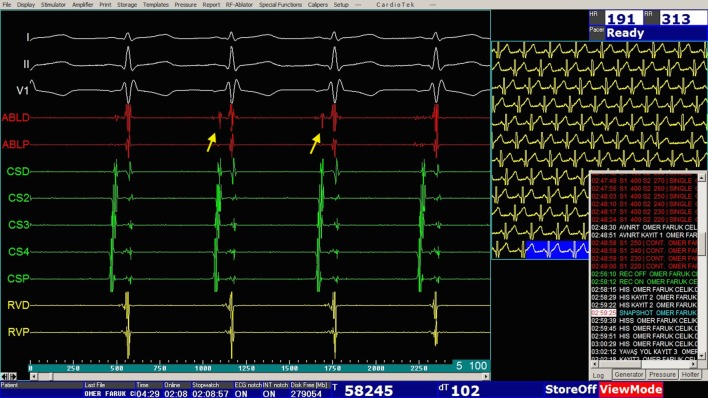
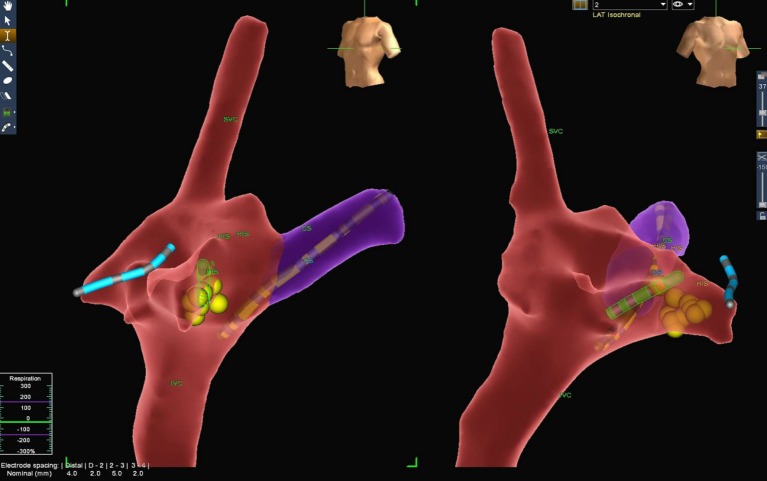
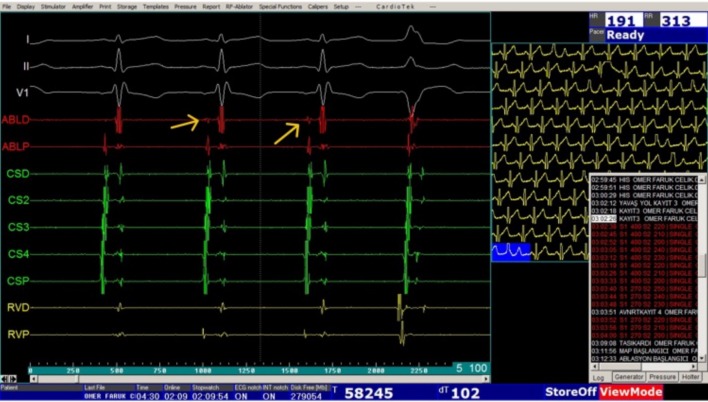
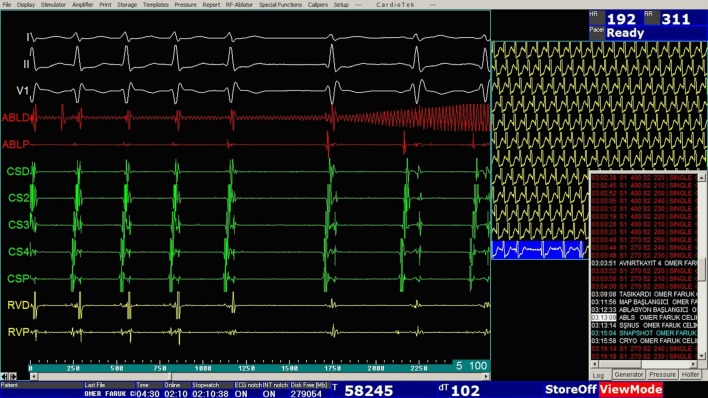
Methods: From September 2015 to October 2016, a transcatheter cryoablation procedure was performed in 109 patients using the EnSite® system. After electrophysiologic studies, a cryoablation catheter was advanced for the purpose of ablation of the slow pathway. Six to eight lesions were delivered in 240-300 seconds at -70 °C, with special effort being paid to obtain an eyeball formation around the first effective lesion.
Results: The mean weight and age of the patients were 24.6 ± 5.3 kg (15-68 kg) and 9.8 ± 2.6 years (5-18 years), respectively. The mean procedure time was 109.8 ± 46 minutes, and the acute procedural success rate was excellent (100%). Ablation procedures were performed during induced tachycardia in 67 patients and during sinus rhythm in 42. The mean follow-up period was 13.3 ± 5.8 months (4-17 months). Recurrence was noted in one patient during the follow-up period who received the ablation procedure with a 6-mm tip catheter. No recurrence was noted among the patients treated with an 8-mm cryocatheter. No permanent cryoablation-related complications occurred.
Conclusions: Cryoablation using an electroanatomic mapping system is safe and effective in pediatric patients with AVNRT, and has the advantage of avoiding ionizing radiation.
Keywords: Atrioventricular reentrant tachycardia; Cryoablation; Electroanatomic mapping; Zero-fluoroscopy.
Figures
References
-
- Drago F, Placidi S, Righi D, et al. Cryoablation of AVNRT in children and adolescents: early intervention leads to a better outcome. J Cardiovasc Electrophysiol. 2014;25:398–403. - PubMed
-
- Reddy CD, Silka MJ, Bar-Cohen Y. A comparison of AV nodal reentrant tachycardia in young children and adolescents: electrophysiology, ablation, and outcomes. Pacing Clin Electrophysiol. 2015;38:1325–1332. - PubMed
-
- Ko JK, Deal BJ, Strasburger JF, et al. Supraventricular tachycardia mechanisms and their age distribution in pediatric patients. Am J Cardiol. 1992;69:1028–1032. - PubMed
-
- Santangeli P, Proietti R, Di Biase L, et al. Cryoablation versus radiofrequency ablation of atrioventricular nodal reentrant tachycardia. J Interv Card Electrophysiol. 2014;39:111–119. - PubMed
LinkOut - more resources
Full Text Sources