The role of transient receptor potential polycystin channels in bone diseases
- PMID: 30069448
- PMCID: PMC6046287
- DOI: 10.21037/atm.2018.04.10
The role of transient receptor potential polycystin channels in bone diseases
Abstract
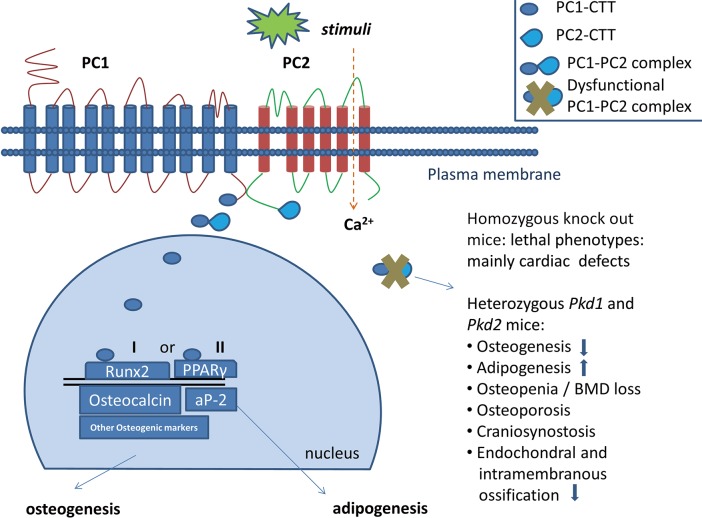
Transient receptor potential (TRP) channels are cation channels which act as molecular sensors that enable cells to detect and respond to a plethora of mechanical and environmental cues. TRPs are involved in various physiological processes, such as mechanosensation, non-inception and thermosensation, while mutations in genes encoding them can lead to pathological conditions, called "channelopathies". The subfamily of transient receptor potential polycystins (TRPPs), Polycystin 1 (PC1, TRPP1) and Polycystin 2 (PC2, TRPP2), act as mechanoreceptors, sensing external mechanical forces, including strain, stretch and fluid shear stress, triggering a cascade of signaling pathways involved in osteoblastogenesis and ultimately bone formation. Both in vitro studies and research on animal models have already identified their implications in bone homeostasis. However, uncertainty veiling the role of polycystins (PCs) in bone disease urges studies to elucidate further their role in this field. Mutations in TRPPs have been related to autosomal polycystic kidney disease (ADKPD) and research groups try to identify their role beyond their well-established contribution in kidney disease. Such an elucidation would be beneficial for identifying signaling pathways where polycystins are involved in bone diseases related to exertion of mechanical forces such as osteoporosis, osteopenia and craniosynostosis. A better understanding of the implications of TRPPs in bone diseases would possibly lay the cornerstone for effective therapeutic schemes.
Keywords: Bone diseases; ion channels; mechanotransduction; polycystin; transient receptor potential polycystin cation channels (TRPP cation channels).
Conflict of interest statement
Conflicts of Interest: The authors have no conflicts of interest to declare.
Figures
References
-
- Boels K, Glassmeier G, Herrmann D, et al. The neuropeptide head activator induces activation and translocation of the growth-factor-regulated Ca(2+)-permeable channel GRC. J Cell Sci 2001;114:3599-606. - PubMed
Publication types
LinkOut - more resources
Full Text Sources
Other Literature Sources
Research Materials
Miscellaneous