


Pharmacovigilance in oncology
- PMID: 30069667
- PMCID: PMC6132974
- DOI: 10.1007/s11096-018-0706-9
Pharmacovigilance in oncology
Abstract
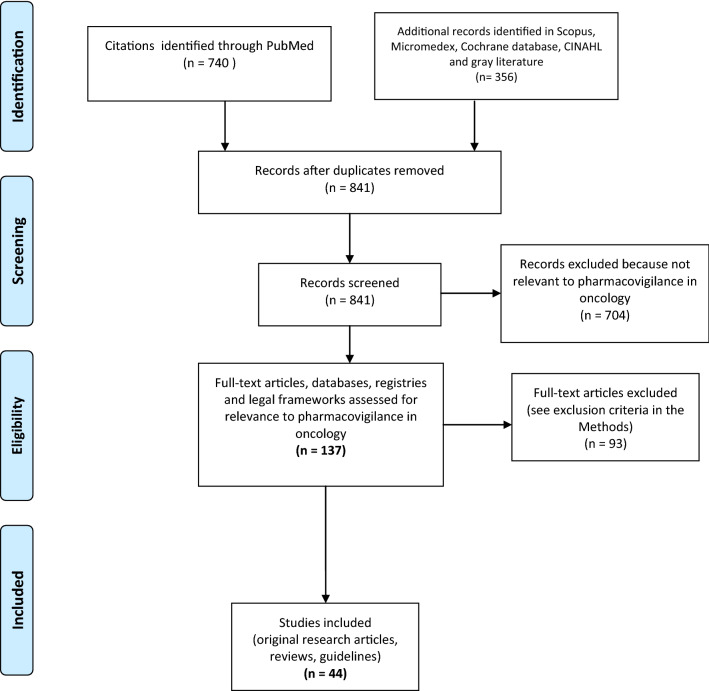
Background Side effects of cancer therapy are one of the most important issues faced by cancer patients during their illness. Pharmacovigilance, namely the science and activities aimed at monitoring the safety of drugs, is particularly important in oncology, due to the intrinsic biologic toxicity of antineoplastic agents, their narrow therapeutic windows, and the high doses and rigid timing of treatment regimens. Aim of the review To identify the main issues in carrying out an effective pharmacovigilance activity in oncology. Method We searched PubMed for articles about pharmacovigilance in relation to chemotherapy, radiotherapy and targeted therapy for cancer, using MeSH terms and text words. We also searched Embase, CINAHL, Scopus, Micromedex, the Cochrane Library, two pharmacovigilance databases and the gray literature for articles published in 2012-2018. Overall, 137 articles were considered potentially relevant and were critically appraised independently by two authors, leading to the inclusion of 44 relevant studies, guidelines and reviews. Another 10 important research reports were included in the review. Results Eight critical issues of pharmacovigilance in oncology were identified. These issues pertain to: terminology; range of side effects; targeted therapy and immunotherapy; chemoradiotherapy; generic drugs and biosimilars; drug interactions, pharmacogenetics and polypharmacy; special patient categories; and under-reporting of ADRs. Conclusion The importance of pharmacovigilance in oncology must be highlighted with every effort, to improve safety and offer cancer patients every possible help to improve their quality of life during such a critical period of their lives.
Keywords: Adverse drug reactions; Cancer; Cytotoxic chemotherapy; Neoplasms; Oncology; Pharmacovigilance; Radiotherapy; Safety; Targeted therapy; Toxicity.
Figures
References
-
- Tuccori M, Montagnani S, Capogrosso-Sansone A, Mantarro S, Antonioli L, Fornai M, et al. Adverse reactions to oncologic drugs: spontaneous reporting and signal detection. Expert Rev Clin Pharmacol. 2015;8(1):61–75. - PubMed
-
- Lau PM, Stewart K, Dooley M. The ten most common adverse drug reactions (ADRs) in oncology patients: do they matter to you? Support Care Cancer. 2004;12(9):626–633. - PubMed
-
- Welcome to Netherlands pharmacovigilance centre Lareb [Internet]. https://www.lareb.nl/en/. Accessed 21 Jan 2018.
-
- Oliveira JL, Lopes P, Nunes T, Campos D, Boyer S, Ahlberg E, et al. The EU-ADR Web Platform: delivering advanced pharmacovigilance tools. Pharmacoepidemiol Drug Saf. 2013;22(5):459–467. - PubMed
Publication types
MeSH terms
Substances
LinkOut - more resources
Full Text Sources
Other Literature Sources
Medical
