


MDN brain descending neurons coordinately activate backward and inhibit forward locomotion
- PMID: 30070205
- PMCID: PMC6097840
- DOI: 10.7554/eLife.38554
MDN brain descending neurons coordinately activate backward and inhibit forward locomotion
Abstract
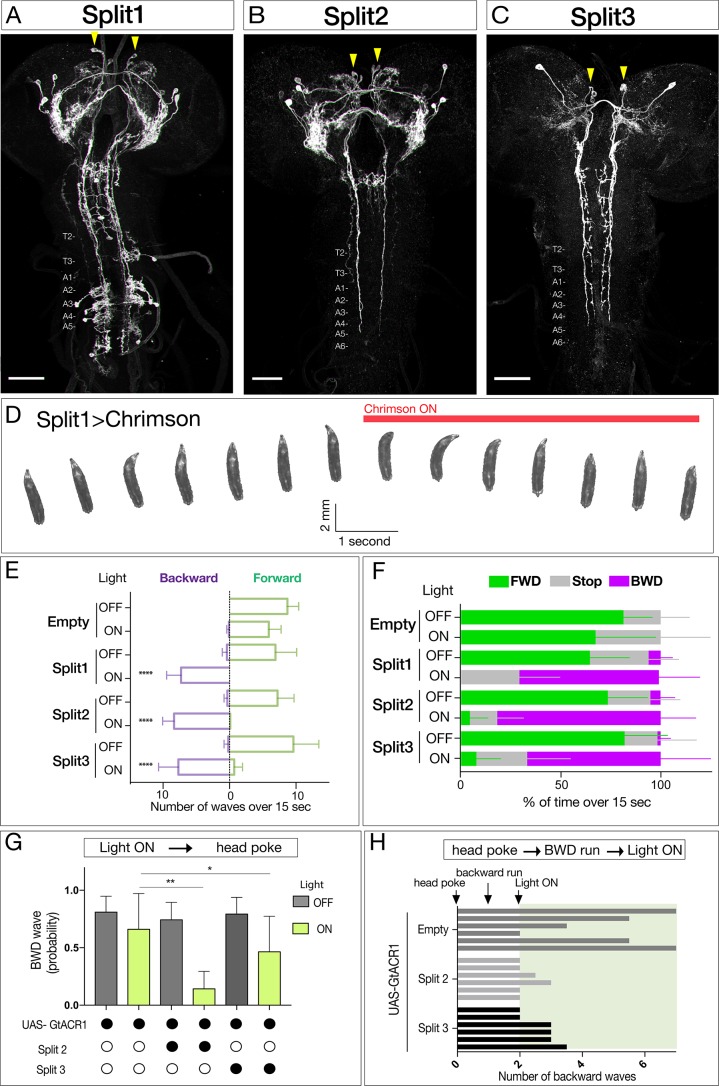
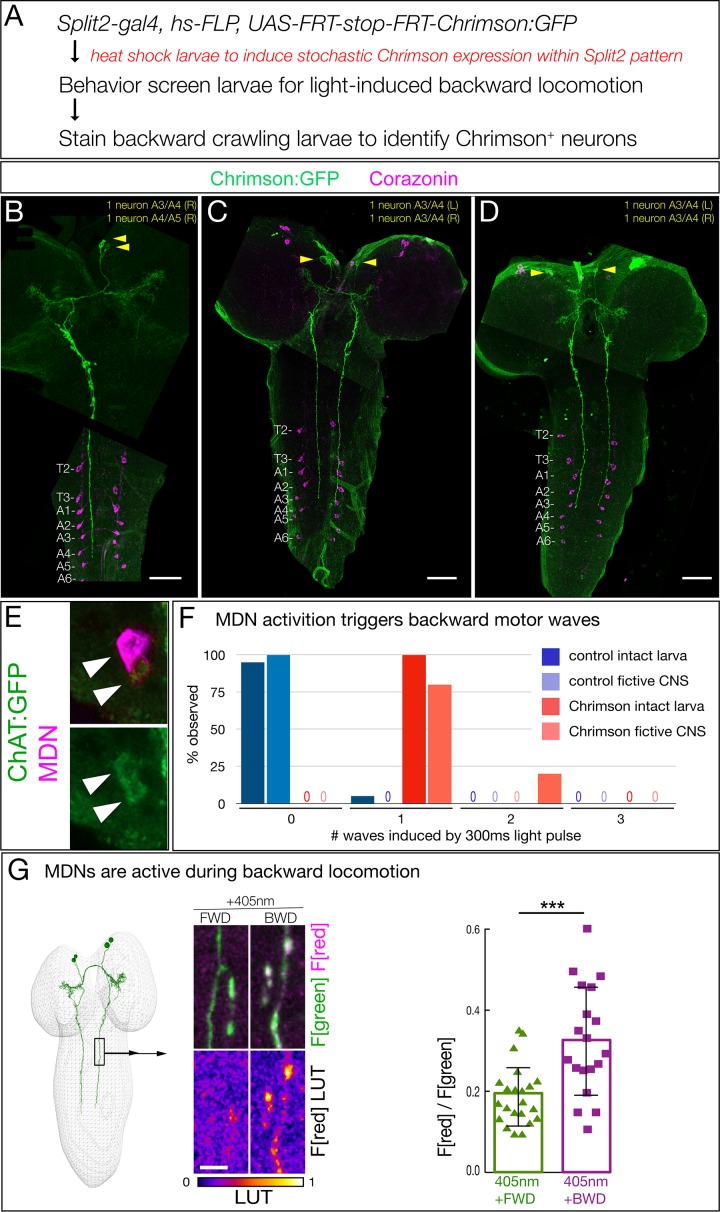
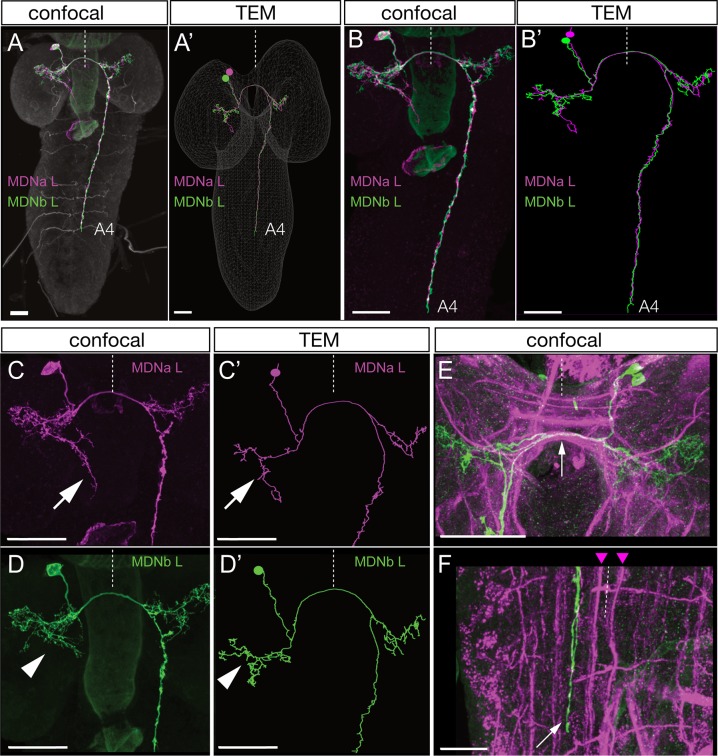
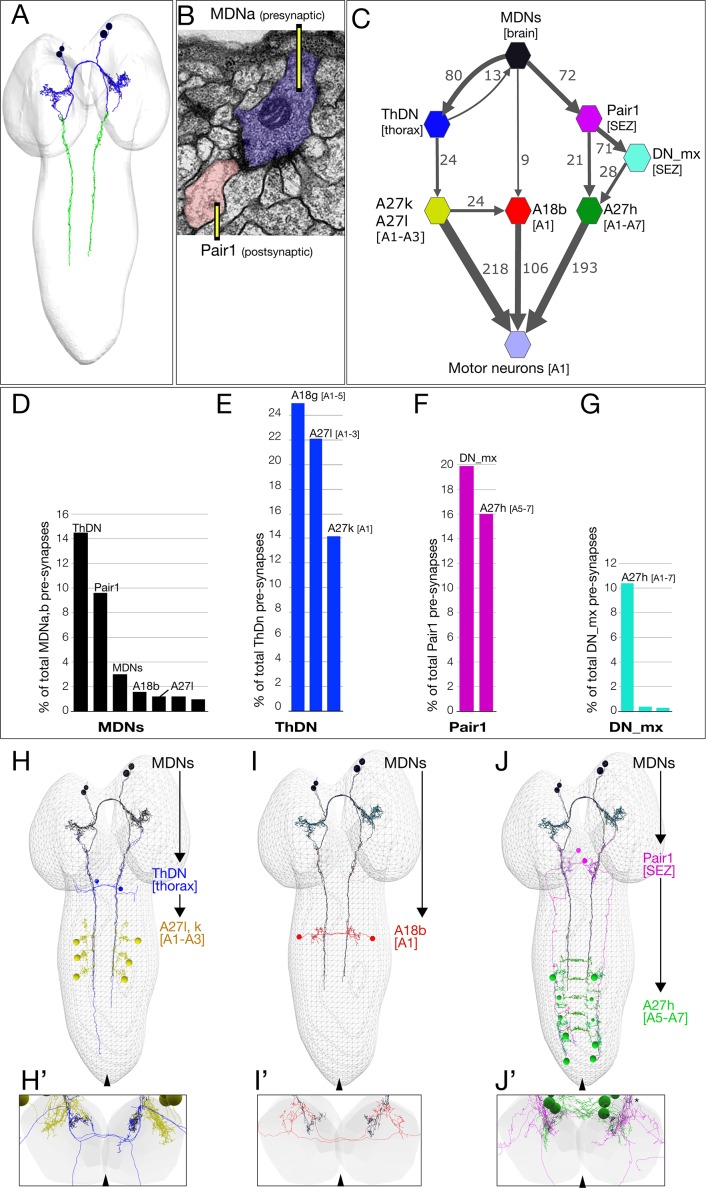
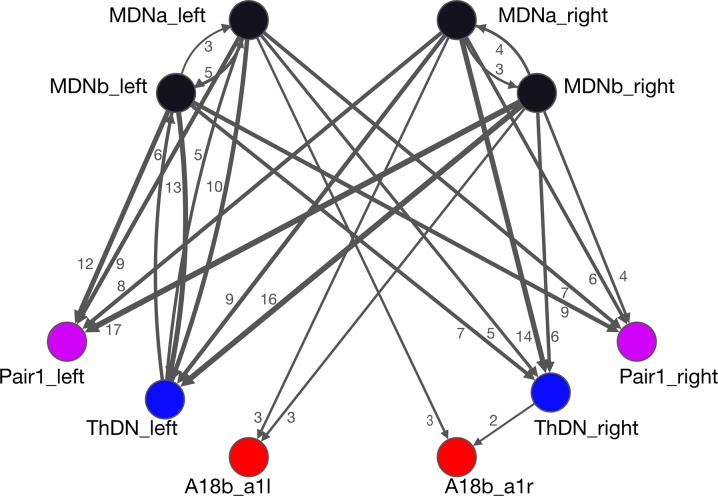
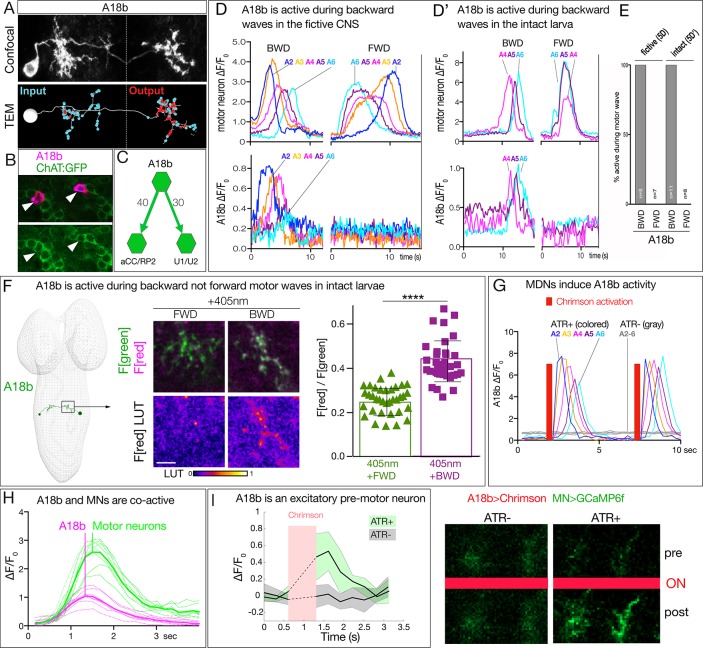
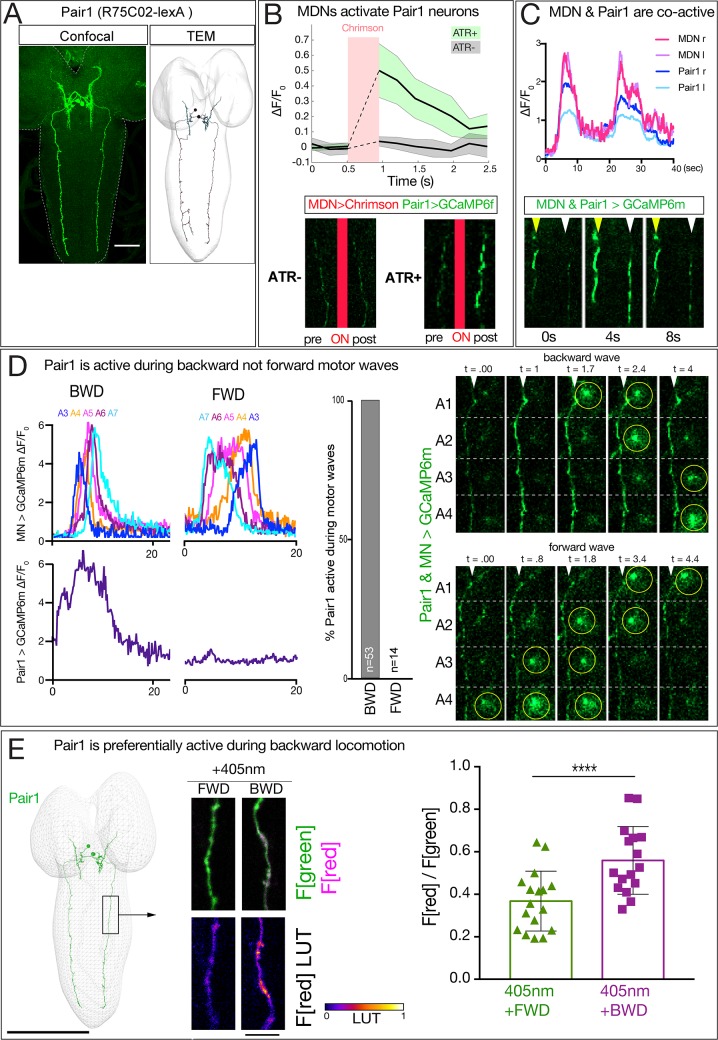
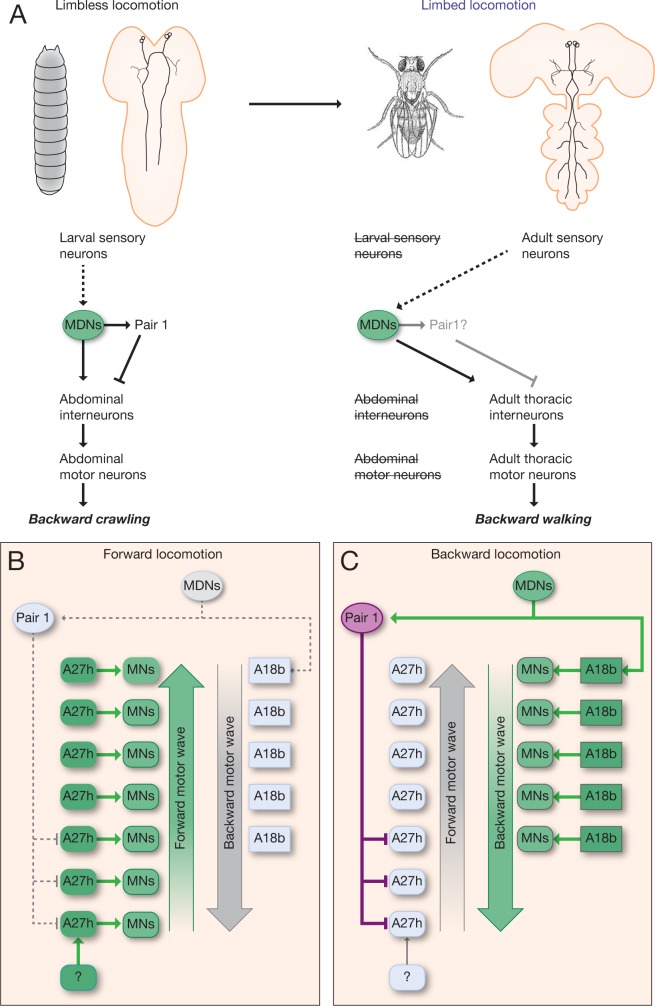
Command-like descending neurons can induce many behaviors, such as backward locomotion, escape, feeding, courtship, egg-laying, or grooming (we define 'command-like neuron' as a neuron whose activation elicits or 'commands' a specific behavior). In most animals, it remains unknown how neural circuits switch between antagonistic behaviors: via top-down activation/inhibition of antagonistic circuits or via reciprocal inhibition between antagonistic circuits. Here, we use genetic screens, intersectional genetics, circuit reconstruction by electron microscopy, and functional optogenetics to identify a bilateral pair of Drosophila larval 'mooncrawler descending neurons' (MDNs) with command-like ability to coordinately induce backward locomotion and block forward locomotion; the former by stimulating a backward-active premotor neuron, and the latter by disynaptic inhibition of a forward-specific premotor neuron. In contrast, direct monosynaptic reciprocal inhibition between forward and backward circuits was not observed. Thus, MDNs coordinate a transition between antagonistic larval locomotor behaviors. Interestingly, larval MDNs persist into adulthood, where they can trigger backward walking. Thus, MDNs induce backward locomotion in both limbless and limbed animals.
Keywords: D. melanogaster; backward crawl; behavior; command neuron; descending neuron; locomotor; neural circuit; neuroscience.
© 2018, Carreira-Rosario et al.
Conflict of interest statement
AC, AZ, MC, LM, RF, AC, CD No competing interests declared
Figures
References
-
- Bainbridge SP, Bownes M. Staging the metamorphosis of Drosophila Melanogaster. Journal of Embryology and Experimental Morphology. 1981;66:57–80. - PubMed
Publication types
MeSH terms
Substances
Grants and funding
- T32HD007348-24/APS Porter Physiology Development Fellowship/International
- F32NS105350-01A1/NH/NIH HHS/United States
- HHMI/HHMI/Howard Hughes Medical Institute/United States
- T32 GM007413/GM/NIGMS NIH HHS/United States
- P40 OD018537/OD/NIH HHS/United States
- HD27056/NH/NIH HHS/United States
- R25 GM086262/GM/NIGMS NIH HHS/United States
- T32 HD007348/HD/NICHD NIH HHS/United States
- R01 HD027056/HD/NICHD NIH HHS/United States
- F32 NS105350/NS/NINDS NIH HHS/United States
- T32GM007413-36/APS Porter Physiology Development Fellowship/International
- R37 HD027056/HD/NICHD NIH HHS/United States
- T32HD007348-24/NH/NIH HHS/United States
LinkOut - more resources
Full Text Sources
Other Literature Sources
Molecular Biology Databases
Miscellaneous
