Review
. 2018 Aug;36(3):421-437.
doi: 10.1016/j.ncl.2018.04.002.

Evolving Insights into the Molecular Neuropathology of Diffuse Gliomas in Adults

Affiliations
Review

Evolving Insights into the Molecular Neuropathology of Diffuse Gliomas in Adults

Floris P Barthel et al. Neurol Clin. 2018 Aug.

Abstract

Recent advances in molecular analysis and genome sequencing have prompted a paradigm shift in neuropathology. This article discusses the discovery and clinical relevance of molecular biomarkers in diffuse gliomas in adults and how these biomarkers led to revision of the World Health Organization classification of these tumors. We relate progress in clinical classification to an overview of studies using molecular profiling to study gene expression and DNA methylation to categorize diffuse gliomas in adults and issues dealing with intratumoral heterogeneity. These efforts will refine the taxonomy of diffuse gliomas, facilitate selection of appropriate treatment regimens, and ultimately improve patient's lives.

Keywords: 1p/19q codeletion; Astrocytoma; Diffuse gliomas; IDH mutations; Oligodendroglioma.


Figures

Figure 1
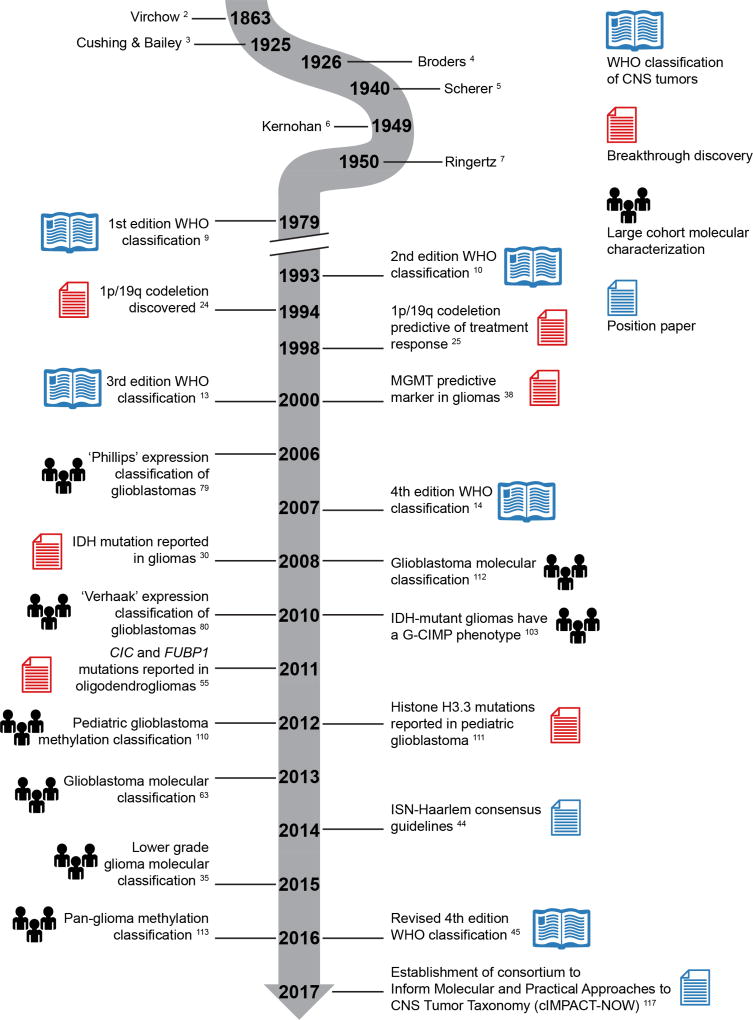
Figure 1. A timeline of events in the history of molecular neuropathology
This selection of events is categorized into breakthrough discoveries, large cohort molecular characterizations, position papers and different editions of the WHO classification of CNS tumors. ISN = International Society of Neuropathology.
Figure 2
Figure 2. Groups of diffuse gliomas classified according to IDH mutation and 1p/19q codeletion status demonstrate a distinct landscape of molecular features
Gene pathways are indicated. Genes in orange indicate genes preferentially targeted by gain-of-function (such as hotspot) mutational events or amplification events. Genes marked in blue indicate genes commonly affected by loss-of-function mutation (such as frameshift) or deletion events. Only features with frequencies greater than five percent are shown. Frequencies were derived from a recent publication. TPM = TERT promoter mutation, RTK = receptor tyrosine kinase, PI3K = phosphoinositide-3 kinase, TMM = telomere maintenance mechanism.
Figure 3
Figure 3. Cell type abundance is an important contributor to transcriptional subtypes
Tumor cells in diffuse gliomas can have a proneural, classical, or mesenchymal transcriptional profile. The now defunct neural subtype appeared to be the result of substantial admixture of non-tumor cells in especially less cellular/more peripheral parts of diffuse gliomas. Cells from the tumor microenvironment including microvascular and immune cells contribute to the mesenchymal subtype.

References

    1. Ostrom QT, Gittleman H, Fulop J, et al. CBTRUS Statistical Report: Primary Brain and Central Nervous System Tumors Diagnosed in the United States in 2008–2012. Neuro-oncology. 2015;17(Suppl 4):iv1–iv62. - PMC - PubMed
    1. Virchow R. Die krankhaften Geschwülste. Dreissig Vorlesungen, gehalten während des Wintersemesters 1862–1863 an Der Universität Zu Berlin. Berlin, Germany: A. Hirschwald; 1863.
    1. Bailey P, Cushing H. Microchemical Color Reactions as an Aid to the Identification and Classification of Brain Tumors. Proceedings of the National Academy of Sciences of the United States of America. 1925;11(1):82–84. - PMC - PubMed
    1. Broders AC. Carcinoma: Grading the malignancy of carcinoma, grading and practical application. Arch Path (Lab Med) 1926;2:376.
    1. Scherer HJ. A Critical Review: The Pathology of Cerebral Gliomas. Journal of Neurology and Psychiatry. 1940;31 - PMC - PubMed

Publication types