


A post-mortem population survey on foetal-infantile end-of-life decisions: a research protocol
- PMID: 30075769
- PMCID: PMC6090741
- DOI: 10.1186/s12887-018-1218-4
A post-mortem population survey on foetal-infantile end-of-life decisions: a research protocol
Abstract
Background: The death of a child before or shortly after birth is frequently preceded by an end-of-life decision (ELD). Population-based studies of incidence and characteristics of ELDs in neonates and infants are rare, and those in the foetal-infantile period (> 22 weeks of gestation - 1 year) including both neonates and stillborns, are non-existent. However, important information is missed when decisions made before birth are overlooked. Our study protocol addresses this knowledge gap.
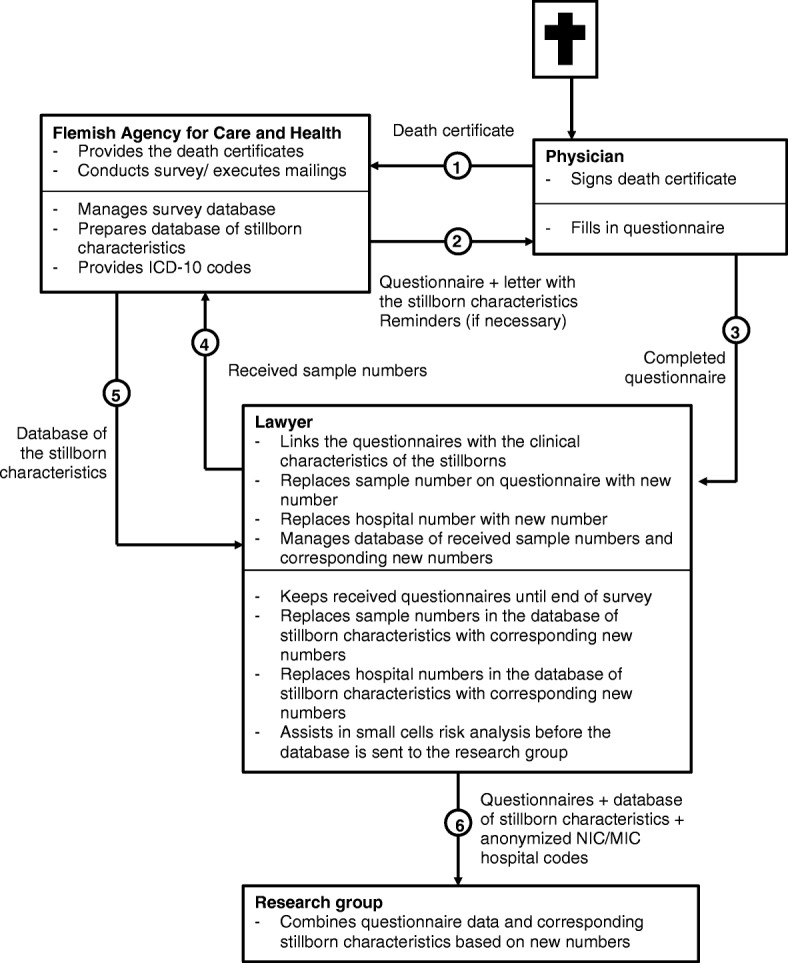
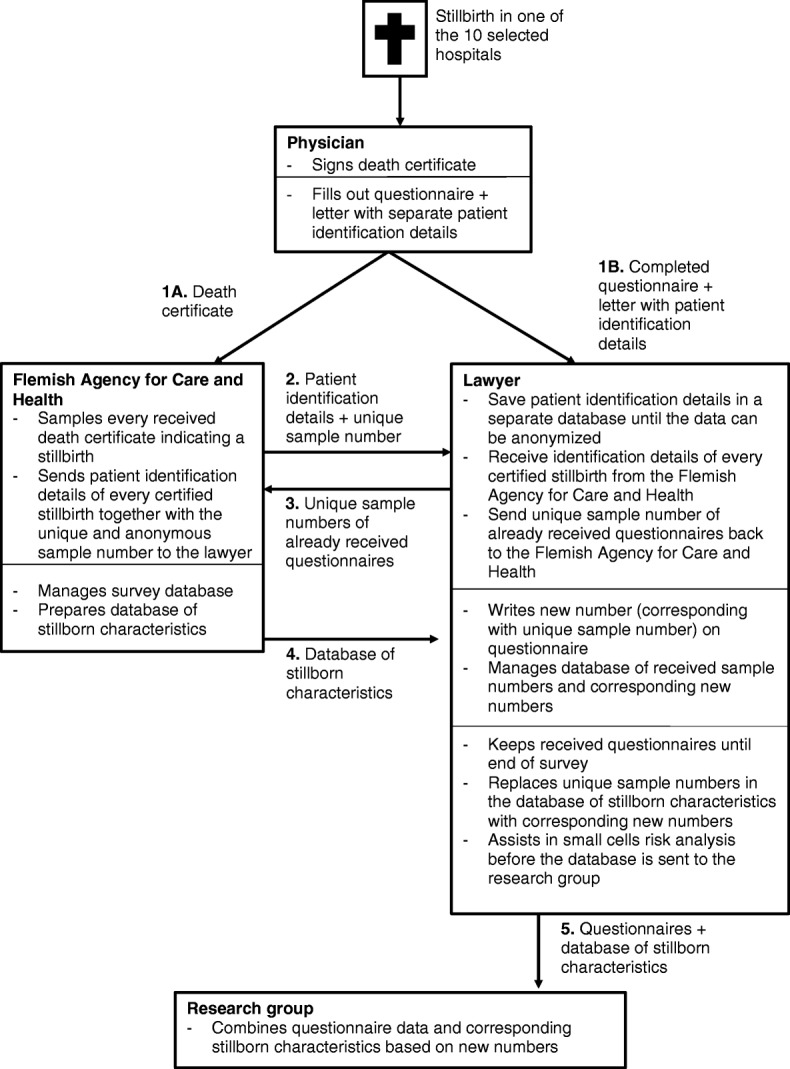
Methods: First, a new and encompassing framework was constructed to conceptualise ELDs in the foetal-infantile period. Next, a population mortality follow-back survey in Flanders (Belgium) was set up with physicians who certified all death certificates of stillbirths from 22 weeks of gestation onwards, and infants under the age of a year. Two largely similar questionnaires (stillbirths and neonates) were developed, pilot tested and validated, both including questions on ELDs and their preceding decision-making processes. Each death requires a postal questionnaire to be sent to the certifying physician. Anonymity of the child, parents and physician is ensured by a rigorous mailing procedure involving a lawyer as intermediary between death certificate authorities, physicians and researchers. Approval by medical societies, ethics and privacy commissions has been obtained.
Discussion: This research protocol is the first to study ELDs over the entire foetal-infantile period on a population level. Based on representative samples of deaths and stillbirths and applying a trustworthy anonymity procedure, the research protocol can be used in other countries, irrespective of legal frameworks around perinatal end-of-life decision-making.
Keywords: End-of-life decisions; Mortality follow-back survey; Neonates; Population-based; Stillbirths; Termination of pregnancy.
Conflict of interest statement
For the neonatal part of this study, approval was obtained from the Ethics Committee of Ghent University (Belgian Registration Number B670201628795), the Privacy Commission (CBPL, registration number SA3/VT005071970), the National Council of the Order of Physicians (registration number BD/wc/89997) and the Sectoral Committee of Social Security and health (registration number SCSZG/16/234). For the prenatal section of this study, approval was obtained from the Central Ethics Committee of Ghent University (Belgian Registration Number B670201730997), the Local Ethics Committees of the participating hospitals in Flanders, the Privacy Commission (CBPL, registration number SA3/VT005071970), the National Council of the Order of Physicians (registration number BD/wc/89997) and the Sectoral Committee of Social Security and health (registration number SCSZG/17/029). Sending back the questionnaire was seen as consent to participate.
Not applicable.
The authors declare that they have no competing interests.
Springer Nature remains neutral with regard to jurisdictional claims in published maps and institutional affiliations.
Figures
References
-
- Devlieger R, Martens E, Martens G, Van Mol C, Cammu H. Perinatale activiteiten in Vlaanderen 2014. Stud voor Perinat Epidemiol. 2014;28:56.
Publication types
MeSH terms
LinkOut - more resources
Full Text Sources
Other Literature Sources
Medical
Miscellaneous
