


Allergic bronchopulmonary mycosis - pathophysiology, histology, diagnosis, and treatment
- PMID: 30079302
- PMCID: PMC6073182
- DOI: 10.5415/apallergy.2018.8.e24
Allergic bronchopulmonary mycosis - pathophysiology, histology, diagnosis, and treatment
Abstract
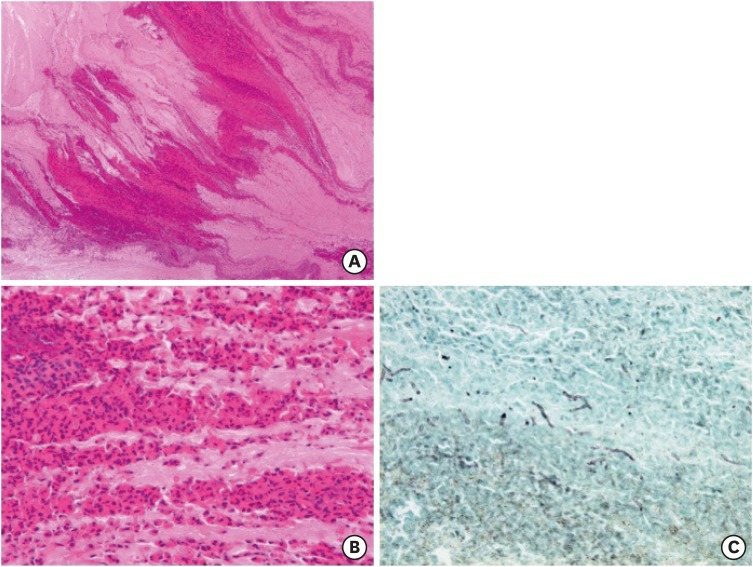
Allergic bronchopulmonary mycosis (ABPM) develops mainly in patients with asthma or cystic fibrosis via types I and III hypersensitivity reactions to filamentous fungi. Aspergillus spp., especially Aspergillus fumigatus, is the major causative fungus because of its small conidia, thermophilic hyphae, and ability to secrete serine proteases. The cardinal histological feature of ABPM is allergic (eosinophilic) mucin-harboring hyphae in the bronchi, for which the formation of extracellular DNA trap cell death (ETosis) of eosinophils induced by viable fungi is essential. Clinically, ABPM is characterized by peripheral blood eosinophilia, increased IgE levels in the serum, IgE and IgG antibodies specific for fungi, and characteristic radiographic findings; however, there are substantial differences in the clinical features of this disease between East and South Asian populations. Systemic corticosteroids and/or antifungal drugs effectively control acute diseases, but recurrences are quite common, and development of novel treatments are warranted to avoid adverse effects and emergence of drug-resistance due to prolonged treatment with corticosteroids and/or antifungal drugs.
Keywords: Allergy; Aspergillus fumigatus; Eosinophils; Fungus.
Figures
References
-
- Denning DW, Pleuvry A, Cole DC. Global burden of allergic bronchopulmonary aspergillosis with asthma and its complication chronic pulmonary aspergillosis in adults. Med Mycol. 2013;51:361–370. - PubMed
-
- Agarwal R, Chakrabarti A, Shah A, Gupta D, Meis JF, Guleria R, Moss R, Denning DW ABPA complicating asthma ISHAM working group. Allergic bronchopulmonary aspergillosis: review of literature and proposal of new diagnostic and classification criteria. Clin Exp Allergy. 2013;43:850–873. - PubMed
-
- Knutsen AP, Bush RK, Demain JG, Denning DW, Dixit A, Fairs A, Greenberger PA, Kariuki B, Kita H, Kurup VP, Moss RB, Niven RM, Pashley CH, Slavin RG, Vijay HM, Wardlaw AJ. Fungi and allergic lower respiratory tract diseases. J Allergy Clin Immunol. 2012;129:280–291. - PubMed
-
- Kosmidis C, Denning DW. The clinical spectrum of pulmonary aspergillosis. Thorax. 2015;70:270–277. - PubMed
Publication types
LinkOut - more resources
Full Text Sources
Other Literature Sources
Miscellaneous