


The global burden and epidemiology of invasive non-typhoidal Salmonella infections
- PMID: 30081708
- PMCID: PMC6663144
- DOI: 10.1080/21645515.2018.1504717
The global burden and epidemiology of invasive non-typhoidal Salmonella infections
Abstract
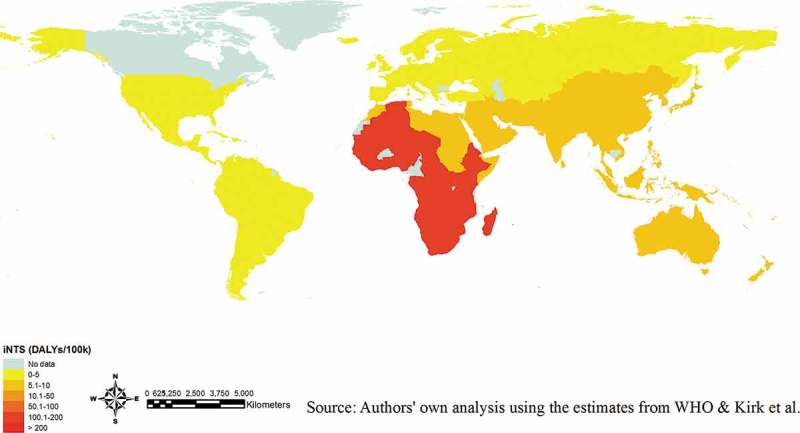
Invasive non-typhoidal Salmonella (iNTS) disease has emerged as a major public health concern. Yet, understanding of the global burden is incomplete, limited particularly by the breadth of blood culture-based surveillance systems that are able to accurately diagnose the etiology of bacteremia. The accessibility of whole genome sequencing has allowed for genetic characterization of pathogens, shedding light on its evolutionary history and sounding alerts for its future progression. iNTS disease is observed to be a particular threat in sub-Saharan Africa, with a case fatality rate greatly exceeding that of typhoid fever, and commonly affecting infants, young children and immunocompromised adults. While iNTS disease might also be a threat in Asia and Latin America, its burden is not well characterized, primarily owing to the lack of comprehensive reporting in these regions. Drug-resistant Salmonella enterica (S. enterica) serovars (e.g. Typhimurium sequence type 313 (ST313)) have emerged as a potential consequence of sustained antibiotic pressure. Genetic analyses have identified distinguished iNTS disease-causing strains that are particularly virulent in certain human host populations. Effective treatment strategies, including vaccination, are necessary; iNTS vaccines targeting the most common S. enterica serovars, Typhimurium, Enteritidis and Dublin, are currently in early developmental stages. Funding and political support is needed to promote vaccine development and implementation programs to ultimately reduce the threat of iNTS disease in high risk areas.
Keywords: Burden; Epidemiology; drug-resistance; iNTS disease; non-typhoidal Salmonella.
Figures
References
-
- Park SE, Pak GD, Aaby P, Adu-Sarkodie Y, Ali M, Aseffa A, Biggs HM, Bjerregaard-Andersen M, Breiman RF, Crump JA, et al. The relationship between invasive nontyphoidal Salmonella disease, other bacterial bloodstream infections, and malaria in Sub-Saharan Africa. Clin Infect Dis. 2016;62(Suppl 1):S23–31. doi: 10.1093/cid/civ893. - DOI - PMC - PubMed
Publication types
MeSH terms
Substances
LinkOut - more resources
Full Text Sources
Other Literature Sources
Medical
