Protein Synthesis and Translational Control: A Historical Perspective
- PMID: 30082466
- PMCID: PMC6719597
- DOI: 10.1101/cshperspect.a035584
Protein Synthesis and Translational Control: A Historical Perspective
Abstract
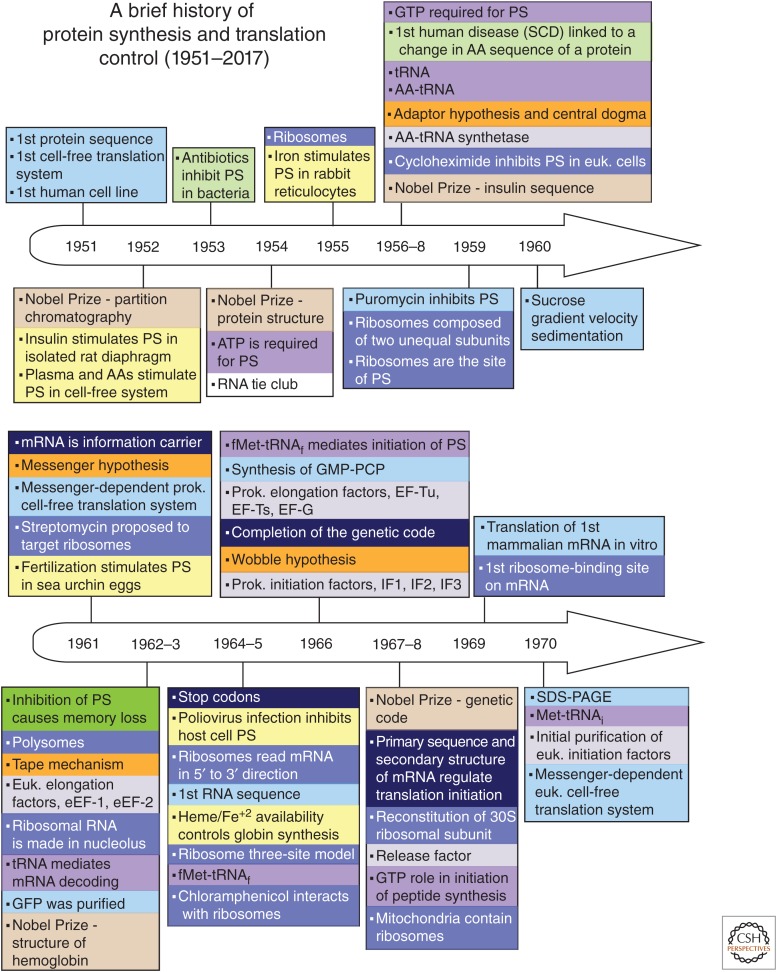
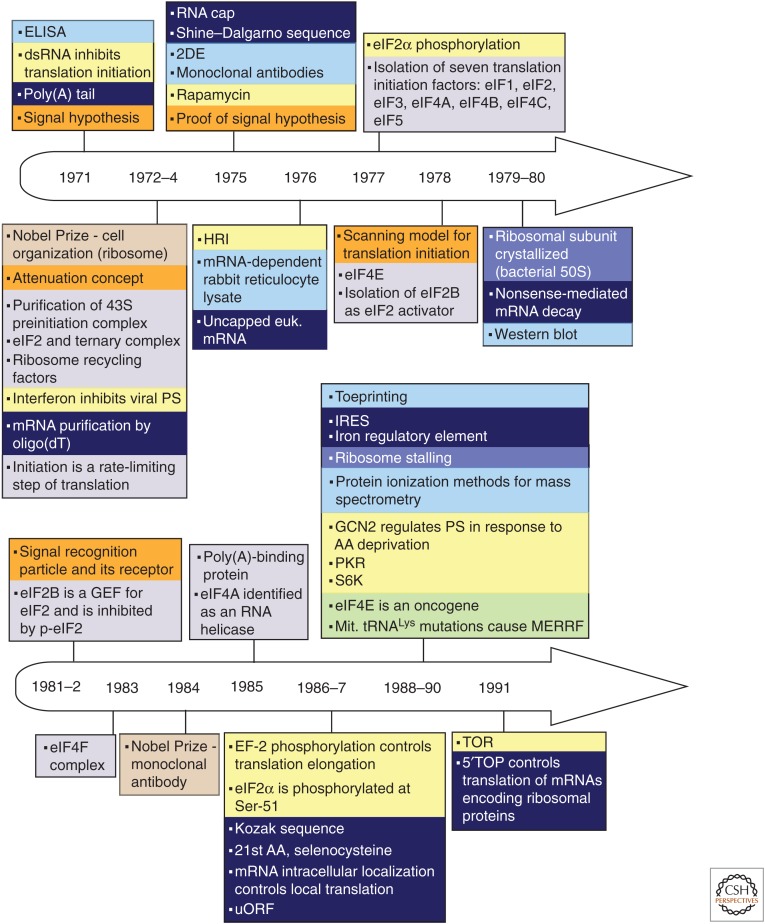
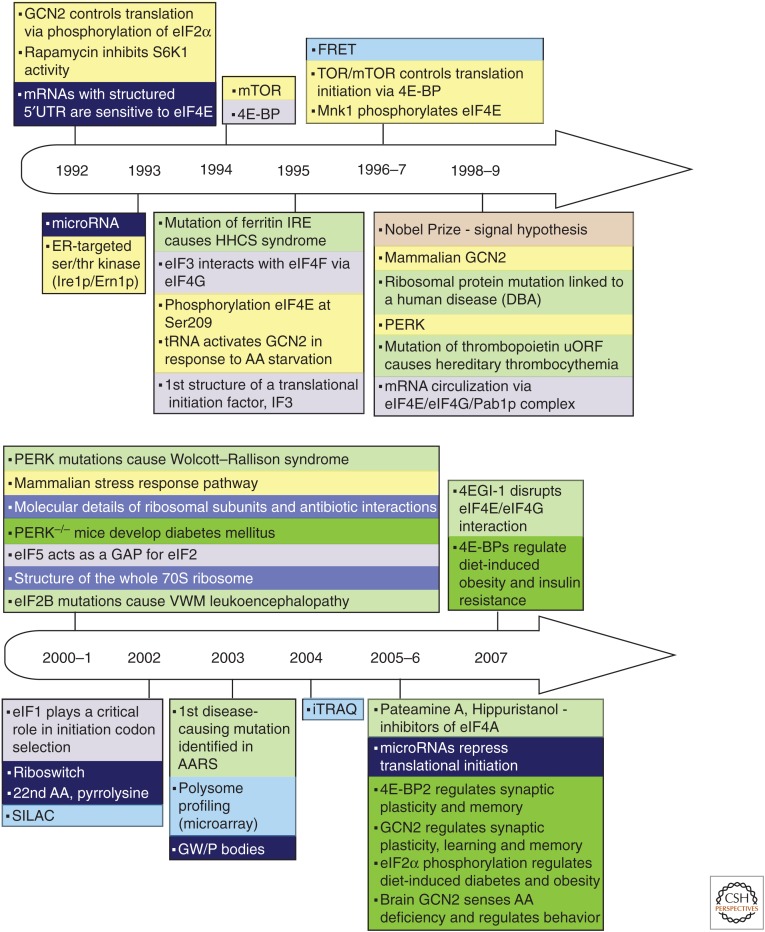
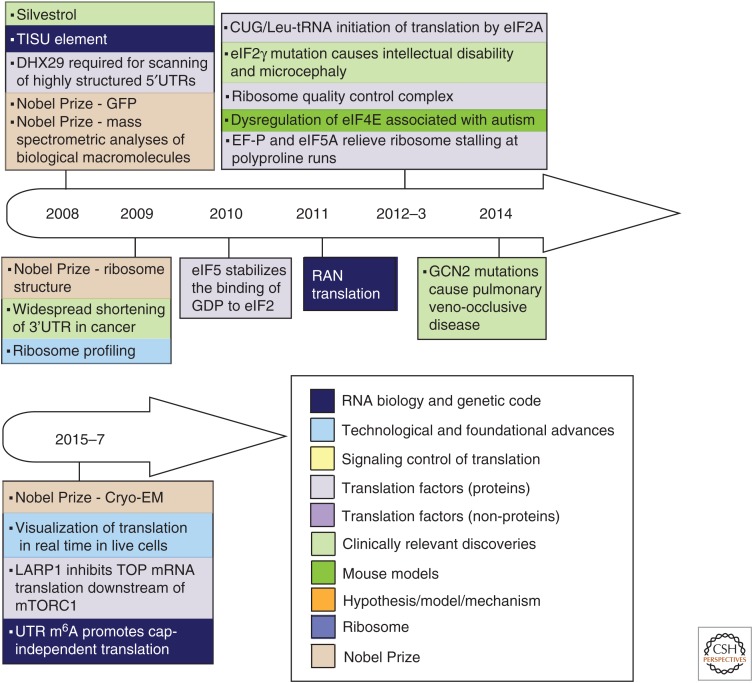
Protein synthesis and its regulation are central to all known forms of life and impinge on biological arenas as varied as agriculture, biotechnology, and medicine. Otherwise known as translation and translational control, these processes have been investigated with increasing intensity since the middle of the 20th century, and in increasing depth with advances in molecular and cell biology. We review the origins of the field, focusing on the underlying concepts and early studies of the cellular machinery and mechanisms involved. We highlight key discoveries and events on a timeline, consider areas where current research has engendered new ideas, and conclude with some speculation on future directions for the field.
Copyright © 2019 Cold Spring Harbor Laboratory Press; all rights reserved.
Figures
References
-
- Adams JM, Cory S. 1975. Modified nucleosides and bizarre 5′-termini in mouse myeloma mRNA. Nature 255: 28–33. - PubMed
-
- Aoki H, Dekany K, Adams SL, Ganoza MC. 1997. The gene encoding the elongation factor P protein is essential for viability and is required for protein synthesis. J Biol Chem 272: 32254–32259. - PubMed
-
- Arlinghaus RF, Schweet R. 1963. A ribosome-bound intermediate in polypeptide synthesis. Biochem Biophys Res Commun 11: 92–96.
Publication types
MeSH terms
LinkOut - more resources
Full Text Sources
Other Literature Sources