. 2018 Sep;24(9):1407-1417.
doi: 10.1038/s41591-018-0128-1. Epub 2018 Aug 6.

Development of a gut microbe-targeted nonlethal therapeutic to inhibit thrombosis potential

Affiliations

Development of a gut microbe-targeted nonlethal therapeutic to inhibit thrombosis potential

Adam B Roberts et al. Nat Med. 2018 Sep.

Abstract

Trimethylamine N-oxide (TMAO) is a gut microbiota-derived metabolite that enhances both platelet responsiveness and in vivo thrombosis potential in animal models, and TMAO plasma levels predict incident atherothrombotic event risks in human clinical studies. TMAO is formed by gut microbe-dependent metabolism of trimethylamine (TMA) moiety-containing nutrients, which are abundant in a Western diet. Here, using a mechanism-based inhibitor approach targeting a major microbial TMA-generating enzyme pair, CutC and CutD (CutC/D), we developed inhibitors that are potent, time-dependent, and irreversible and that do not affect commensal viability. In animal models, a single oral dose of a CutC/D inhibitor significantly reduced plasma TMAO levels for up to 3 d and rescued diet-induced enhanced platelet responsiveness and thrombus formation, without observable toxicity or increased bleeding risk. The inhibitor selectively accumulated within intestinal microbes to millimolar levels, a concentration over 1-million-fold higher than needed for a therapeutic effect. These studies reveal that mechanism-based inhibition of gut microbial TMA and TMAO production reduces thrombosis potential, a critical adverse complication in heart disease. They also offer a generalizable approach for the selective nonlethal targeting of gut microbial enzymes linked to host disease limiting systemic exposure of the inhibitor in the host.


Conflict of interest statement

Competing Financial Interests

The authors declare the following competing interests: Drs. Hazen, Gu, Wang and Levison are named as co-inventors on pending and issued patents held by the Cleveland Clinic relating to cardiovascular diagnostics or therapeutics. Drs. Hazen, Wang and Levison report having the right to receive royalty payment for inventions or discoveries related to cardiovascular diagnostics from Cleveland Heart Lab, Inc. and Quest Diagnostics. Dr. Hazen also reports having been paid as a consultant for P&G, and receiving research funds from Astra Zeneca, P&G, Pfizer Inc., and Roche Diagnostics.

Figures
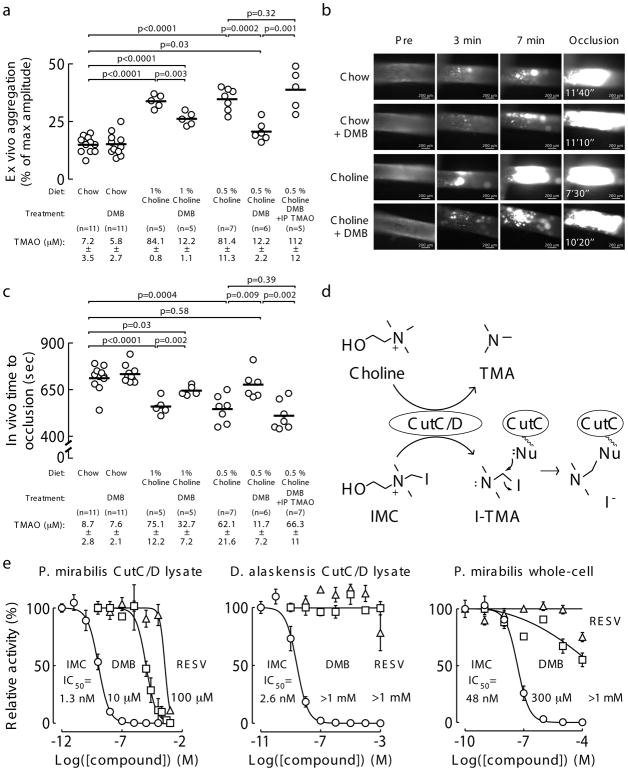
Figure 1
Figure 1. Proof of concept that microbial choline TMA lyase inhibition can attenuate choline diet-enhanced platelet aggregation and in vivo thrombus formation
a) Platelet aggregation in PRP of mice fed the indicated diets ± DMB (1.3% v/v) provided in the drinking water for 6 weeks. Platelet aggregation was measured in response to a submaximal concentration of ADP (1 μM). Data points represent aggregation as % of maximum amplitude in PRP recovered from each mouse, and bars represent mean levels for each group. Plasma TMAO levels are also shown and represent mean ± SEM for each group. Significance determined by two-tailed Student’s t-test. b) Representative vital microscopy images of carotid artery thrombus formation at the indicated time points following FeCl3-induced carotid artery injury in mice fed either a chemically-defined chow or 1% choline diet with or without the addition of DMB (1.3% v/v). The time to complete occlusion is noted in the right-hand panels. Complete study results including replications are shown in Figure 1c. c) Quantification of in vivo thrombus formation following FeCl3-induced carotid artery injury in mice fed the indicated diets ± DMB (1.3% v/v) provided in the drinking water for 6 weeks. Data points represent the time to cessation of flow for each mouse, and bars represent mean levels for each group. Plasma TMAO levels are also shown and represent mean ± SEM for each group. Significance determined by two-tailed Student’s t-test. d) Proposed mechanism by which a potential suicide substrate inhibitor of CutC/D, iodomethylcholine (IMC), can form a reactive iodotrimethylamine (I-TMA) product that can promote irreversible CutC/D inhibition via covalent modification of a reactive, nucleophilic active-site residue (Nu). e) Comparison of the inhibitory potency of IMC (○), DMB (□) and Resveratrol (RESV, △), against (left) wild-type, recombinant P. mirabilis CutC/D lysate, (center) recombinant D. alaskensis CutC/D lysate, and (right) whole-cell (intact live culture) wild-type P. mirabilis. Data points represent the mean ± SEM. Exact numbers used for each data point can be found in the Source Data (n=2–9 technical replicates).
Figure 2
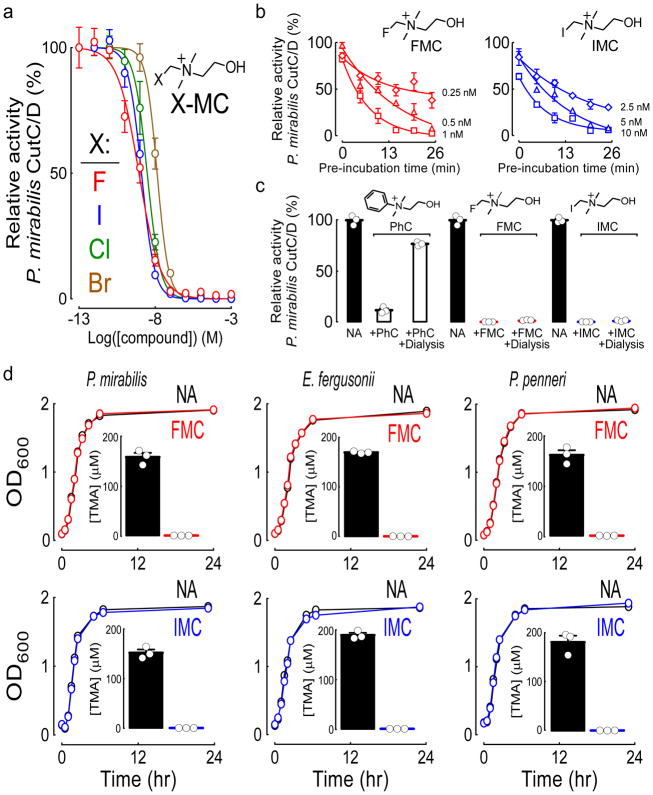
Figure 2. IMC and FMC are non-lethal, irreversible and non-competitive CutC/D inhibitors
a) Dose-response curves for halide-substituted (fluorine, F; iodine, I; chlorine, Cl; bromine, Br) methyl-choline analogues (X-MC) against recombinant P. mirabilis CutC/D lysate. Data points represent the mean ± SEM. Exact numbers used for each data point can be found in the Source Data (n=3–9 technical replicates). b) The time-dependence of the inhibitory potency as assessed by pre-incubating the indicated concentrations FMC or IMC with recombinant P. mirabilis CutC/D lysate for increasing intervals before the addition of d9-choline substrate and subsequent quantification of choline TMA lyase activity. Relative activity was measured against no inhibitor controls during the initial kinetic phase. Data points represent the mean ± SEM. Exact numbers used for each data point can be found in the Source Data (n=2–9 technical replicates). c) Characterization of the reversibility of FMC, IMC, and phenylcholine (PhC) inhibition of recombinant P. mirabilis CutC/D lysate. The indicated inhibitors were incubated with P. mirabilis CutC/D at a fully inhibitory concentration (10 μM). After overnight dialysis, recovered CutC/D activity was measured by LC/MS/MS quantification of d9-TMA generated from the d9-choline substrate. Data points represent the mean ± SEM (n=3 technical replicates for each). d) The impact of FMC (top) and IMC (bottom) on the growth of the indicated human TMA-producing gut commensals was tested by culturing them with or without inhibitor in rich nutrient broth and monitoring growth curves. “No Addition” (NA) used vehicle for comparison. Insets: During the log-phase of growth (OD600=0.5), TMA lyase activity was measured by LC/MS/MS quantification of d9-TMA generated from d9-choline substrate. Growth curves shown are from representative experiments (n=3 technical replicates), and TMA quantification represents the mean ± SEM.
Figure 3
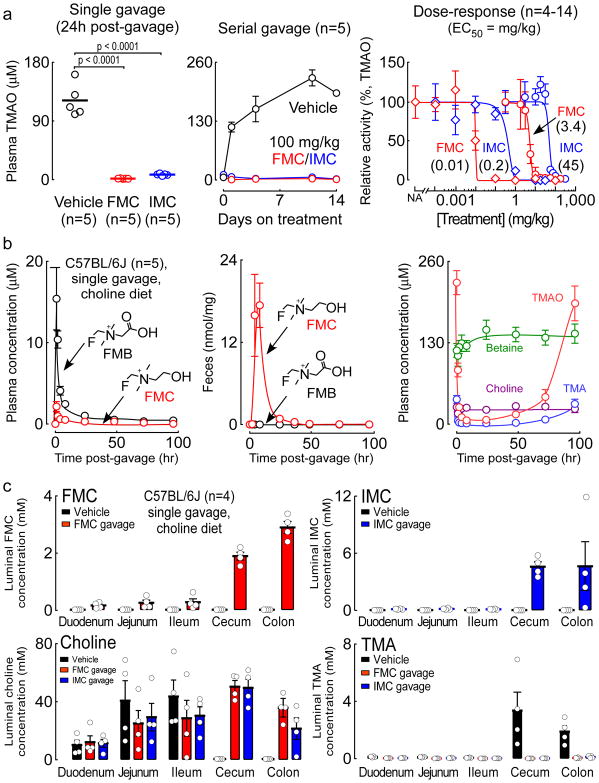
Figure 3. The in vivo pharmacokinetic and pharmacodynamic properties of FMC and IMC
a) (Left) Plasma TMAO levels 24 hours post-gavage of vehicle, 100 mg/kg FMC, or 100 mg/kg IMC in mice maintained on a choline-supplemented (1% w/w) diet. Significance determined by two-tailed Student’s t-test. (Center) Plasma TMAO levels (determined at 24 hours post-gavage) on the indicated days over a course of daily FMC or IMC treatment for 14 days. (Right) Relative activity (compared to vehicle controls) in mice treated by oral gavage with either vehicle (“No Addition”, NA) or the indicated range of doses (0.0001 – 310 mg/kg) of either FMC or IMC. For each inhibitor, two groups of mice were tested. In the “d9-choline challenge” group (⋄), mice were maintained on a chemically-defined chow diet (0.08% w/w total choline) and simultaneously gavaged with 10 mg/mL d9-choline plus the indicated dose of FMC or IMC as described in Methods; the relative activity was measured in blood collected 3 hours post-gavage as the amount of d9-TMAO produced relative to the vehicle control (100%). In the “q24h post-gavage” groups (O), mice were maintained on a choline-supplemented diet (1% w/w) and treated with once-daily oral gavages of the indicated inhibitor and dose for 4 days; the relative activity represents plasma TMAO levels relative to the vehicle control in blood collected 24 hours after the last gavage (on day 5). Data points represent the mean ± SEM. Exact numbers of mice used for each data point can be found in the Source Data (n=4–14). b) Plasma levels of (left) FMC and FMB and (right) choline, betaine, TMA, and TMAO at the indicated time points after a single oral gavage of FMC (100 mg/kg) in mice maintained on a choline-supplemented diet (1% w/w) for 3 weeks. Center, levels of FMC and FMB in fresh fecal samples, normalized to the dry weight of the samples. Data points represent the mean ± SEM for the indicated number of mice. c) Concentrations of FMC, IMC, choline and TMA within the indicated intestinal luminal compartment 4 hours after a single gavage of either vehicle, 100 mg/kg FMC, or 100 mg/kg IMC in mice maintained on a choline-supplemented diet (1% w/w) for 3 weeks. Bars represent the mean ± SEM for the indicated number of mice.
Figure 4
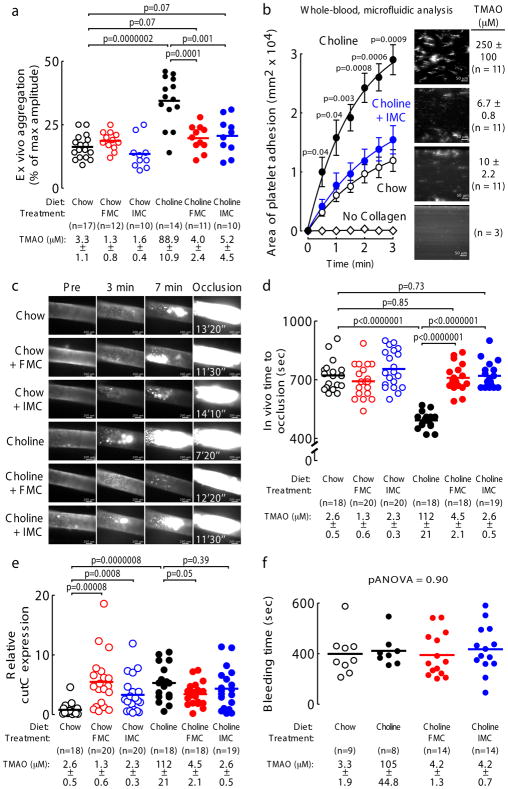
Figure 4. The mechanism based CutC/D inhibitors IMC and FMC reverse choline diet-enhanced platelet responsiveness and thrombus formation
a) Platelet aggregation in PRP of mice fed the indicated diets ± FMC (0.006% w/w) or IMC (0.06% w/w) for 2 weeks. Platelet aggregation was measured in response to a submaximal concentration of ADP (1 μM). Data points represent aggregation as % of maximum amplitude in PRP recovered from each mouse, and bars represent mean levels for each group. Plasma TMAO levels are also shown and represent mean ± SEM for the indicated number of mice for each group. Significance determined by two-tailed Student’s t-test. b) Platelet (fluorescently-labeled) adherence in whole blood samples to a collagen-coated microfluidic biochip under physiological shear stress from mice fed the indicated diets (0.06% w/w IMC) for 2 weeks. Data points represent the mean ± SEM for the indicated numbers of mice. Plasma TMAO levels are also shown and represent mean ± SEM for each group. Significance between “Choline” and “Choline + IMC” groups determined by two-tailed Student’s t-test. c) Representative vital microscopy images of carotid artery thrombus formation at the indicated time points following FeCl3-induced carotid artery injury in mice fed the indicated diets for 2 weeks. The time to complete vessel occlusion is noted in the right-hand panels. Cumulative study results for the indicated number of mice in each group are shown in Figure 4d. d) Quantification of in vivo thrombus formation following FeCl3-induced carotid artery injury in mice fed the indicated diets ± FMC (0.006% w/w) or IMC (0.06% w/w) for 2 weeks. Data points represent the time to cessation of flow for each mouse, and bars represent mean levels for each group. Plasma TMAO levels are also shown and represent mean ± SEM for each group. Significance determined by two-tailed Student’s t-test. (e) The cecal contents were harvested from the mice used in Figure 4d, and qPCR was used to quantify the relative expression of microbial cutC as described under Methods. Data points represent the relative cutC expression for each mouse, and bars represent mean levels for each group. Significance determined by two-tailed Student’s t-test. f) Bleeding time following tail-tip amputation in the indicated number of mice fed the indicated diets (0.006% w/w FMC; 0.06% w/w IMC) for 1 week. Data points represent the cumulative bleeding time over 10 minutes for each mouse, and bars represent mean levels for each group. Plasma TMAO levels are also shown and represent mean ± SEM for each group. Significance was determined using two-way ANOVA.
Figure 5
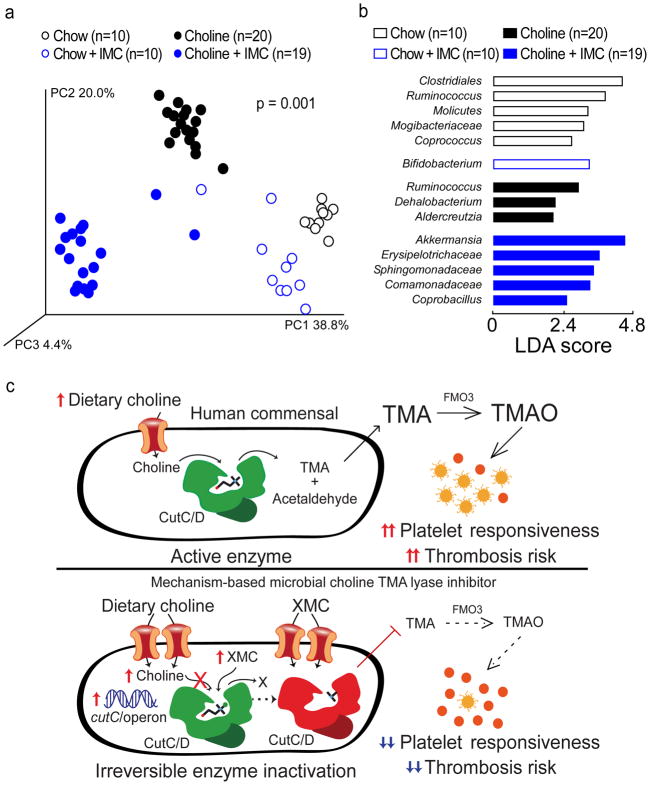
Figure 5. Microbial choline TMA lyase inhibitor reverses diet-induced changes in cecal microbial community composition associated with plasma TMAO levels, platelet responsiveness, and in vivo thrombosis potential
a–b) Groups of mice were maintained on the indicated diets ± IMC (0.06% w/w) for 2 weeks. Cecal contents were harvested and intestinal microbial community composition was assessed by (a) Principal Coordinates Analysis or (b) Linear Discriminant Analysis (LDA) effect size (LEfSe). c) (Top) Scheme illustrating the relationship between human gut commensal choline TMA lyase activity, TMA and TMAO generation, and enhanced platelet responsiveness and thrombosis risk in the host. (Bottom) Illustration of the impact of halomethylcholine mechanism-based microbial choline TMA lyase inhibitors (XMC) on human commensal TMA generation, host TMAO generation, platelet responsiveness, and thrombosis potential. Upon irreversible enzymatic inhibition of CutC, microbial cytosolic choline increases. Choline is sensed as an abundant nutrient, leading to upregulation of the cut gene cluster, including cutC and a choline active-transporter. Choline and the halomethylcholine inhibitor are actively pumped into the microbe and accumulate. Sequestration of choline in the microbe also depletes the levels of choline available to neighboring microbes, further preventing production of TMA from the gut microbial community and contributing to a reduction in systemic TMA and TMAO levels in the host. The net effect is reduction in platelet aggregation responsiveness to multiple agonists and reduced thrombosis potential in the host.

Comment in

References

    1. Kau AL, Ahern PP, Griffin NW, Goodman AL, Gordon JI. Human nutrition, the gut microbiome and the immune system. Nature. 2011;474:327–336. - PMC - PubMed
    1. Blaser MJ. The microbiome revolution. J Clin Invest. 2014;124:4162–4165. - PMC - PubMed
    1. Fischbach MA, Segre JA. Signaling in Host-Associated Microbial Communities. Cell. 2016;164:1288–1300. - PMC - PubMed
    1. Aron-Wisnewsky J, Clément K. The gut microbiome, diet, and links to cardiometabolic and chronic disorders. Nat Rev Nephrol. 2016;12:169–181. - PubMed
    1. Schroeder BO, Bäckhed F. Signals from the gut microbiota to distant organs in physiology and disease. Nat Med. 2016;22:1079–1089. - PubMed

Publication types

MeSH terms