. 2018 Aug 8;7(1):143.
doi: 10.1038/s41426-018-0140-z.

Adaptive mutation F772S-enhanced p7-NS4A cooperation facilitates the assembly and release of hepatitis C virus and is associated with lipid droplet enlargement

Affiliations

Adaptive mutation F772S-enhanced p7-NS4A cooperation facilitates the assembly and release of hepatitis C virus and is associated with lipid droplet enlargement

Xiaobing Duan et al. Emerg Microbes Infect. .

Abstract

Hepatitis C virus (HCV) infection is a major cause of chronic hepatitis and liver cancer worldwide. Adaptive mutations play important roles in the development of the HCV replicon and its infectious clones. We and others have previously identified the p7 mutation F772S and the co-presence of NS4A mutations in infectious HCV full-length clones and chimeric recombinants. However, the underlying mechanism of F772S function remains incompletely understood. Here, we investigated the functional role of F772S using an efficient JFH1-based reporter virus with Core-NS2 from genotype 2a strain J6, and we designated J6-p7/JFH1-4A according to the strain origin of the p7 and NS4A sequences. We found that replacing JFH1-4A with J6-4A (wild-type or mutated NS4A) or genotype 2b J8-4A severely attenuated the viability of J6-p7/JFH1-4A. However, passage-recovered viruses that contained J6-p7 all acquired F772S. Introduction of F772S efficiently rescued the viral spread and infectivity titers of J6-p7/J6-4A, which reached the levels of the original J6-p7/JFH1-4A and led to a concomitant increase in RNA replication, assembly and release of viruses with J6-specific p7 and NS4A. These data suggest that an isolate-specific cooperation existed between p7 and NS4A. NS4A exchange- or substitution-mediated viral attenuation was attributed to the RNA sequence, and no p7-NS4A protein interaction was detected. Moreover, we found that F772S-enhanced p7-NS4A cooperation was associated with the enlargement of intracellular lipid droplets. This study therefore provides new insights into the mechanisms of adaptive mutations and facilitates studies on the HCV life cycle and virus-host interaction.


Conflict of interest statement

The authors declare that they have no conflict of interest.

Figures
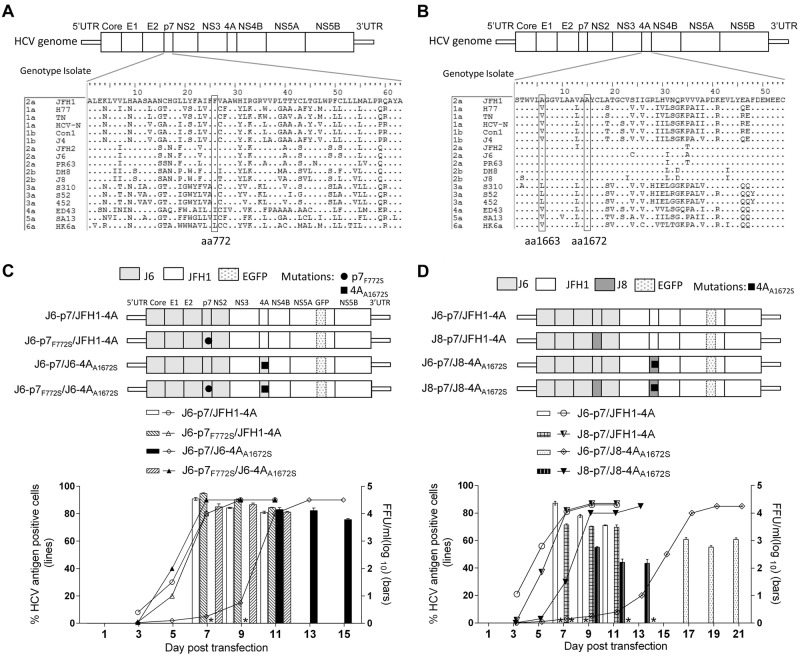
Fig. 1
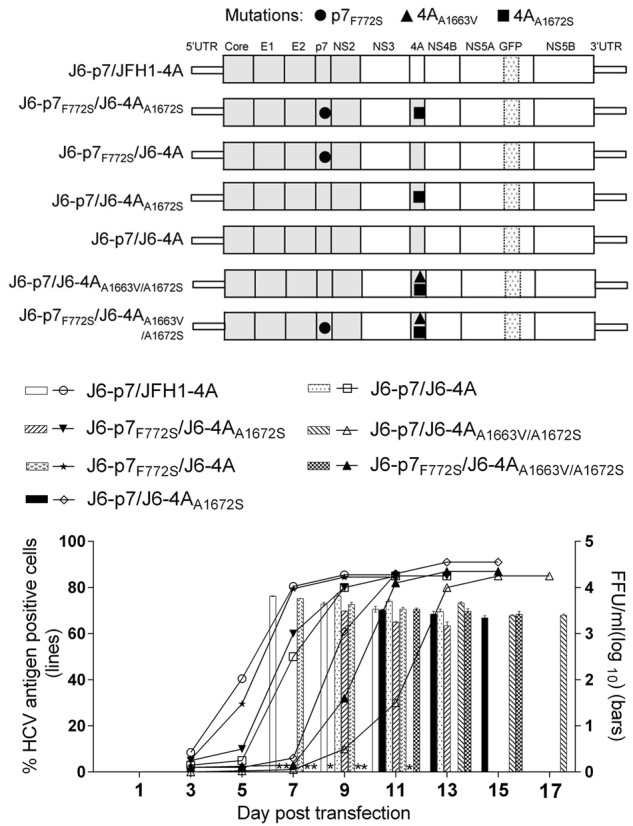
Fig. 1. Isolate-specific p7 and F772S mutation rescued the viral attenuation caused by NS4A substitutions.
a, b Alignments of p7 and NS4A proteins of HCV genotypes 1–6. c, d Transfection of HCV recombinants with different mutations. The HCV antigen was detected by immunostaining or EGFP, and the percentage of virus positive cells was estimated (left y axis). HCV supernatant infectivity titers at peak infection were determined by the FFU assay (right y axis), and mean ± SEM of three determinations is shown. *, FFU was not determined owing to its low infection rate
Fig. 2
Fig. 2. F772S compensated for the attenuation caused by A1663V and A1672S substitutions in NS4A.
Transfection of HCV recombinants with different mutations. The percentage of infected cells and HCV supernatant infectivity titers were shown. See Fig. 1 legend for details
Fig. 3
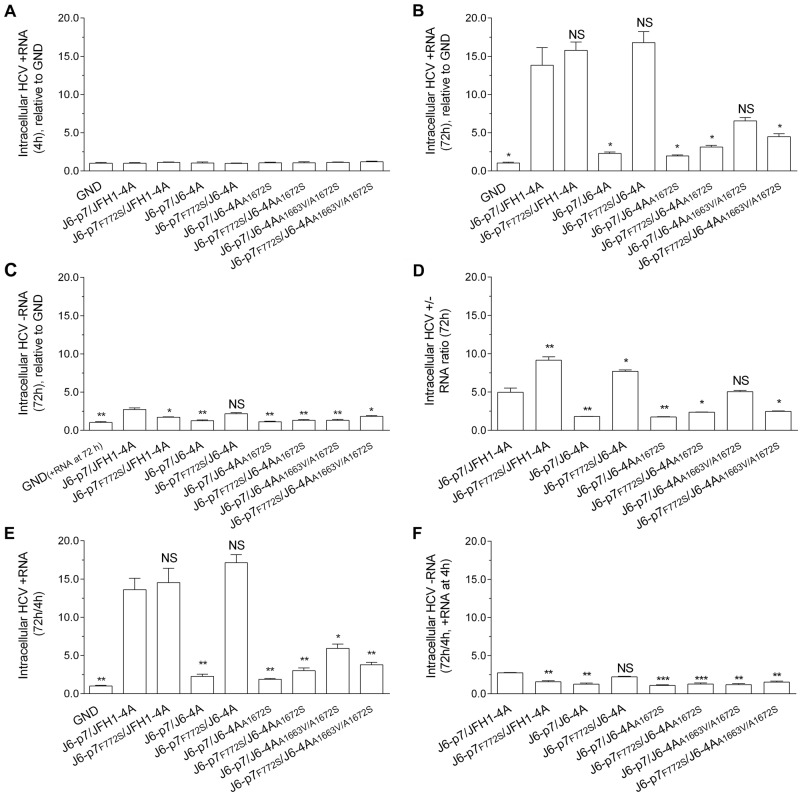
Fig. 3. F772S-enhanced RNA replication of recombinants with isolate-specific p7 and NS4A.
RNA transcripts (10 μg) of different HCV recombinants were transfected into Huh7.5 cells, and the cells were collected at 4 and 72 h p.t. J6/JFH1-EGFP△40-GND (GND) was the control. a HCV +RNA at 4 h p.t. was determined (baseline). b, c Fold-change of HCV +RNA and -RNA at 72 h relative to GND. d The ratio of +/-RNA at 72 h. e, f Fold-change of + RNA and -RNA at 72 h (normalized to 4 h +RNA). The data presented in (a–f) are the average ± SEM of three determinations, and three independent experiments were performed. Statistical significance was calculated against J6-p7/JFH1-4A and is indicated by asterisk(s) (*, p ≤ 0.05; **, p ≤ 0.01; ***, p ≤ 0.001). NS, no significant difference (student’s t test)
Fig. 4
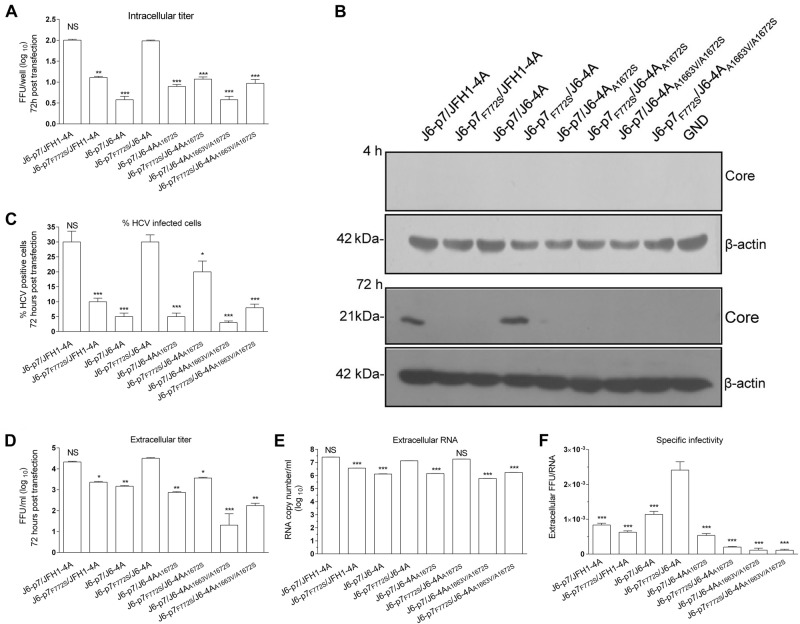
Fig. 4. F772S enhanced the assembly/release of HCV recombinants with isolate-specific p7 and NS4A.
Huh7.5 cells were transfected with RNA transcripts (10 μg) of different HCV recombinants, and the analyses were performed at 72 h p.t. a Intracellular titers were determined (FFU/well). b Western blotting of intracellular HCV Core. c The HCV infection rate was estimated by core immunostaining or NS5A-EGFP expression. d Extracellular infectivity titers (FFU/ml). e Extracellular RNA titers (copy/ml). f Specific infectivity (FFU/RNA ratio). See Fig. 3 legend for the detailed annotations
Fig. 5
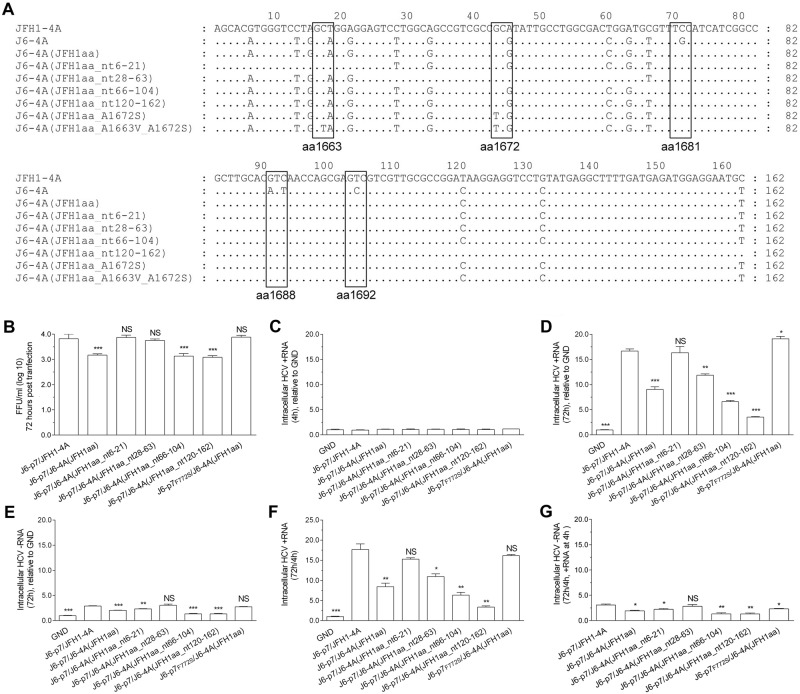
Fig. 5. F772S-enhanced p7-NS4A cooperation involved the NS4A RNA sequence.
Recombinants expressing JFH1-type NS4A were transfected into Huh7.5 cells, and the analyses were performed at 4 h and 72 h p.t. a RNA sequence of J6-JFH1 NS4A chimeras. b The infectivity titers of JFH1 NS4A-expressing recombinants. c HCV +RNA at 4 h p.t. (baseline). d, e Fold-change of +RNA and -RNA at 72 h p.t. relative to GND. f, g Fold-change of +RNA and -RNA at 72 h (normalized to 4 h +RNA). The data in c–g are the average ± SEM (n = 3). See Fig. 3 legend for the detailed annotations
Fig. 6
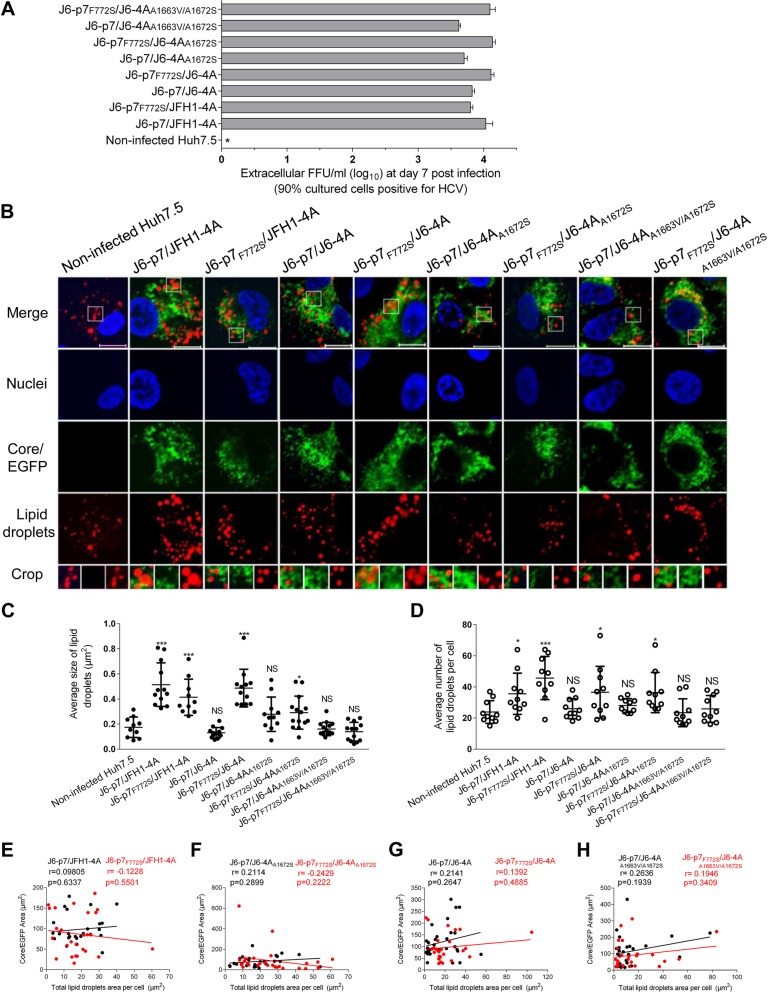
Fig. 6. F772S-enhanced viral assembly/release was associated with the enlargement of LDs in HCV-infected cells.
Huh7.5 cells were infected with HCV (MOI = 0.1), and ~90% of cells were HCV positive at day 7. The cells were fixed and stained for HCV and LDs. a The supernatant infectivity titers at day 7 post infection. b Images of HCV antigens (Core/NS5A-EGFP) (green), nuclei (blue), LD (red), and the merged images. Bar, 10 μm. c The average size of LDs in HCV positive Huh7.5 cells (10–15 cells). d The average numbers of LDs per Huh7.5 cell positive for HCV (by ImageJ software). See Fig. 3 legend for the annotations of statistical analysis. eh The correlation analysis of the total HCV protein and the formation of LDs in 26 HCV-infected cells using ImageJ software. Correlation coefficient (r value) and p value are shown. p ≤ 0.05 indicates a statistically correlation, in which the higher r value suggests the stronger correlation

References

    1. The World Health Organization. Global hepatitis report, 2017, <http://www.who.int/hepatitis/publications/global-hepatitis-report2017/en/> (2017).
    1. Hoofnagle JH. Course and outcome of hepatitis C. Hepatology. 2002;36:S21–S29. - PubMed
    1. Thomas DL. Global control of hepatitis C: where challenge meets opportunity. Nat. Med. 2013;19:850–858. doi: 10.1038/nm.3184. - DOI - PMC - PubMed
    1. Pawlotsky JM. Therapy: avoiding treatment failures associated with HCV resistance. Nat. Rev. Gastroenterol. Hepatol. 2015;12:673–674. doi: 10.1038/nrgastro.2015.184. - DOI - PubMed
    1. Scheel TK, Rice CM. Understanding the hepatitis C virus life cycle paves the way for highly effective therapies. Nat. Med. 2013;19:837–849. doi: 10.1038/nm.3248. - DOI - PMC - PubMed

MeSH terms

Substances