


Estimating the Evolution of Disease in the Parkinson's Progression Markers Initiative
- PMID: 30089306
- PMCID: PMC6314496
- DOI: 10.1159/000488780
Estimating the Evolution of Disease in the Parkinson's Progression Markers Initiative
Abstract
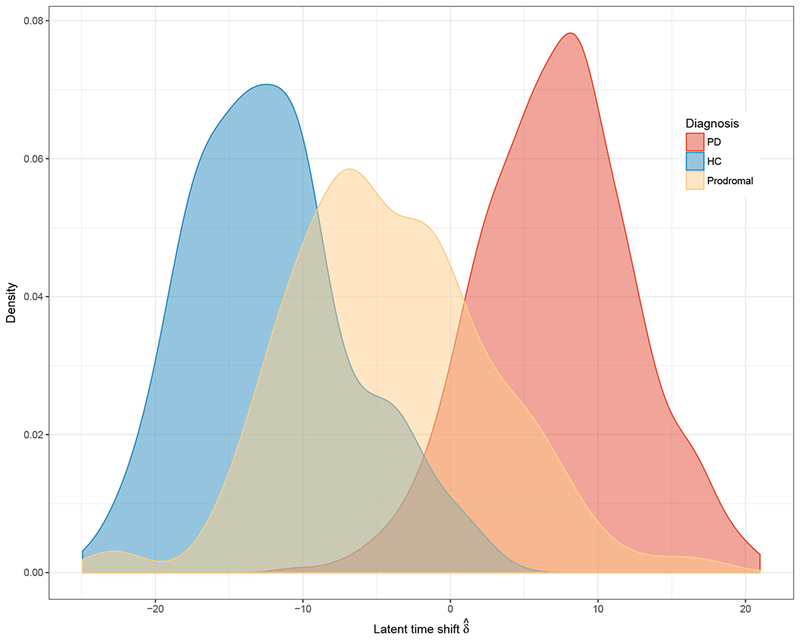
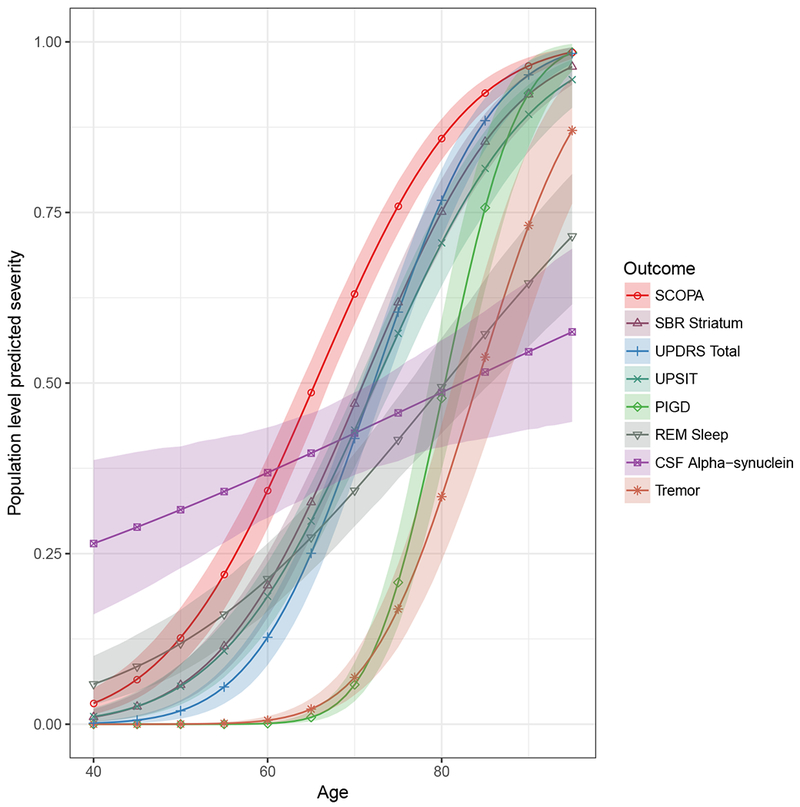
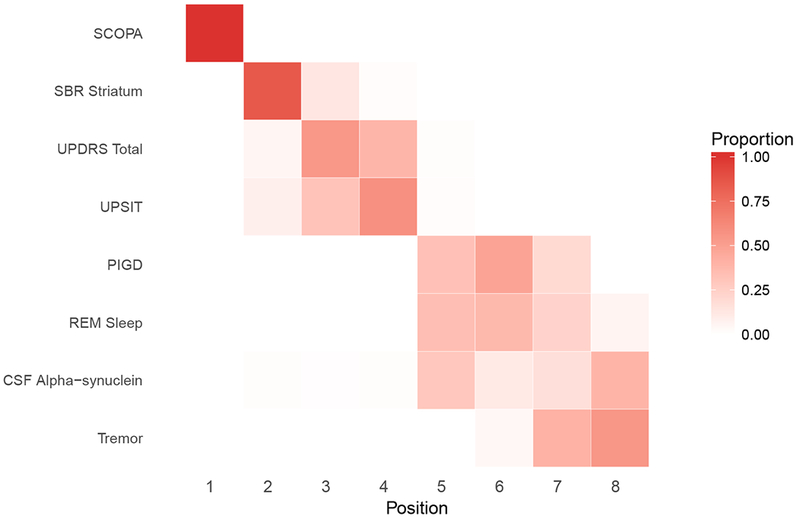
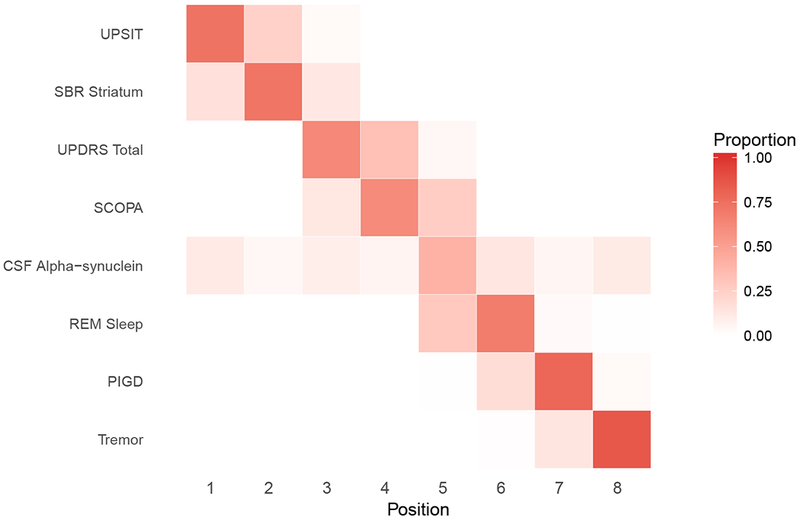
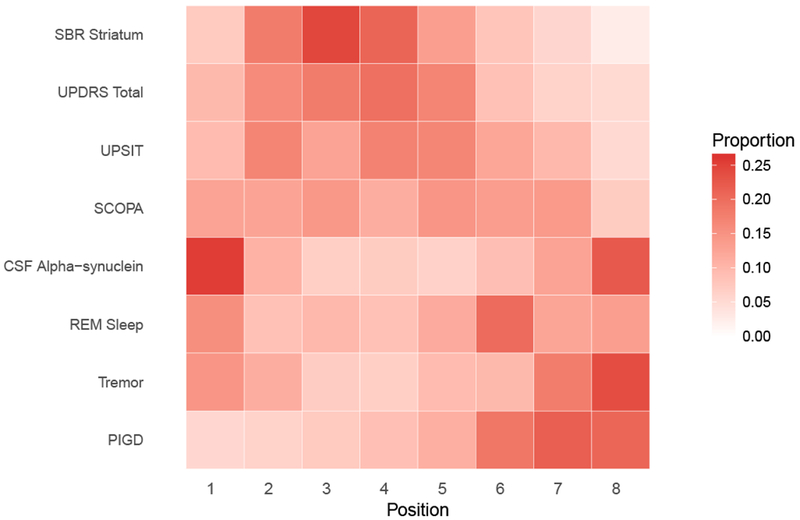
Parkinson's disease is the second most common neurological disease and affects about 1% of persons over the age of 60 years. Due to the lack of approved surrogate markers, confirmation of the disease still requires postmortem examination. Identifying and validating biomarkers are essential steps toward improving clinical diagnosis and accelerating the search for therapeutic drugs to ameliorate disease symptoms. Until recently, statistical analysis of multicohort longitudinal studies of neurodegenerative diseases has usually been restricted to a single analysis per outcome with simple comparisons between diagnostic groups. However, an important methodological consideration is to allow the modeling framework to handle multiple outcomes simultaneously and consider the transitions between diagnostic groups. This enables researchers to monitor multiple trajectories, correctly account for the correlation among biomarkers, and assess how these associations may jointly change over the long-term course of disease. In this study, we apply a latent time joint mixed-effects model to study biomarker progression and disease dynamics in the Parkinson's Progression Markers Initiative (PPMI) and examine which markers might be most informative in the earliest phases of disease. The results reveal that, even though diagnostic category was not included in the model, it seems to accurately reflect the temporal ordering of the disease state consistent with diagnosis categorization at baseline. In addition, results indicated that the specific binding ratio on striatum and the total Unified Parkinson's Disease Rating Scale (UPDRS) show high discriminability between disease stages. An extended latent time joint mixed-effects model with heterogeneous latent time variance also showed improvement in model fit in a simulation study and when applied to real data.
Keywords: Biomarkers; Clinical diagnosis; Disease trajectories; Joint mixed-effects models; Latent time shift; Multicohort longitudinal data; Multilevel Bayesian models; Parkinson’s disease.
© 2018 S. Karger AG, Basel.
Conflict of interest statement
Conflict of Interest
None declared.
Figures
References
-
- Brockmann K, Schulte C, Deuschle C, Hauser A-K, Heger T, Gasser T, Maetzler W, & Berg D (2015). Neurodegenerative CSF markers in genetic and sporadic PD: Classification and prediction in a longitudinal study. Parkinsonism and Related Disorders, 21, 1427–1434. - PubMed
-
- Guerrero R, Schmidt-Richbergh A, Ledig C, Tong T, Wolz R, & Rueckert D (2016). Instantiated mixed effects modeling of Alzheimer’s disease markers. NeuroImage, 142, 113–125. - PubMed
-
- Iddi S, & Molenberghs G (2012). A joint marginalized multilevel model for longitudinal outcomes. Journal of Applied Statistics, 39,24132430.
-
- Klotsche J, Reese JP, Winter Y, Oertel WH, Irving H, Wittchen H, Rehm J, & Dodel R (2011). Trajectory classes of decline in health-related quality of life in Parkinson’s disease: A pilot study. Value in Health, 14,329–338. - PubMed
