


Prevalence and Profile of High-Impact Chronic Pain in the United States
- PMID: 30096445
- PMCID: PMC8822465
- DOI: 10.1016/j.jpain.2018.07.006
Prevalence and Profile of High-Impact Chronic Pain in the United States
Abstract
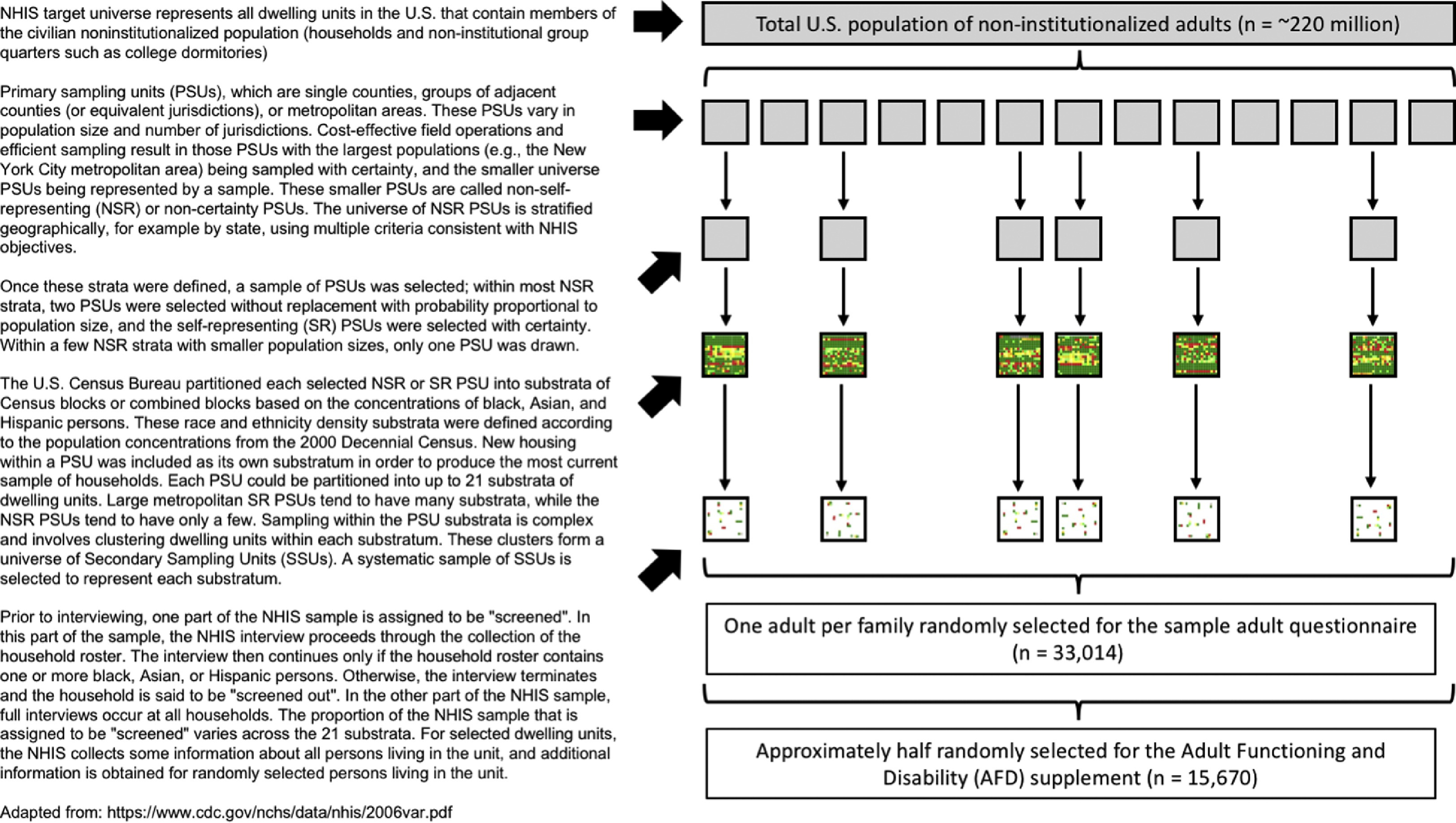
The multidimensional nature of chronic pain is not reflected by definitions based solely on pain duration, resulting in high prevalence estimates limiting effective policy development. The newly proposed concept of high-impact chronic pain (HICP) incorporates both disability and pain duration to identify a more severely impacted portion of the chronic pain population yet remains uncharacterized at the population level. As such, we used the 2011 National Health Interview Survey (N = 15,670) to 1) assess the likelihood of disability in the overall chronic pain population, 2) estimate the prevalence of HICP, and 3) characterize the disability, health status, and health care use profile of this population in the United States. Overall, chronic pain, defined as pain experienced on most days or every day in the previous 3 months, was strongly associated with an increased risk of disability after controlling for other chronic health conditions (odds ratio = 4.43; 95% confidence interval = 3.73-5.26), where disability was more likely in those with chronic pain than in those with stroke or kidney failure, among others. HICP affected 4.8% of the U.S. adult population, or approximately 10.6 million individuals, in 2011. The HICP population reported more severe pain and more mental health and cognitive impairments than persons with chronic pain without disability, and was also more likely to report worsening health, more difficulty with self-care, and greater health care use. HICP clearly represents a more severely impacted portion of the chronic pain population. Understanding this heterogeneity will contribute to developing more effective legislation promoting safe and cost-effective approaches to the prevention and treatment of chronic pain. PERSPECTIVE: HICP is a powerful new classification that differentiates those with debilitating chronic pain from those with less impactful chronic pain. By addressing the multidimensionality of chronic pain, this classification will improve clinical practice, research, and the development of effective health policy.
Keywords: High-impact chronic pain; National Health Interview Survey; disability; health outcomes; prevalence.
Published by Elsevier Inc.
Conflict of interest statement
The authors have no conflicts of interest to declare.
Figures
References
-
- Borenstein D, Altman R, Bello A, Chatham W, Clauw D, Crofford L, Croft J, Hassett A, Kozin F, Pisetsky D, Rich-Ardson J, Schanberg L, Starz T, Witter J: Report of the American College of Rheumatology Pain Management Task Force. Arthrit Care Res 62:590–599, 2010 - PubMed
-
- Christensen A, Ekholm O, Glümer C, Juel K: Effect of survey mode on response patterns: Comparison of face-to-face and self-administered modes in health surveys. Eur J Public Health 24:327–332, 2014 - PubMed
-
- Currie SR, Wang J: Chronic back pain and major depression in the general Canadian population. Pain 107:54–60, 2004 - PubMed
-
- Demyttenaere K, Bruffaerts R, Lee S, Posada-Villa J, Kovess V, Angermeyer MC, Levinson D, de Girolamo G, Nakane H, Mneimneh Z, Lara C, de Graaf R, Scott KM, Gureje O, Stein DJ, Haro JM, Bromet EJ, Kessler RC, Alonso J, Von Korff M: Mental disorders among persons with chronic back or neck pain: Results from the world mental health surveys. Pain 129:332–342, 2007 - PubMed
-
- Dunn KM, Croft PR, Main CJ, Von Korff M: A prognostic approach to defining chronic pain: Replication in a UK primary care low back pain population. Pain 135:48–54, 2008 - PubMed
Publication types
MeSH terms
Grants and funding
LinkOut - more resources
Full Text Sources
Other Literature Sources
Medical
