


Effect of haemodiafiltration vs conventional haemodialysis on growth and cardiovascular outcomes in children - the HDF, heart and height (3H) study
- PMID: 30097064
- PMCID: PMC6086045
- DOI: 10.1186/s12882-018-0998-y
Effect of haemodiafiltration vs conventional haemodialysis on growth and cardiovascular outcomes in children - the HDF, heart and height (3H) study
Abstract
Background: Cardiovascular disease is prevalent in children on dialysis and accounts for almost 30% of all deaths. Randomised trials in adults suggest that haemodiafiltration (HDF) with high convection volumes is associated with reduced cardiovascular mortality compared to high-flux haemodialysis (HD); however paediatric data are scarce. We designed the haemodiafiltration, heart and height (3H) study to test the hypothesis that children on HDF have an improved cardiovascular risk profile, growth and nutritional status and quality of life, compared to those on conventional HD. We performed a non-randomised parallel-arm intervention study within the International Paediatric Haemodialysis Network Registry comparing children on HDF and conventional HD to determine annualised change in cardiovascular end-points and growth. Here we present the 3H study design and baseline characteristics of the study population.
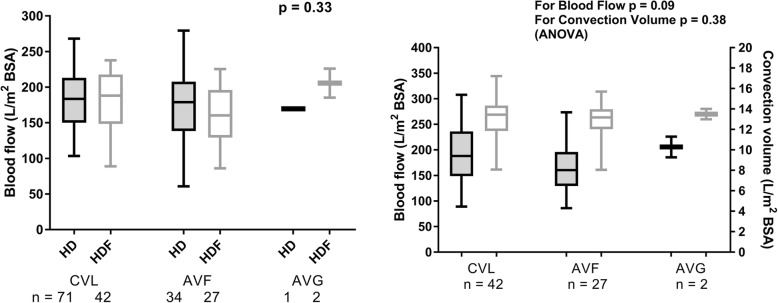
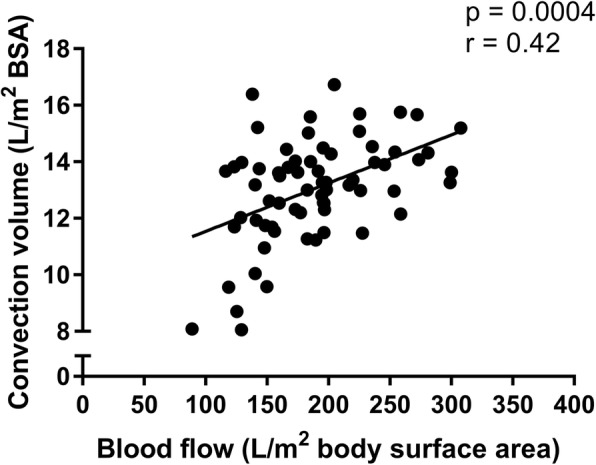
Methods: 190 children were screened and 177 (106 on HD and 71 on HDF) recruited from 28 centres in 10 countries. There was no difference in age, underlying diagnosis, comorbidities, previous dialysis therapy, dialysis vintage, residual renal function, type of vascular access or blood flow between HD and HDF groups. High flux dialysers were used in 63% of HD patients and ultra-pure water was available in 52%. HDF patients achieved a median convection volume of 13.3 L/m2; this was associated with the blood flow rate only ((p = 0.0004, r = 0.42) and independent of access type (p = 0.38).
Discussion: This is the largest study on dialysis outcomes in children that involves deep phenotyping across a wide range of cardiovascular, anthropometric, nutritional and health-related quality of life measures, to test the hypothesis that HDF leads to improved cardiovascular and growth outcomes compared to conventional HD.
Trial registration: ClinicalTrials.gov: NCT02063776 . The trial was prospectively registered on the 14 Feb 2014.
Keywords: Cardiovascular; Carotid intima media thickness (IMT); Children; Growth; Haemodiafiltration (HDF); Haemodialysis (HD).
Conflict of interest statement
The study was performed according to the principles of the declaration of Helsinki. It has been approved by the NRES (National Research Ethics Service) Committee London – Bloomsbury, a Research Ethics Committee established by the Health Research Authority, England. Full written informed consent has been obtained from all parents or carers, and assent from children, where applicable.
Not applicable.
The authors declare that they have no competing interests. The study was part sponsored by Fresenius Medical Care, who approved the study protocol, but had no role in data collection, data analysis or drafting the present manuscript.
Springer Nature remains neutral with regard to jurisdictional claims in published maps and institutional affiliations.
Figures
References
-
- US Renal Data System U2Adr . Atlas of chronic kidney disease and end-stage renal disease in the United States. 2011.
Publication types
MeSH terms
Associated data
LinkOut - more resources
Full Text Sources
Other Literature Sources
Medical
