


Community pharmacists' knowledge and perspectives of reporting adverse drug reactions in Australia: a cross-sectional survey
- PMID: 30097819
- PMCID: PMC6132965
- DOI: 10.1007/s11096-018-0700-2
Community pharmacists' knowledge and perspectives of reporting adverse drug reactions in Australia: a cross-sectional survey
Abstract
Background Under-reporting of adverse drug reactions (ADRs) by healthcare professionals is prevalent worldwide. Community pharmacists are the most frequently visited healthcare professional and are well placed to document ADRs as a part of their routine practice. Objective To measure community pharmacists' knowledge and perspectives towards ADR reporting and their reporting practices. Setting Community pharmacists in the New South Wales, Queensland, Victoria and Tasmania, Australia. Method A survey tool consisting of 28 items was developed, piloted and validated by a panel of expert reviewers. The final anonymised survey was distributed online to community pharmacists. Exploratory factor analysis and Cronbach's alpha were used to measure the validity and reliability of the tool, respectively. Non-parametric statistical tests were used to analyse knowledge, perspectives and ADR reporting practices.
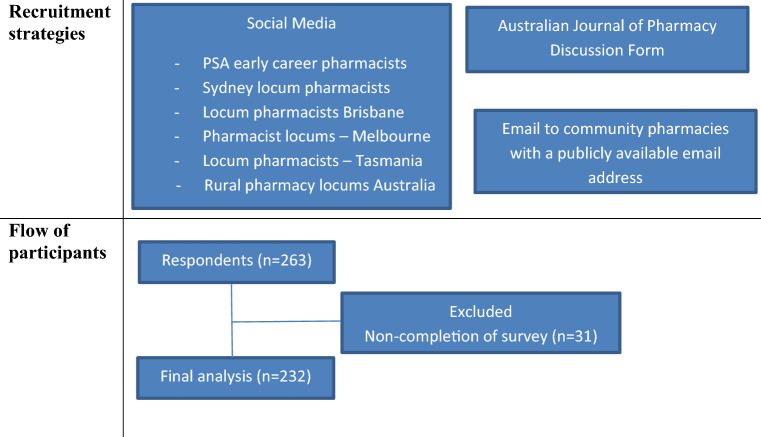
Main outcome measures: Knowledge, perceived importance, enablers and barriers to reporting ADRs. Results The survey tool showed acceptable validity and reliability. A total of 232 respondents completed the survey. The median knowledge score was 5 out of 10 (interquartile range, 2). Less than a third of respondents (31.0%) reported sufficient knowledge and training on ADR reporting. Only 35.3% of pharmacists reported at least one ADR in the previous 12 months. Non-reporting pharmacists were more likely to report lack of time as a barrier (P < 0.001), conversely they were more likely to report if the practice was remunerated (P = 0.007). Conclusion Under-reporting of ADRs by community pharmacists is highly prevalent. Initiatives to educate and train them on ADR reporting and simplifying the reporting process may improve reporting practices.
Keywords: Adverse drug reaction; Australia; Drug safety; Pharmacist; Pharmacovigilance.
Conflict of interest statement
All authors declare that they have no conflict of interest.
Figures
References
-
- World Health Organisation. Pharmacovigilance. 2002. http://www.who.int/medicines/areas/quality_safety/safety_efficacy/pharmv.... Accessed 19 June 2018.
-
- Australian Government Department of Health and Aging. Australian requirements and recommendations for pharmacovigilance responsibilities of sponsors of medicines version 1.3 June 2014. https://www.tga.gov.au/sites/default/files/australian-pharmacovigilance-.... Accessed 19 June 2018.
-
- Food and Drugs Administration. Department of Health and Human Services. 21CFR314.80—post-marketing reporting of adverse drug experiences volume 5 updated April 1999.
-
- Guideline on good pharmacovigilance practices: module VI—management and reporting of adverse reactions to medicinal products updated September 2014. http://www.ema.europa.eu/docs/en_GB/document_library/Scientific_guidelin.... Accessed 19 June 2018.
Publication types
MeSH terms
LinkOut - more resources
Full Text Sources
Other Literature Sources
Medical
Research Materials
