


Human β-defensin-1: A natural antimicrobial peptide present in amniotic fluid that is increased in spontaneous preterm labor with intra-amniotic infection
- PMID: 30101464
- PMCID: PMC6160339
- DOI: 10.1111/aji.13031
Human β-defensin-1: A natural antimicrobial peptide present in amniotic fluid that is increased in spontaneous preterm labor with intra-amniotic infection
Abstract
Problem: Human β-defensins (HBDs) are antimicrobial peptides that participate in the soluble innate immune mechanisms against infection. Herein, we determined whether HBD-1 was present in amniotic fluid during normal pregnancy and whether its concentrations change with intra-amniotic inflammation and/or infection.
Method of study: Amniotic fluid was collected from 219 women in the following groups: (a) midtrimester who delivered at term (n = 35); (b) term with (n = 33) or without (n = 17) labor; (c) preterm labor with intact membranes who delivered at term (n = 29) or who delivered preterm with (n = 19) and without (n = 29) intra-amniotic inflammation and infection or with intra-amniotic inflammation but without infection (n = 21); and (d) preterm prelabor rupture of membranes (pPROM) with (n = 19) and without (n = 17) intra-amniotic inflammation/infection. Amniotic fluid HBD-1 concentrations were determined using a sensitive and specific ELISA kit.
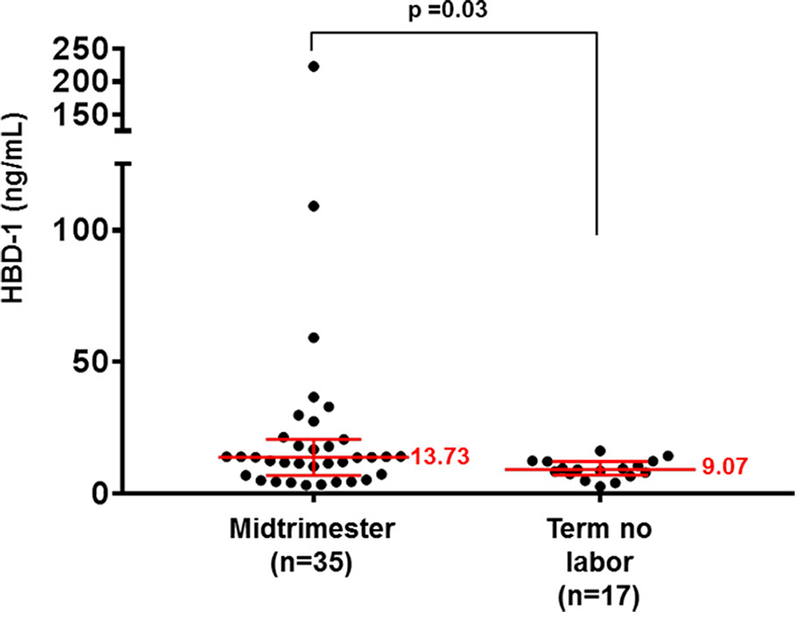
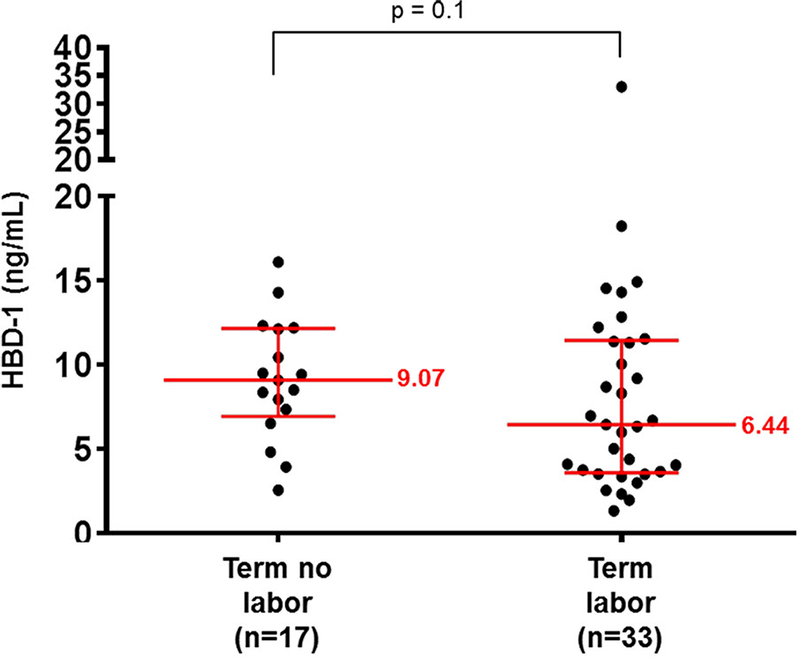
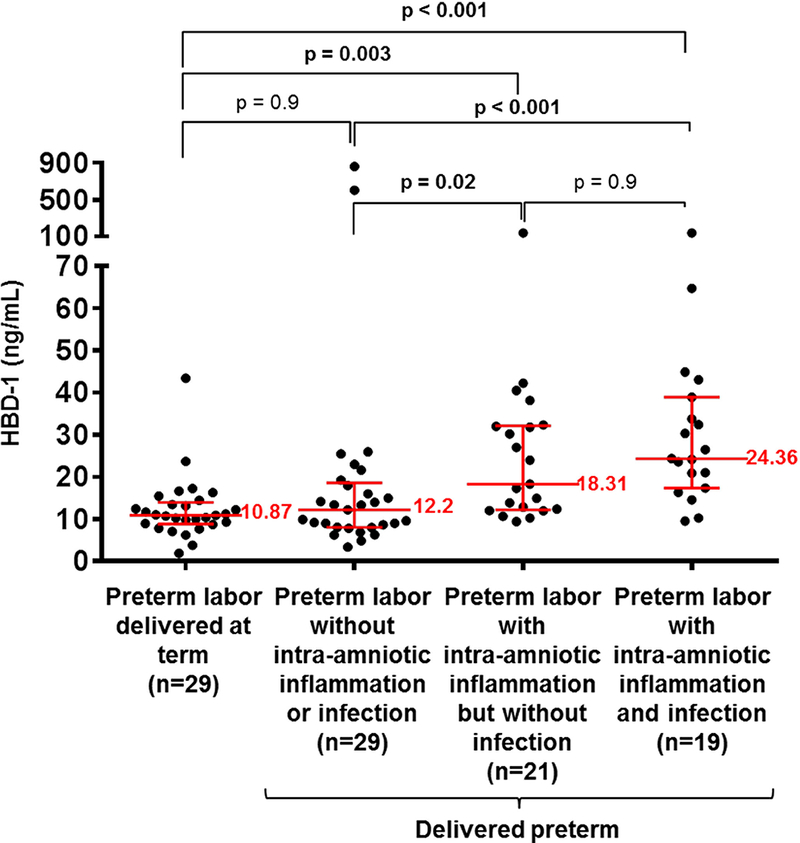
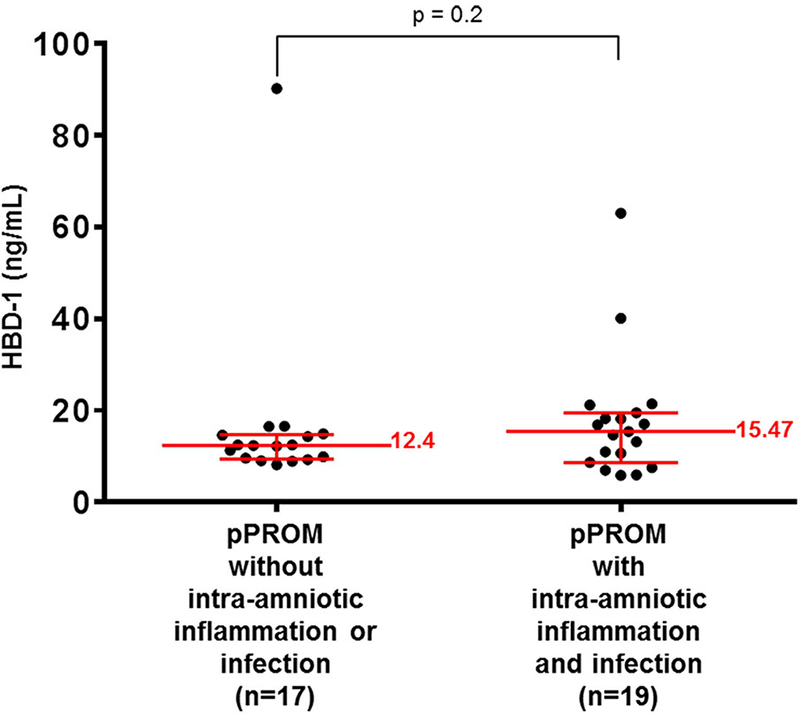
Results: (a) HBD-1 was detectable in all amniotic fluid samples; (b) amniotic fluid concentrations of HBD-1 were changed with gestational age (midtrimester vs term no labor), being higher in midtrimester; (c) amniotic fluid concentrations of HBD-1 were similar between women with and without spontaneous labor at term; (d) among patients with spontaneous preterm labor, amniotic fluid concentrations of HBD-1 in women with intra-amniotic inflammation/infection and in those with intra-amniotic inflammation without infection were greater than in women without intra-amniotic inflammation or infection who delivered preterm or at term; and (e) the presence of intra-amniotic inflammation and infection in patients with pPROM did not change amniotic fluid concentrations of HBD-1.
Conclusion: HBD-1 is a physiological constituent of amniotic fluid that is increased in midtrimester during normal pregnancy and in the presence of culturable microorganisms in the amniotic cavity. These findings provide insight into the soluble host defense mechanisms against intra-amniotic infection.
Keywords: acute chorioamnionitis; cytokines; danger signals; fetal immunity; funisitis; innate immunity; microbial invasion of the amniotic cavity; neutrophils; preterm PROM; sterile intra-amniotic inflammation.
Published 2018. This article is a U.S. Government work and is in the public domain in the USA.
Conflict of interest statement
Figures
References
-
- Galask RP, Snyder IS: Antimicrobial factors in amniotic fluid. Am J Obstet Gynecol 1970;106:59–65. - PubMed
-
- Miller J, Michel J, Bercovici B, Argaman M, Sacks T: Studies on the antimicrobial activity of amniotic fluid. Am J Obstet Gynecol 1976;125:212–214. - PubMed
-
- Tafari N, Ross SM, Naeye RL, Galask RP, Zaar B: Failure of bacterial growth inhibition by amniotic fluid. Am J Obstet Gynecol 1977;128:187–189. - PubMed
-
- Thadepalli H, Appleman MD, Maidman JE, Arce JJ, Davidson EC Jr Antimicrobial effect of amniotic fluid against anaerobic bacteria. Am J Obstet Gynecol 1977;127:250–254. - PubMed
-
- Thadepalli H, Bach VT, Davidson EC Jr: Antimicrobial effect of amniotic fluid. Obstet Gynecol 1978;52:198–204. - PubMed
Publication types
MeSH terms
Substances
Grants and funding
- Z01 HD002400/ImNIH/Intramural NIH HHS/United States
- Wayne State University Perinatal Initiative in Maternal, Perinatal and Child Health/International
- Perinatology Research Branch (PRB), Division of Intramural Research/International
- Eunice Kennedy Shriver National Institute of Child Health and Human Development/International
- HHSN275201300006C/HD/NICHD NIH HHS/United States
LinkOut - more resources
Full Text Sources
Other Literature Sources
Medical
Research Materials
