


The other side of the coin: Hypersociability
- PMID: 30101538
- PMCID: PMC6342648
- DOI: 10.1111/gbb.12512
The other side of the coin: Hypersociability
Abstract
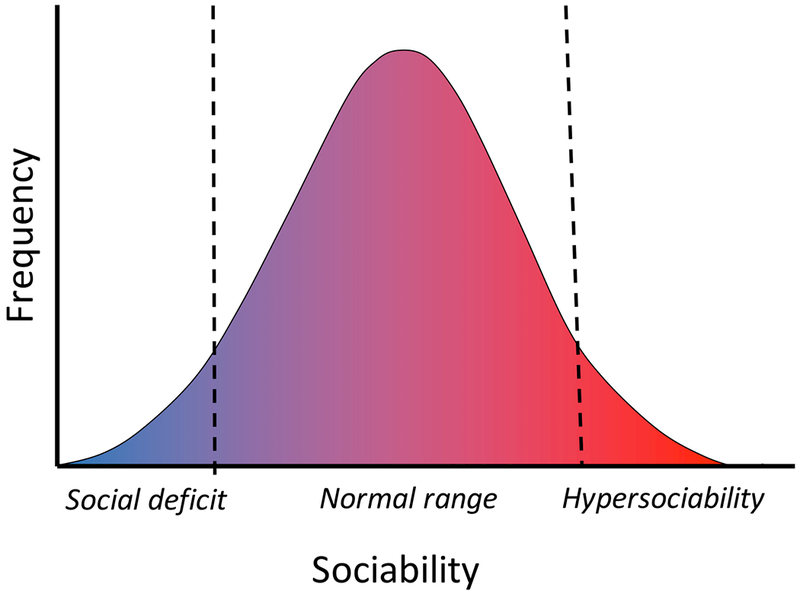
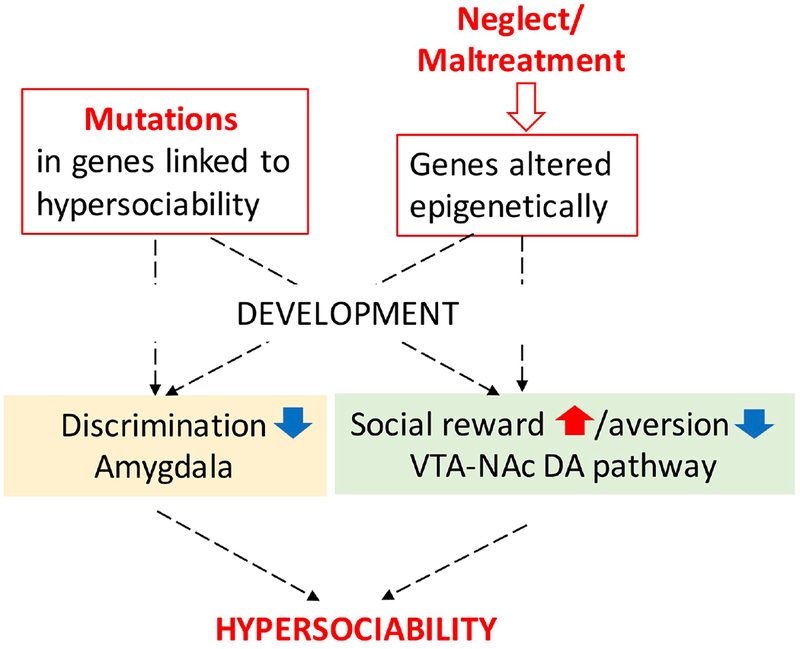
Affiliative social motivation and behavior, that is, sociability that includes attachment, prosocial behavior (sharing, caring and helping) and empathy (the ability to understand and share the feelings of others), has high variability in the human population, with a portion of people outside of the normal range. While psychiatric disorders and autism spectrum disorders are typically associated with a deficit in social behavior, the opposite trait of hypersociability and indiscriminate friendliness are exhibited by individual with specific neurodevelopmental disorders and following early adverse care. Here we discuss both genetic and environmental factors that cause or increase the risk for developing pathological hypersociability from human to rodent models.
Keywords: Williams syndrome; amygdala; child maltreatment; friendliness; hypersociability; indiscriminate; institutional rearing; neurodevelopmental disease; social behavior; social reward/aversion; synaptic genes.
© 2018 John Wiley & Sons Ltd and International Behavioural and Neural Genetics Society.
Figures
References
-
- Ebstein RP, Israel S, Chew SH, Zhong S, Knafo A. Genetics of human social behavior. Neuron. 2010;65(6):831–844. - PubMed
-
- Constantino JN, Todd RD. Autistic traits in the general population: a twin study. Arch Gen Psychiatry. 2003;60(5):524–530. - PubMed
-
- Lundström S, Chang Z, Råstam M, et al. Autism spectrum disorders and autistic like traits: similar etiology in the extreme end and the normal variation. Arch Gen Psychiatry. 2012;69(1):46–52. - PubMed
Publication types
MeSH terms
Grants and funding
LinkOut - more resources
Full Text Sources
Other Literature Sources
