


Wnt signaling in bone, kidney, intestine, and adipose tissue and interorgan interaction in aging
- PMID: 30101565
- PMCID: PMC6372353
- DOI: 10.1111/nyas.13945
Wnt signaling in bone, kidney, intestine, and adipose tissue and interorgan interaction in aging
Abstract
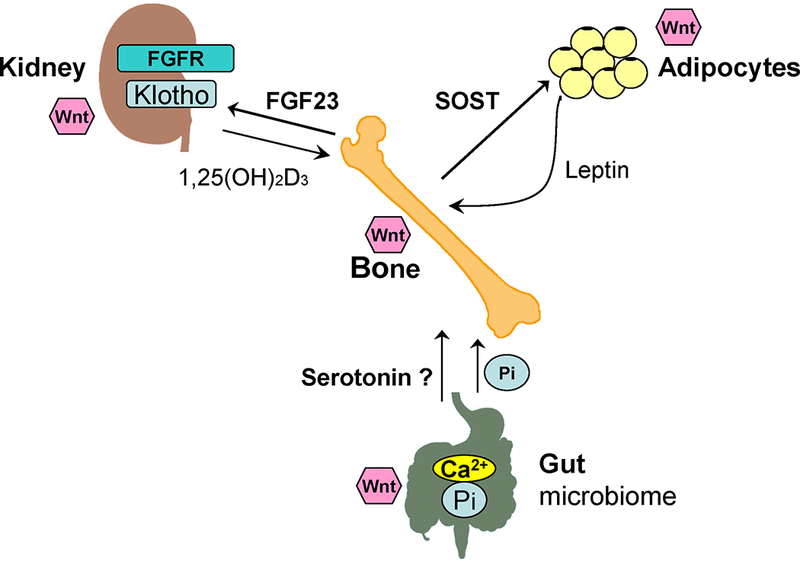
Over the last two decades, it has become increasingly apparent that Wnt signaling plays a critical role in development and adult tissue homeostasis in multiple organs and in the pathogenesis of many diseases. In particular, a crucial role for Wnt signaling in bone development and bone tissue homeostasis has been well recognized. Numerous genome-wide association studies confirmed the importance of Wnt signaling in controlling bone mass. Moreover, ample evidence suggests that Wnt signaling is essential for kidney, intestine, and adipose tissue development and homeostasis. Recent emerging evidence demonstrates that Wnt signaling may play a fundamental role in the aging process of those organs. New discoveries show that bone is not only the major reservoir for calcium and phosphate storage, but also the largest organ with multiple functions, including mineral and energy metabolism. The interactions among bone, kidney, intestine, and adipose tissue are controlled and regulated by several endocrine signals, including FGF23, klotho, sclerostin, osteocalcin, vitamin D, and leptin. Since the aging process is characterized by structural and functional decline in almost all tissues and organs, understanding the Wnt signaling-related interactions among bone, kidney, intestine, and adipose tissue in aging may shed light on the pathogenesis of age-related diseases.
Keywords: FGF23-klotho; Wnt/β-catenin signaling; aging; bone; sclerostin.
© 2018 New York Academy of Sciences.
Conflict of interest statement
Competing interests
The author declare no competing interests.
Figures
References
Publication types
MeSH terms
Substances
Grants and funding
LinkOut - more resources
Full Text Sources
Other Literature Sources
Medical
