


Acute hyperviscosity: syndromes and management
- PMID: 30104220
- PMCID: PMC6161773
- DOI: 10.1182/blood-2018-06-846816
Acute hyperviscosity: syndromes and management
Abstract
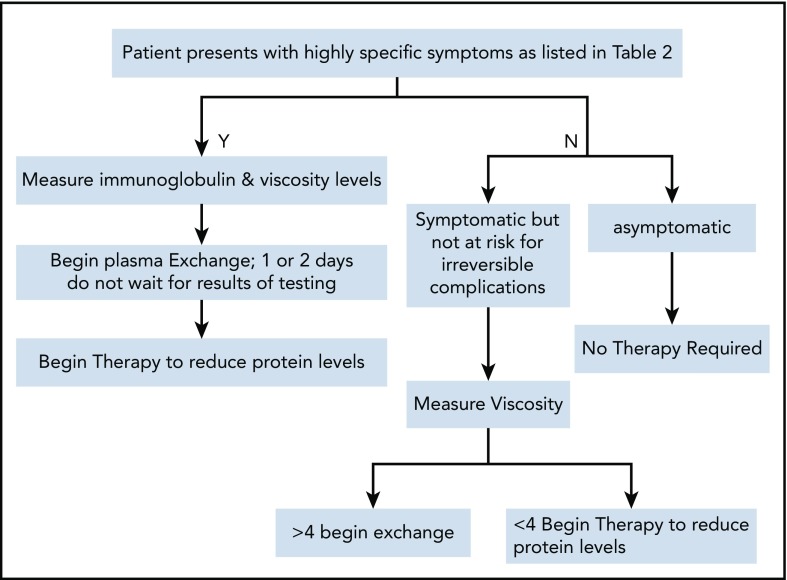
Plasma hyperviscosity is a rare complication of both monoclonal and polyclonal disorders associated with elevation of immunoglobulins. Asymptomatic patients with an elevation in the serum viscosity do not require plasma exchange, and the majority will have other indications for therapeutic intervention. For patients with hemorrhagic or central nervous system manifestations, plasma exchange is the therapy of choice and is relatively safe. Viscosity measurements are not required to initiate therapy if the index of suspicion is high and the clinical presentation is typical. However, patients should have a sample sent for confirmation of the diagnosis. Whole-blood hyperviscosity is seen in patients with extreme elevation of the red cell and white cell count. Phlebotomy of patients with primary and secondary elevation of the red cell count is a well-established therapy.
© 2018 by The American Society of Hematology.
Figures

References
-
- Késmárky G, Kenyeres P, Rábai M, Tóth K. Plasma viscosity: a forgotten variable. Clin Hemorheol Microcirc. 2008;39(1-4):243-246. - PubMed
-
- Skinner HB. Velocity-diameter relationships of the microcirculation. Med Inform (Lond). 1979;4(4):243-256. - PubMed
-
- Pries AR, Neuhaus D, Gaehtgens P. Blood viscosity in tube flow: dependence on diameter and hematocrit. Am J Physiol. 1992;263(6 Pt 2):H1770-H1778. - PubMed
-
- Fahey JL, Barth WF, Solomon A. Serum hyperviscosity syndrome. JAMA. 1965;192(6):464-467. - PubMed
-
- Fahey JL. Serum protein disorders causing clinical symptoms in malignant neoplastic disease. J Chronic Dis. 1963;16(7):703-712. - PubMed
Publication types
MeSH terms
Grants and funding
LinkOut - more resources
Full Text Sources
Other Literature Sources
