


Mre11 complex links sister chromatids to promote repair of a collapsed replication fork
- PMID: 30104346
- PMCID: PMC6126713
- DOI: 10.1073/pnas.1808189115
Mre11 complex links sister chromatids to promote repair of a collapsed replication fork
Abstract
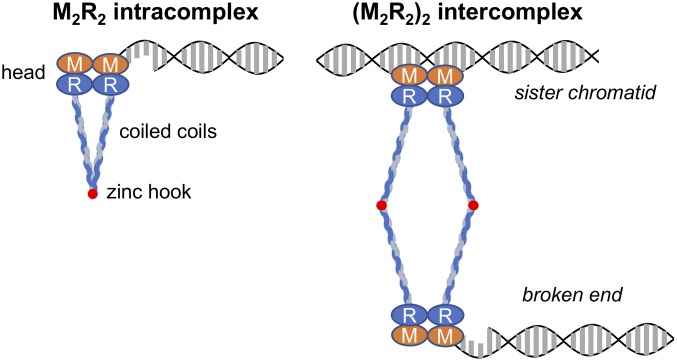
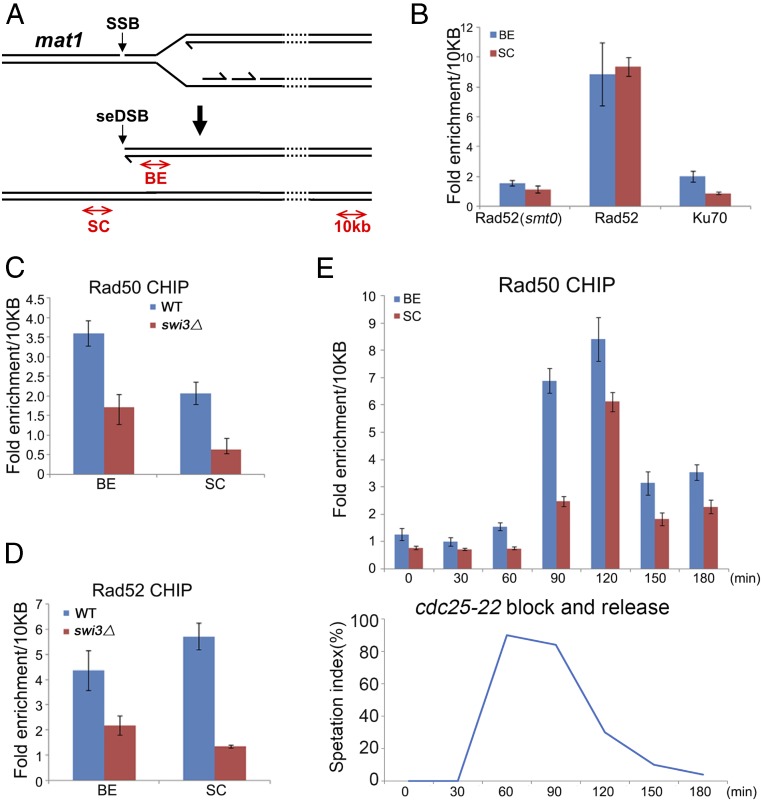
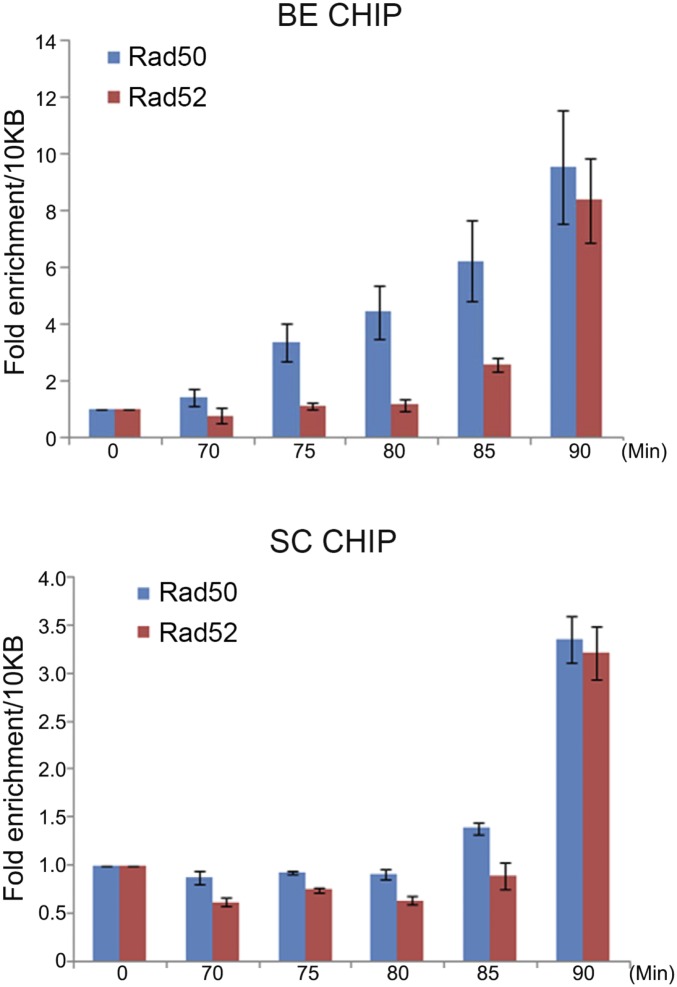
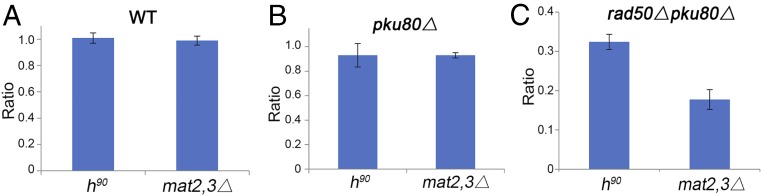
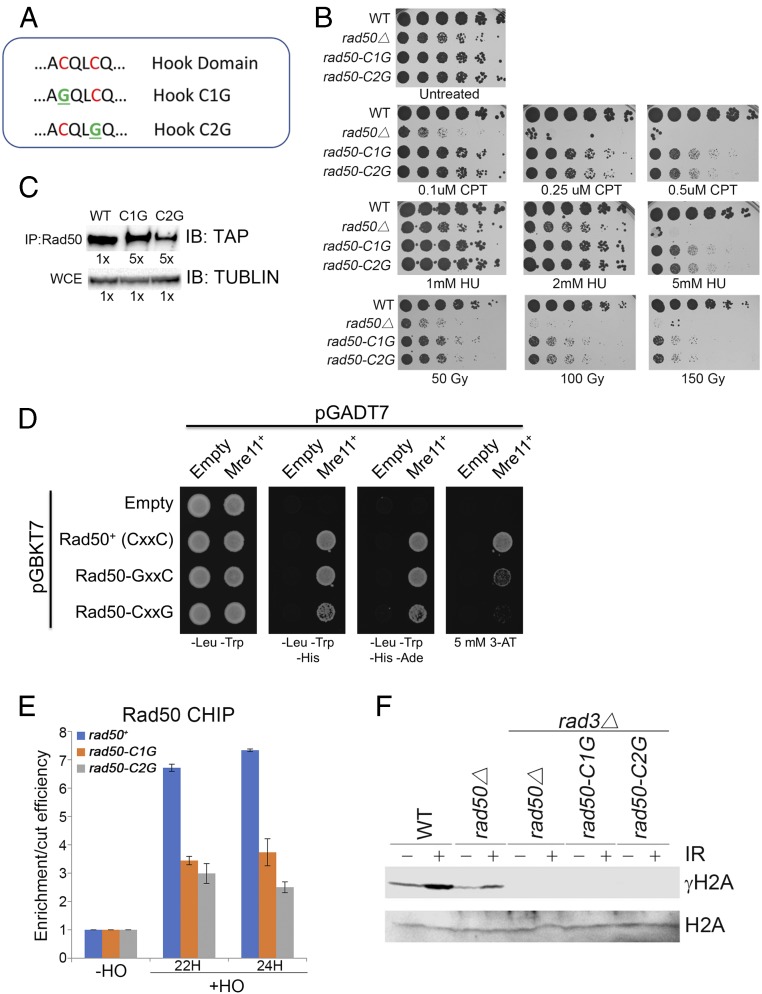
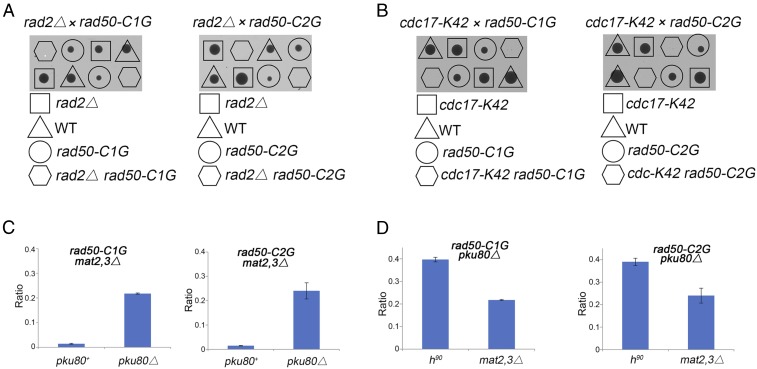
Collapsed replication forks, which are a major source of DNA double-strand breaks (DSBs), are repaired by sister chromatid recombination (SCR). The Mre11-Rad50-Nbs1 (MRN) protein complex, assisted by CtIP/Sae2/Ctp1, initiates SCR by nucleolytically resecting the single-ended DSB (seDSB) at the collapsed fork. The molecular architecture of the MRN intercomplex, in which zinc hooks at the apices of long Rad50 coiled-coils connect two Mre112-Rad502 complexes, suggests that MRN also structurally assists SCR. Here, Rad50 ChIP assays in Schizosaccharomyces pombe show that MRN sequentially localizes with the seDSB and sister chromatid at a collapsed replication fork. Ctp1, which has multivalent DNA-binding and DNA-bridging activities, has the same DNA interaction pattern. Provision of an intrachromosomal repair template alleviates the nonnucleolytic requirement for MRN to repair the broken fork. Mutations of zinc-coordinating cysteines in the Rad50 hook severely impair SCR. These data suggest that the MRN complex facilitates SCR by linking the seDSB and sister chromatid.
Keywords: Mre11; Rad50; double-strand break repair; genome maintenance; recombination.
Conflict of interest statement
The authors declare no conflict of interest.
Figures
References
-
- Aguilera A, García-Muse T. Causes of genome instability. Annu Rev Genet. 2013;47:1–32. - PubMed
Publication types
MeSH terms
Substances
Grants and funding
LinkOut - more resources
Full Text Sources
Other Literature Sources
Molecular Biology Databases
Research Materials
Miscellaneous
