


Genome Sequencing and Carbohydrate-Active Enzyme (CAZyme) Repertoire of the White Rot Fungus Flammulina elastica
- PMID: 30104475
- PMCID: PMC6121412
- DOI: 10.3390/ijms19082379
Genome Sequencing and Carbohydrate-Active Enzyme (CAZyme) Repertoire of the White Rot Fungus Flammulina elastica
Abstract
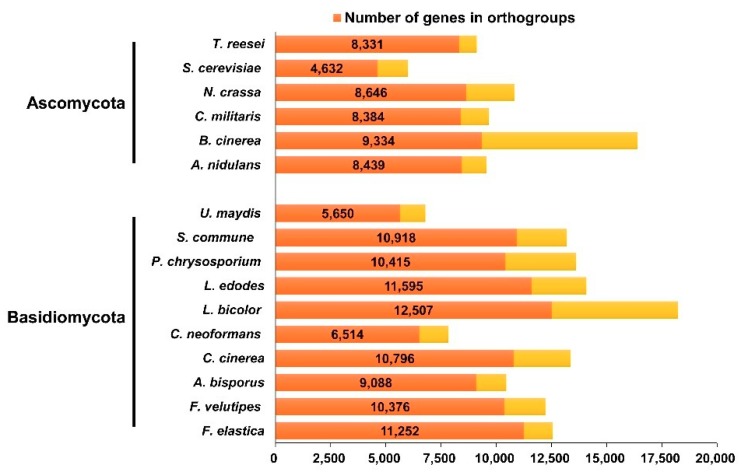
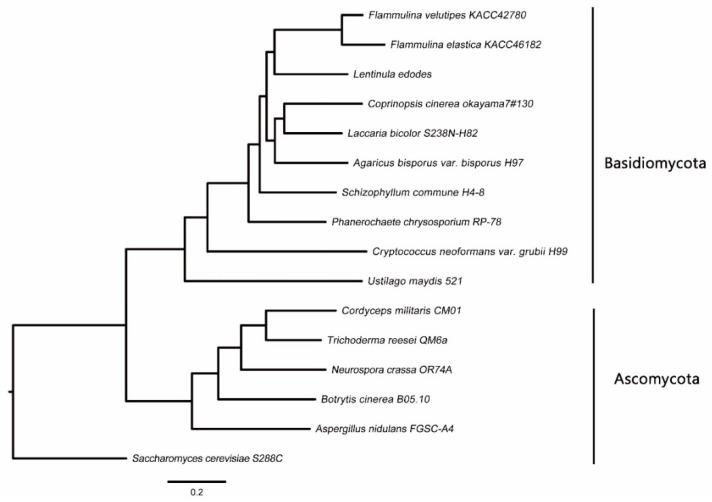
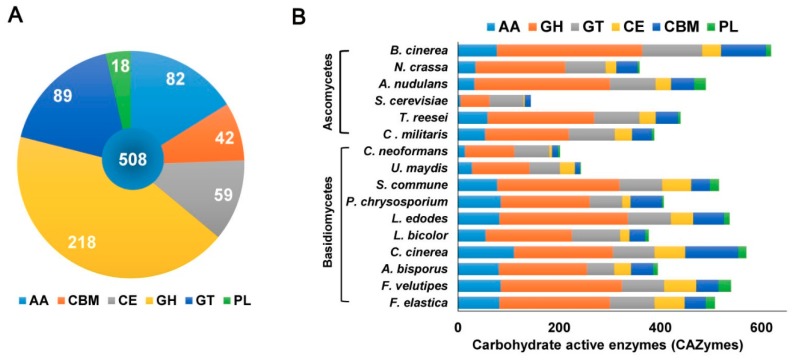
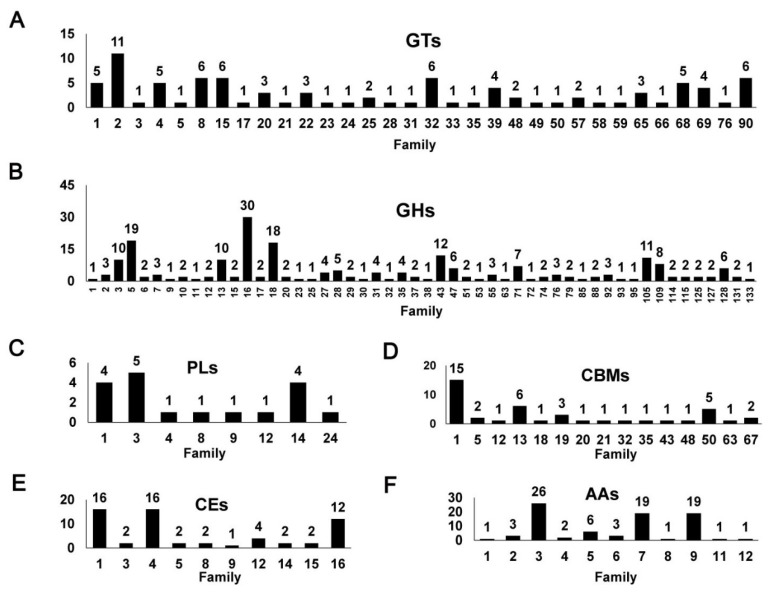
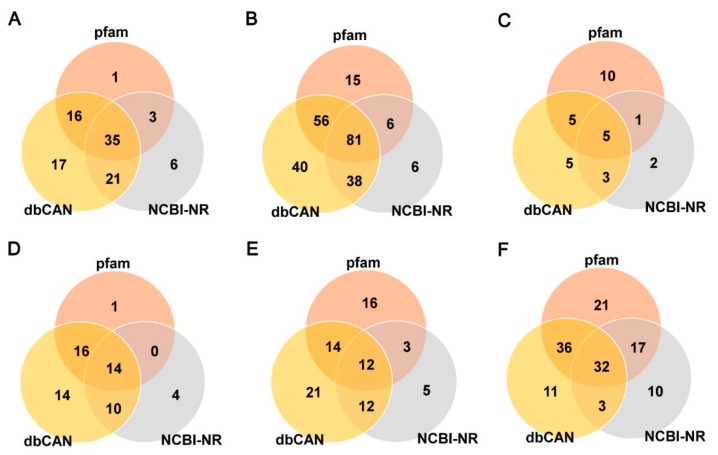
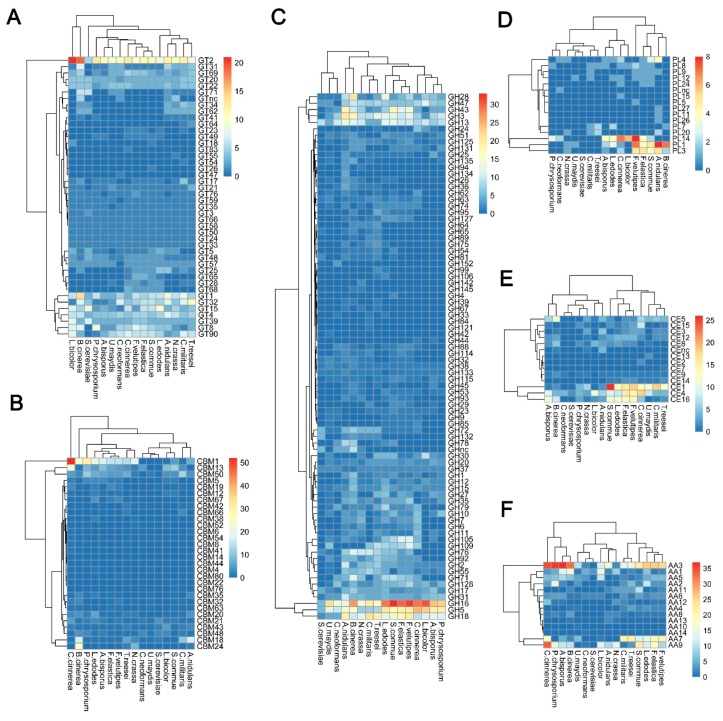
Next-generation sequencing (NGS) of the Flammulina elastica (wood-rotting basidiomycete) genome was performed to identify carbohydrate-active enzymes (CAZymes). The resulting assembly (31 kmer) revealed a total length of 35,045,521 bp (49.7% GC content). Using the AUGUSTUS tool, 12,536 total gene structures were predicted by ab initio gene prediction. An analysis of orthologs revealed that 6806 groups contained at least one F. elastica protein. Among the 12,536 predicted genes, F. elastica contained 24 species-specific genes, of which 17 genes were paralogous. CAZymes are divided into five classes: glycoside hydrolases (GHs), carbohydrate esterases (CEs), polysaccharide lyases (PLs), glycosyltransferases (GTs), and auxiliary activities (AA). In the present study, annotation of the predicted amino acid sequences from F. elastica genes using the dbCAN CAZyme database revealed 508 CAZymes, including 82 AAs, 218 GHs, 89 GTs, 18 PLs, 59 CEs, and 42 carbohydrate binding modules in the F. elastica genome. Although the CAZyme repertoire of F. elastica was similar to those of other fungal species, the total number of GTs in F. elastica was larger than those of other basidiomycetes. This genome information elucidates newly identified wood-degrading machinery in F. elastica, offers opportunities to better understand this fungus, and presents possibilities for more detailed studies on lignocellulosic biomass degradation that may lead to future biotechnological and industrial applications.
Keywords: Flammulina elastica; carbohydrate active enzyme; whole genome sequencing.
Conflict of interest statement
The authors declare no conflicts of interest.
Figures
References
-
- Redhead S.A., Petersen R.H. New species, varieties and combinations in the genus Flammulina. Mycotaxon. 1999;71:285–294.
-
- Petersen R.H., Hughes K.W., Redhead S.A. The genus Flammulina, a Tennessee tutorial. [(accessed on 21 October 2009)]; Available online: https://www.bioinfo.org.uk/html/Flammulina.htm.
-
- Ripková S., Hughes K., Adamčík S., Kučera V., Adamčíková K. The delimitation of Flammulina fennae. Mycol. Prog. 2010;9:469–484. doi: 10.1007/s11557-009-0654-9. - DOI
-
- Pérez-Butrón J.L., Ferdnández-Vicente J. Una nueva especie de Flammulina P. Karsten, F. cephalariae (Agaricales) encontrada en España. Rev. Catalana Micol. 2007;29:81–91.
-
- Eriksson K., Blanchette R.A., Ander P. Microbial and Ezymatic Degradation of Wood and Wood Components. Springer; Berlin/Heidelberg, Germany: 1990. Morphological aspects of wood degradation by fungi and bacteria; pp. 1–87.
MeSH terms
Substances
LinkOut - more resources
Full Text Sources
Other Literature Sources
Miscellaneous
