


Behavioral effects of long-term oral administration of aluminum ammonium sulfate in male and female C57BL/6J mice
- PMID: 30106265
- PMCID: PMC7292291
- DOI: 10.1002/npr2.12002
Behavioral effects of long-term oral administration of aluminum ammonium sulfate in male and female C57BL/6J mice
Abstract
Background: Aluminum (Al) is considered to be a neurotoxic metal, and excessive exposure to Al has been reported to be a potential risk factor for neurodegenerative diseases. Al ammonium sulfate is one of the Al compounds that is widely used as a food additive. However, the effects of the oral administration of Al ammonium sulfate on physical development and behavior remain to be examined.
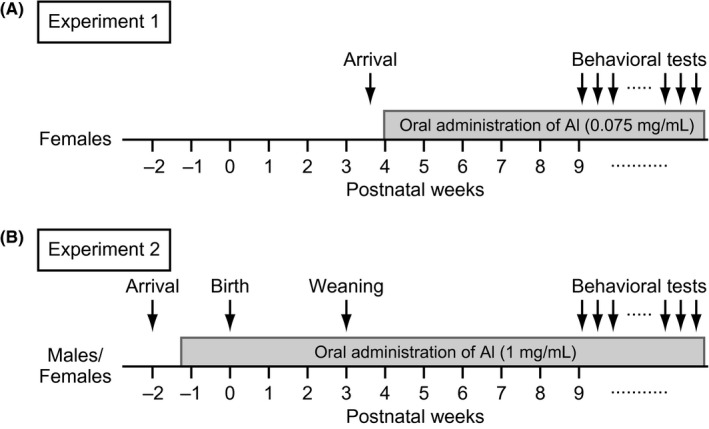
Methods: In this study, we investigated the effects of the administration of Al ammonium sulfate 12-water dissolved in drinking water (0.075 mg/mL) beginning in adolescence on various types of behavior in adult female C57BL/6J mice through a battery of behavioral tests (low-dose experiment; Experiment 1). We further examined the behavioral effects of the oral administration of a higher dose of the Al compound in drinking water (1 mg/mL) beginning in the prenatal period on behavior in adult male and female mice (high-dose experiment; Experiment 2).
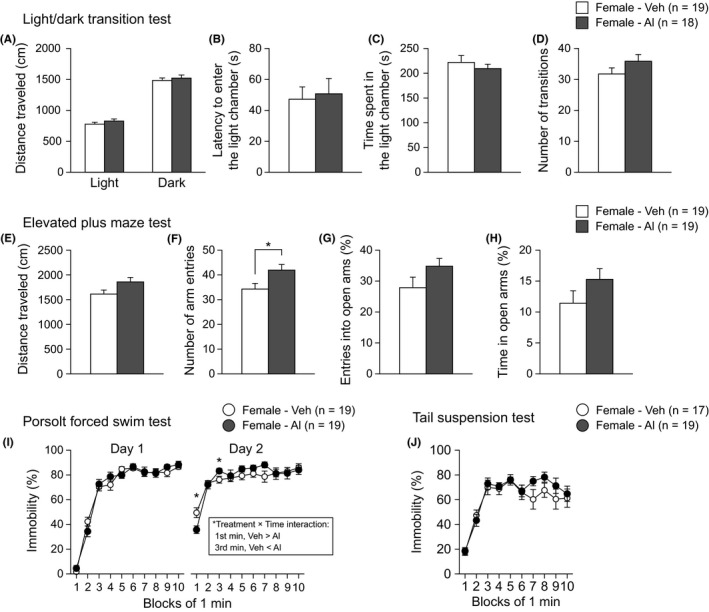
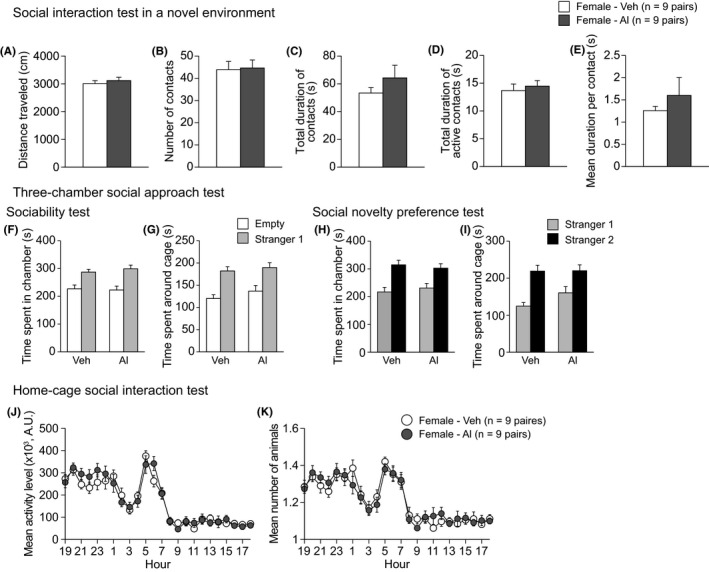
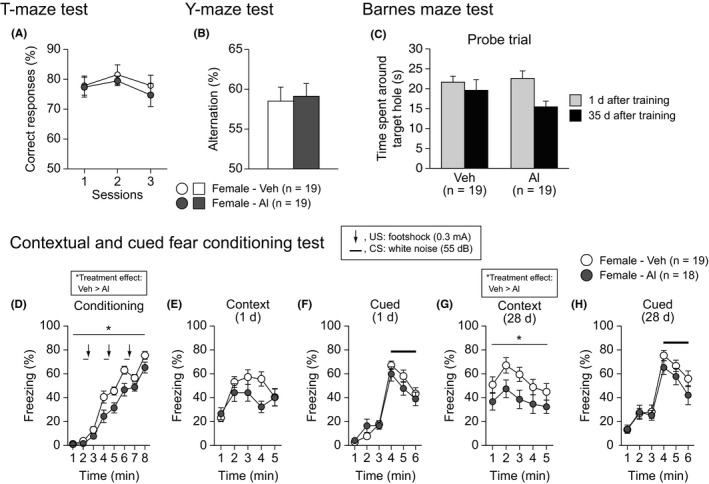
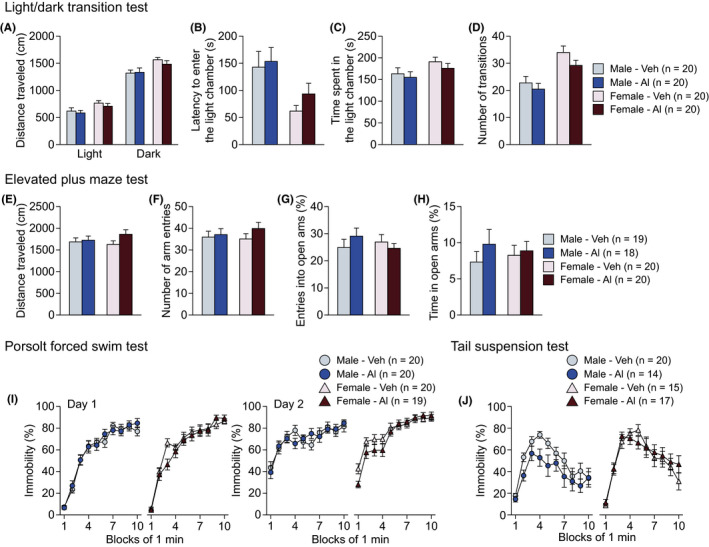
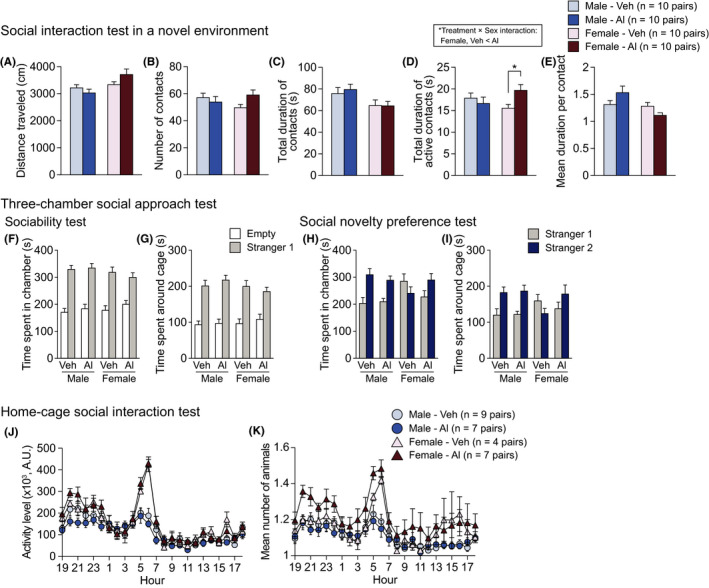
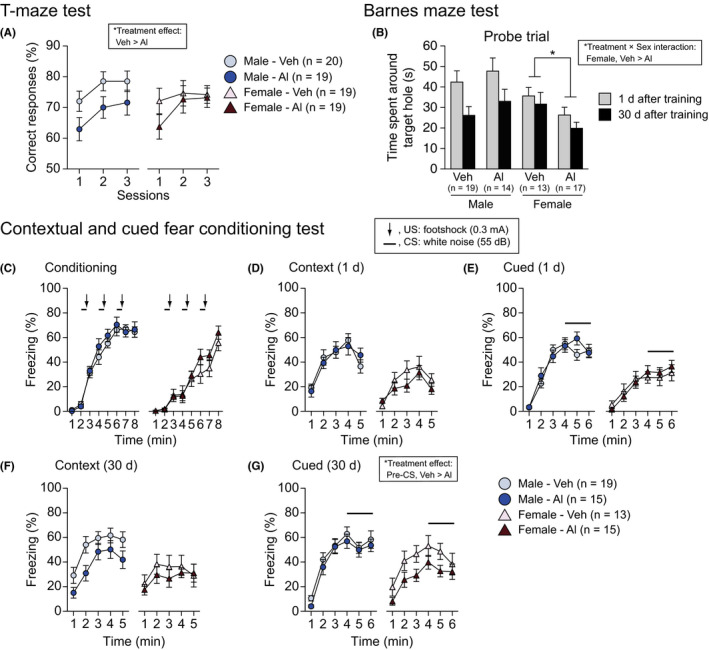
Results: In the low-dose experiment, in which females' oral intake of Al was estimated to be 0.97 mg Al/kg/d as adults, Al-treated females exhibited an increase in total arm entries in the elevated plus maze test, an initial decrease and subsequent increase in immobility in the forced swim test, and reduced freezing in the fear conditioning test approximately 1 month after the conditioning session compared with vehicle-treated females (uncorrected P < .05). However, the behavioral differences did not reach a statistically significant level after correction for multiple testing. In the high-dose experiment, in which animals' oral intakes were estimated to be about ten times higher than those in the low-dose experiment, behavioral differences found in the low-dose experiment were not observed in high-dose Al-treated mice, suggesting that the results of the low-dose experiment might be false positives. Additionally, although high-dose Al-treated females exhibited increased social contacts with unfamiliar conspecifics and impaired reference memory performance, and high-dose Al-treated mice exhibited decreases in prepulse inhibition and in correct responses in the working memory task (uncorrected P < .05), the differences in any of the behavioral measures did not reach the significance level after correction for multiple testing.
Conclusion: Our results show that long-term oral exposure to Al ammonium sulfate at the doses used in this study may have the potential to induce some behavioral changes in C57BL/6J mice. However, the behavioral effects of Al were small and statistically weak, as indicated by the fact that the results failed to reach the study-wide significance level. Thus, further study will be needed to replicate the results and reevaluate the behavioral outcomes of oral intake of Al ammonium sulfate.
Keywords: C57BL/6J; aluminum ammonium sulfate; behavioral test battery; mice; oral intake.
© 2018 The Authors. Neuropsychopharmacology Reports published by John Wiley & Sons Australia, Ltd on behalf of The Japanese Society of Neuropsychopharmacology.
Conflict of interest statement
The authors declare no conflict of interest for this article. [Correction added on 5 March 2018, after first online publication: The words, ‘for this article’, have been added to the back of the conflict of interest statement.]
Figures
References
-
- Joint FAO/WHO Expert Committee on Food Additives . Evaluation of certain food additives and contaminants: seventy‐fourth report. Volume 65. Geneva: WHO Press; 2011.
-
- Exley C. A molecular mechanism of aluminium‐induced Alzheimer's disease? J Inorg Biochem. 1999;76:133–40. - PubMed
-
- Grant WB, Campbell A, Itzhaki RF, Savory J. The significance of environmental factors in the etiology of Alzheimer's disease. J Alzheimer's Dis. 2002;4:179–89. - PubMed
-
- Polizzi S, Pira E, Ferrara M, et al. Neurotoxic effects of aluminium among foundry workers and Alzheimer's disease. Neurotoxicology. 2002;23:761–74. - PubMed
-
- Perl DP, Gajdusek DC, Garruto RM, Yanagihara RT, Gibbs CJ. Intraneuronal aluminum accumulation in amyotrophic lateral sclerosis and Parkinsonism‐dementia of Guam. Science. 1982;217:1053–5. - PubMed
Publication types
MeSH terms
Substances
LinkOut - more resources
Full Text Sources
Other Literature Sources
Molecular Biology Databases
