


Development of a Traditional Chinese Medicine Syndrome-Specific Scale for Ulcerative Colitis: The Large Intestine Dampness-Heat Syndrome Questionnaire
- PMID: 30108653
- PMCID: PMC6077564
- DOI: 10.1155/2018/4039019
Development of a Traditional Chinese Medicine Syndrome-Specific Scale for Ulcerative Colitis: The Large Intestine Dampness-Heat Syndrome Questionnaire
Abstract
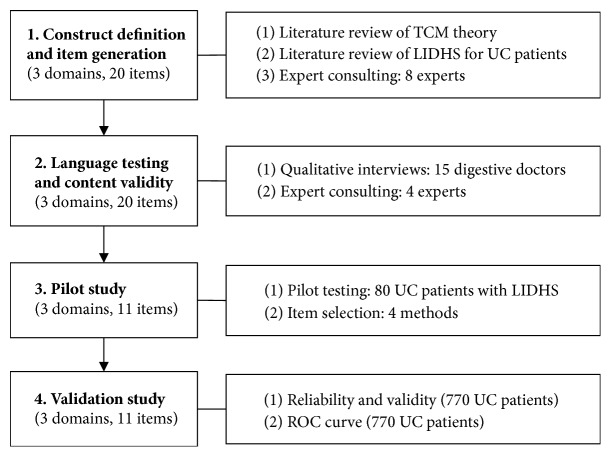
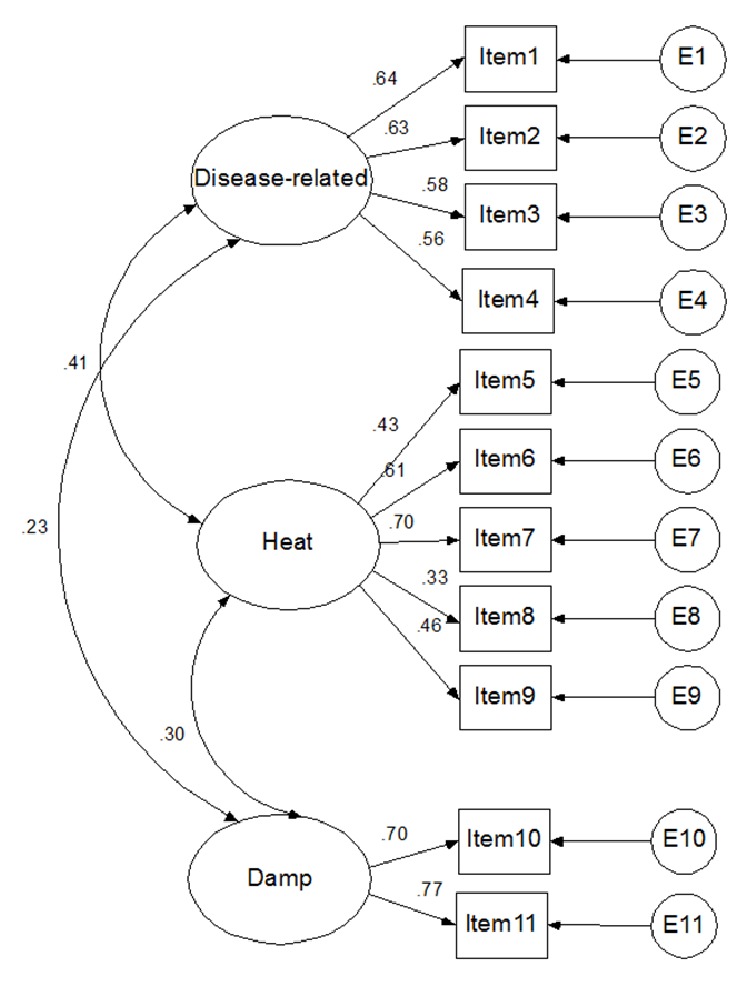
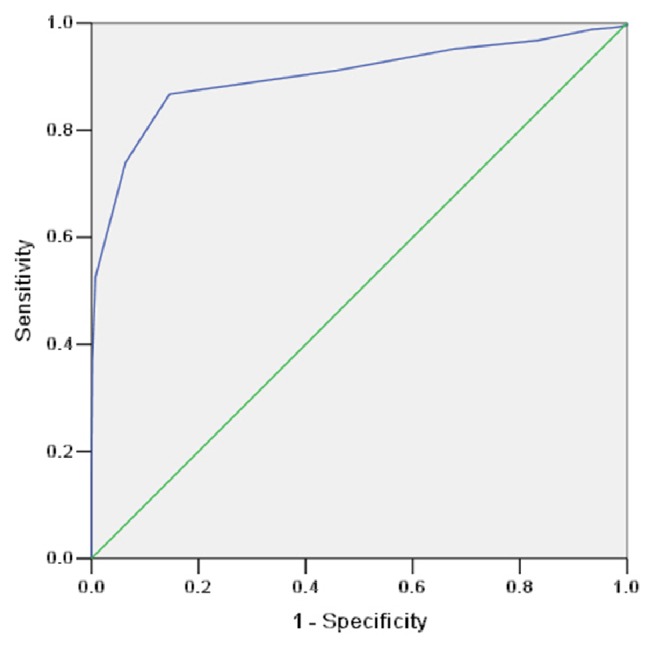
The aim of this study was to develop and validate the large intestine dampness-heat syndrome questionnaire (LIDHSQ) for patients with ulcerative colitis (UC). The domains and items of the LIDHSQ were developed according to standard procedures, namely, construct definition, item generation, language testing, content validity, pilot study, and validation study. At first, a total of 20 items in 3 domains were generated based on literature review and expert consultation. After the item selection, the LIDHSQ contains 11 items in three domains: disease-related domain (diarrhoea, abdominal pain, bloody purulent stool, and mucus stool), heat domain (fever, dry mouth, red tongue, yellow fur, and anal burning), and dampness domain (greasy fur and defecation disorder). The Cronbach's alphas of all domains were greater than 0.6. All of the intraclass correlation coefficients were greater than 0.8. The LIDHSQ and domain scores of the patients with LIDHS were higher than those of the patients with other syndromes (P < 0.001). The area under the receiver operating characteristic curve of the LIDHSQ was 0.900, with a 95% confidence interval of 0.872-0.928. When the cut-off value of the LIDHSQ was ≥ 7, the sensitivity and specificity were 0.867 and 0.854, respectively. The LIDHSQ is valid and reliable for measuring LIDHS in UC patients with good diagnostic efficacy. We recommend the use of the LIDHSQ in Chinese UC patients.
Figures
References
LinkOut - more resources
Full Text Sources
Other Literature Sources
