. 2017 Jul 18;8(9):1817-1823.
doi: 10.1039/c7md00273d. eCollection 2017 Sep 1.

Click chemistry-assisted synthesis of triazolo linked podophyllotoxin conjugates as tubulin polymerization inhibitors

Affiliations

Click chemistry-assisted synthesis of triazolo linked podophyllotoxin conjugates as tubulin polymerization inhibitors

M V P S Vishnuvardhan et al. Medchemcomm. .

Abstract

A series of new triazolo linked 4β-amidopodophyllotoxin conjugates (9a-l) were synthesized using click chemistry and evaluated for their antitumor activity against four human cancer cell lines. Among them, two compounds (9c and 9j) showed significant anticancer activity with IC50 values of 0.9 and 0.07 μM, respectively. Biological studies are conducted into the cell-cycle distribution of these conjugates inducing G2/M-phase arrest, apart from an increase in the levels of caspase-3 proteins, followed by apoptotic cell death. A tubulin polymerization assay analysis showed that these compounds effectively inhibit microtubule assembly in HeLa cells and, moreover, Hoechst 33258 and Immunohistochemistry staining suggest that these compounds induce cell death by apoptosis. The docking studies showed that compounds 9c and 9j interact and bind efficiently with the tubulin protein at the colchicine site.


Figures
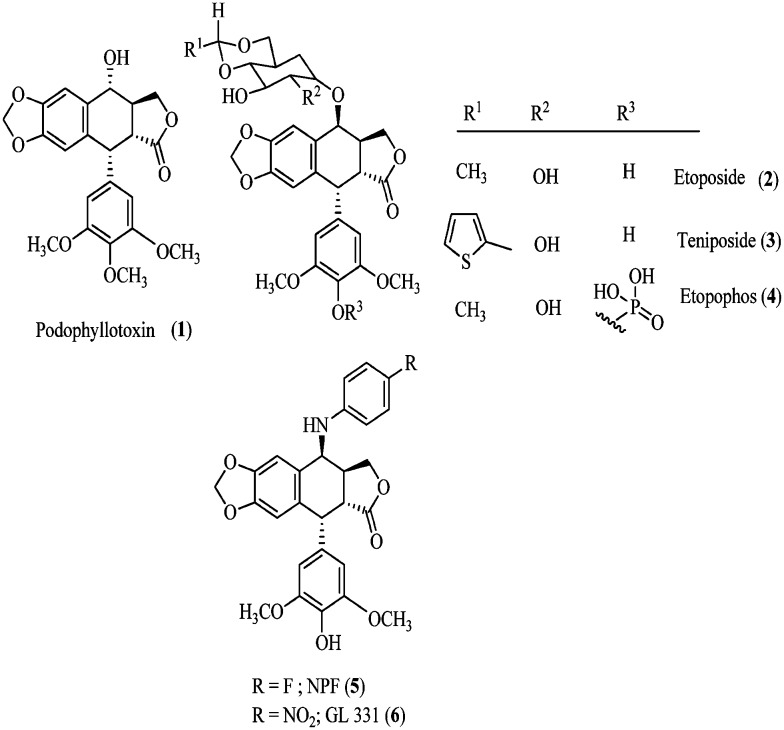
Fig. 1
Fig. 1. Naturally occurring and semisynthetic podophyllotoxin.
Scheme 1
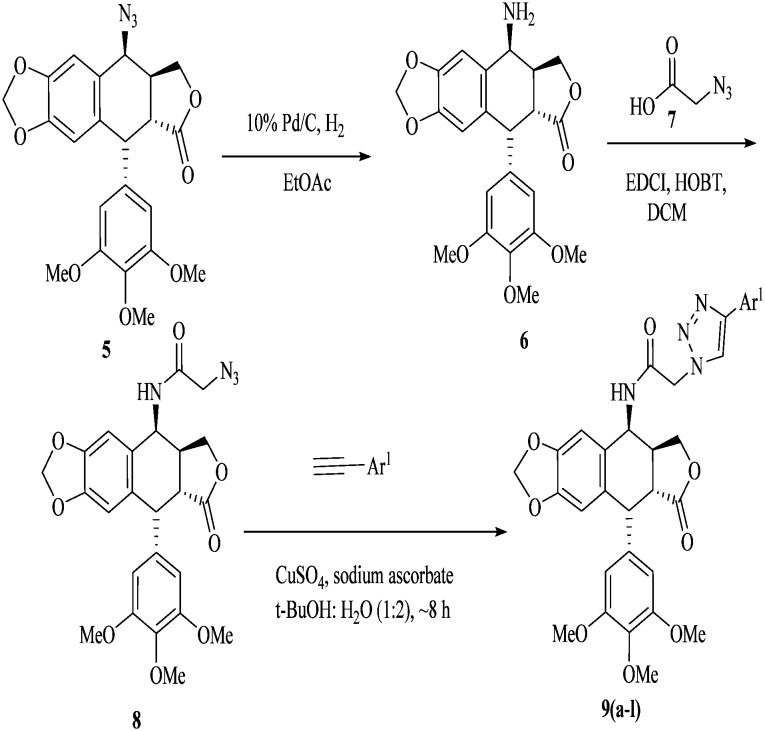
Scheme 1. 4β-[(Amido-4-substituted)-1,2,3-triazol-1-yl] podophyllotoxin hybrids (9a–l).
Fig. 2
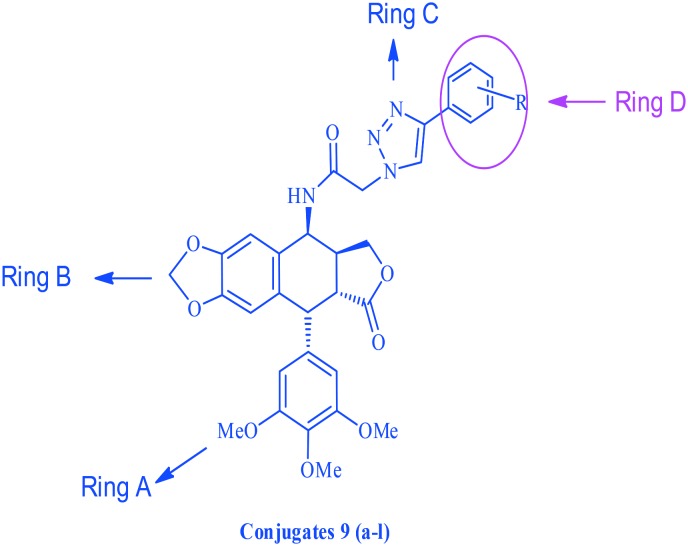
Fig. 2. The structure activity relationship of triazolo linked podophyllotoxin conjugates.
Fig. 3
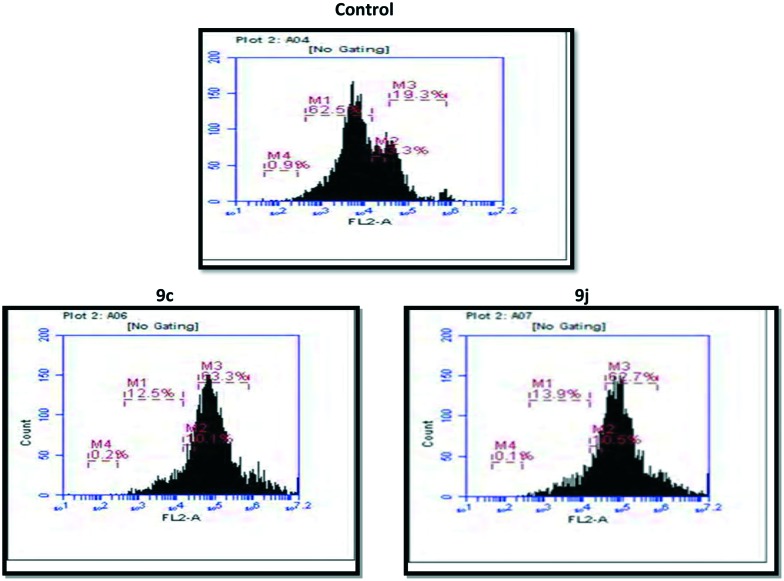
Fig. 3. The effects of the compound control, 9c and 9j on the DNA content/cell following the treatment of HeLa cells at 0.5 μM for 48 h. The cell cycle distribution was analysed by the standard propidium iodide procedure as described in the experimental section.
Fig. 4
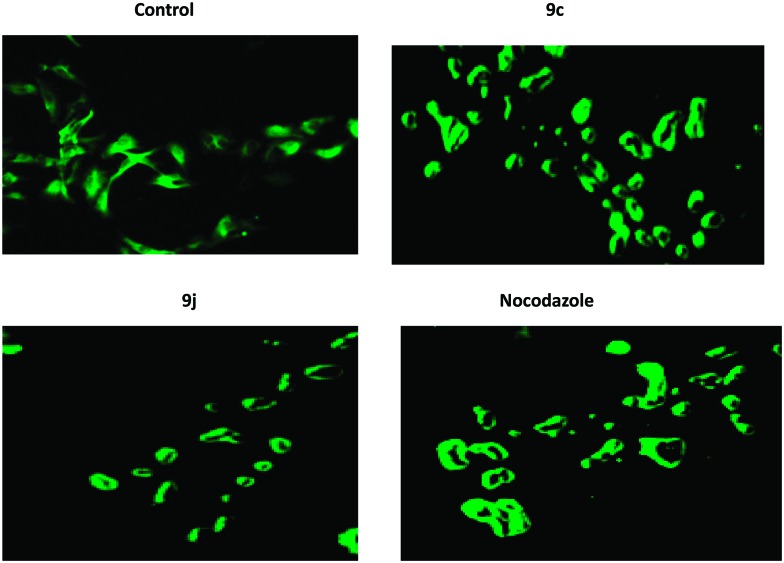
Fig. 4. IHC analyses of the compounds in the microtubule network: the HeLa cells were treated with compounds 9c and 9j at 0.5 μM concentration for 48 h, followed by staining with an α-tubulin antibody. Microtubule organization was clearly observed by the green colored tubulin network like structures in the control cells and was found to be disrupted in cells treated with compounds 9c and 9j.
Fig. 5
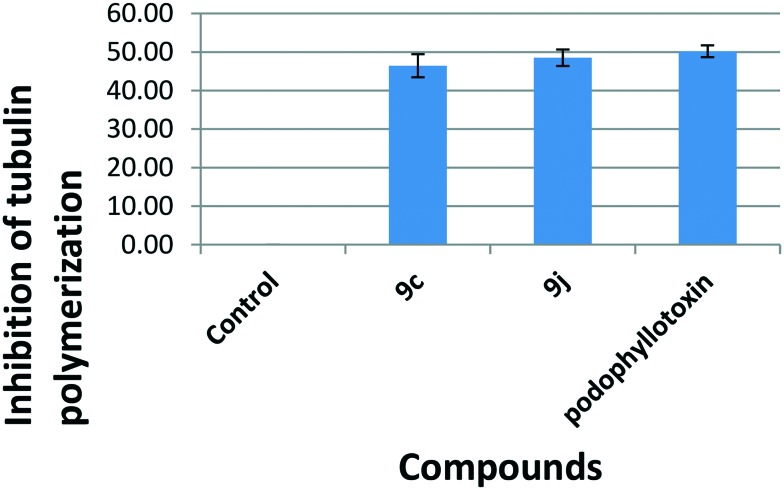
Fig. 5. The effect on tubulin polymerization: a tubulin polymerization assay was carried out in a reaction mixture that contained PEM buffer and GTP (1 mM) in the presence or absence of the test compounds (9c and 9j) at 3 μM concentration. The reaction was initiated by the addition of GTP to all the wells. Tubulin polymerization was monitored by the increase in fluorescence at 420 nm (excitation wavelength is 360 nm), which was measured for 1 h at 1 min intervals in a multimode plate reader (Tecan) at 37 °C.
Fig. 6
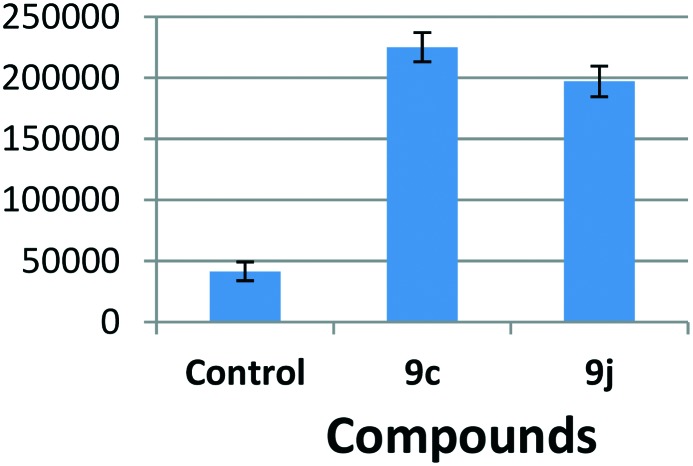
Fig. 6. The effect of podophyllotoxin conjugates on the caspase 3 protein activity. The HeLa cells were treated with the indicated compounds at 0.5 μM for 48 h and then subjected to fluorimetry, as explained in detail in the experimental section.
Fig. 7
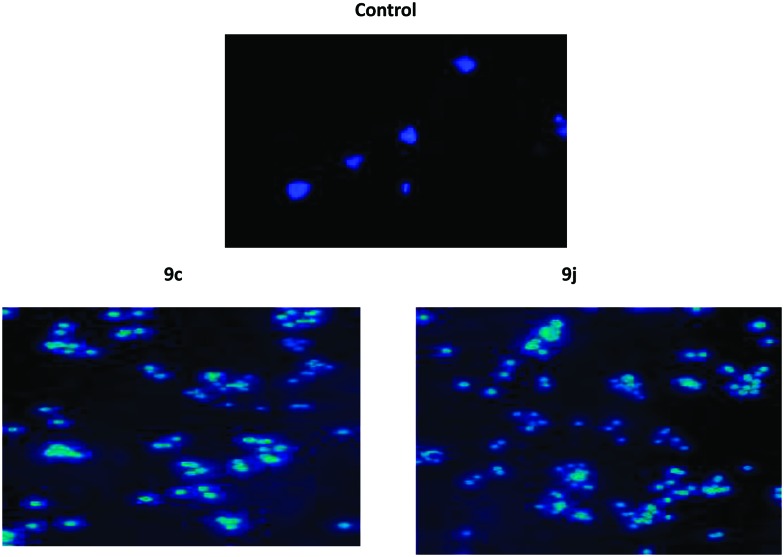
Fig. 7. Hoechst staining in the HeLa cervical cancer cell line; control cells, and 0.5 μM 9c and 9j.
Fig. 8
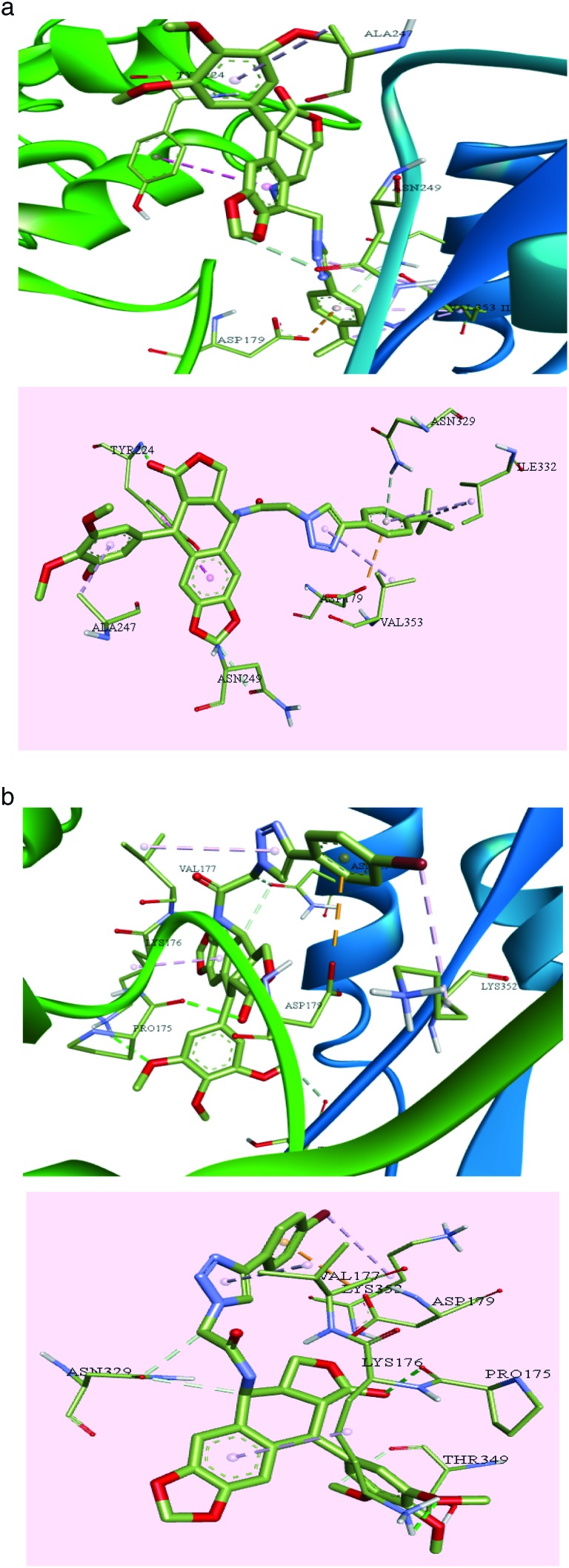
Fig. 8. a: The interactions of compound 9c, the carbon atoms are shown in green, oxygen atoms in red and nitrogen atoms in violet. b: The interactions of compound 9j, the carbon atoms are shown in green, oxygen atoms in red and nitrogen atoms in violet.

References

    1. Slevin L. M. L. Cancer. 1991;67:319–329. - PubMed
    1. Hande K. R. Eur. J. Cancer. 1998;34:1514–1521. - PubMed
    1. Caner B. A. and Longo D. L., Cancer therapy and biotherapy, Lippincott-Raven Publishers, New York, 1996.
    1. Yuan P., Xu B. H., Wang J. Y., Ma F., Fan Y., Li Q., Zhang P. J. Clin. Med. 2012;125:79–139.
    1. Burden D. A., Osheroff N. Biochim. Biophys. Acta, Gen. Subj. 1998;1400:139–154. - PubMed