


The Influence of Diet on Fertility and the Implications for Public Health Nutrition in the United States
- PMID: 30109221
- PMCID: PMC6079277
- DOI: 10.3389/fpubh.2018.00211
The Influence of Diet on Fertility and the Implications for Public Health Nutrition in the United States
Abstract
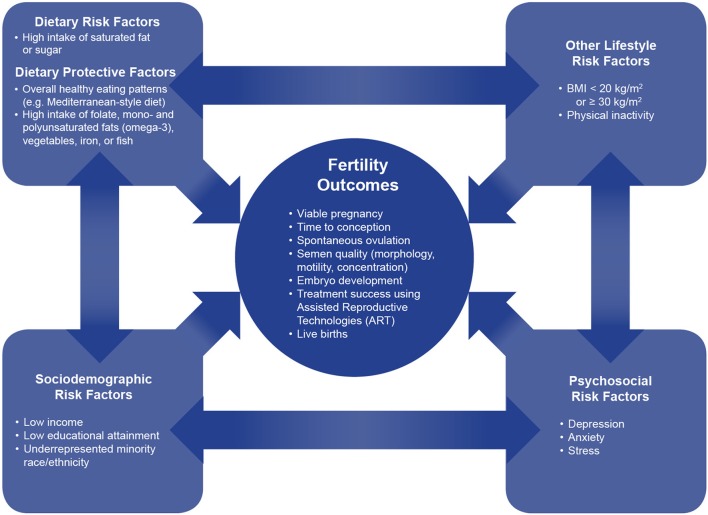
Despite growing evidence of the impact of diet on human fertility, few studies have examined the public health implications of this association in the United States (U.S.). This narrative review summarizes current scientific evidence on associations between dietary intake and fertility, discusses challenges in the public health landscape surrounding infertility, and proposes evidence-based recommendations to address these issues. Diets high in unsaturated fats, whole grains, vegetables, and fish have been associated with improved fertility in both women and men. While current evidence on the role of dairy, alcohol, and caffeine is inconsistent, saturated fats, and sugar have been associated with poorer fertility outcomes in women and men. Furthermore, women and men with obesity [body mass index (BMI) ≥ 30 kg/m2] have a higher risk of infertility. This risk is extended to women who are underweight (BMI <20 kg/m2). Diet and BMI influence outcomes during clinical treatment for infertility. Further, women in the U.S. who belong to an underrepresented minority group, have low income, or have low educational attainment, have significantly higher rates of infertility outcomes as compared to women who are non-Hispanic white, have high income, or have high educational attainment. Given this, it may be prudent to integrate nutrition counseling into both clinical guidelines for infertility as well as national dietary guidelines for individuals of reproductive age. Further studies on diet and reproductive health may enhance our ability to improve existing fertility programs across the U.S. and to deliver tailored care to women and men within at-risk groups.
Keywords: diet and fertility; fertility disparities; infertility; infertility treatment; nutrition and fertility; obesity and fertility.
Figures
References
Publication types
Grants and funding
LinkOut - more resources
Full Text Sources
Other Literature Sources
